A conventional drone camera can capture a field, forest, or wetland in impressive detail, but visible color tells only part of the story. Plants and other surfaces interact with light differently across the electromagnetic spectrum, and some of the most useful differences appear at wavelengths the human eye cannot see.
The MicaSense RedEdge-MX was designed to capture this hidden spectral information using five carefully selected bands. In this article, we take a closer look at what those bands reveal, how the camera turns reflected light into useful data, and why this relatively compact sensor has found applications far beyond conventional aerial photography.
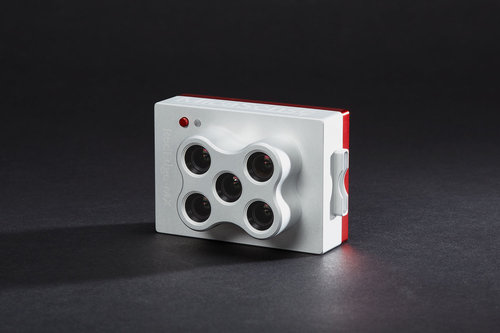
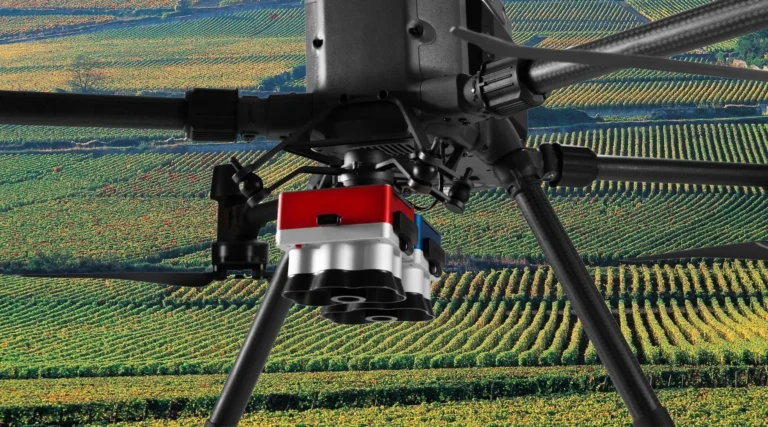
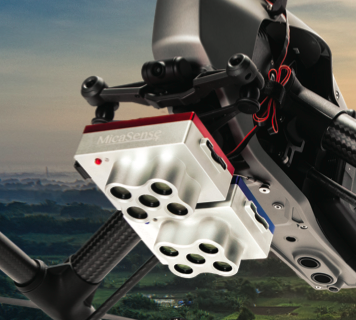
The MicaSense RedEdge-MX is a compact multispectral camera designed primarily for UAV mapping and remote sensing. Instead of producing a single RGB image, it uses five separate imagers with dedicated optical filters to capture five spectral bands simultaneously. Each capture therefore produces five individual images of the same scene.
Specification | RedEdge-MX |
Spectral channels | 5 |
Resolution per band | 1.2 MP (1280 × 960) |
Image depth | 12-bit |
Pixel size | 3.75 μm |
Focal length | 5.4 mm |
Field of view | 47.2° × 35.4° |
Shutter | Global shutter |
GSD at 60 m | ~4 cm/pixel per band |
GSD at 120 m | ~8 cm/pixel per band |
Image format | TIFF |
Storage | SD card |
Interfaces | Ethernet, serial, PWM/GPIO |
Typical platform | UAV / drone |
The global shutter is particularly useful for aerial mapping because the whole frame is exposed at once, reducing the geometric distortions that can occur with rolling-shutter cameras on a moving aircraft.
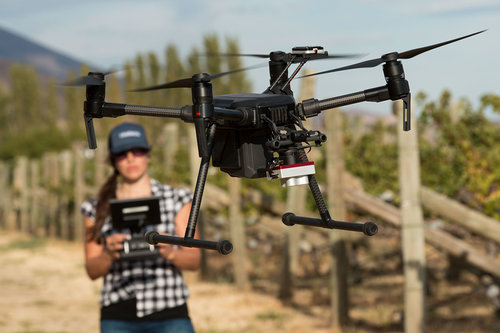
A typical RedEdge-MX setup also includes the DLS 2 (Downwelling Light Sensor) and a Calibrated Reflectance Panel. These components are used to account for illumination conditions and convert the captured data into more consistent surface reflectance measurements. We will return to this calibration process later.
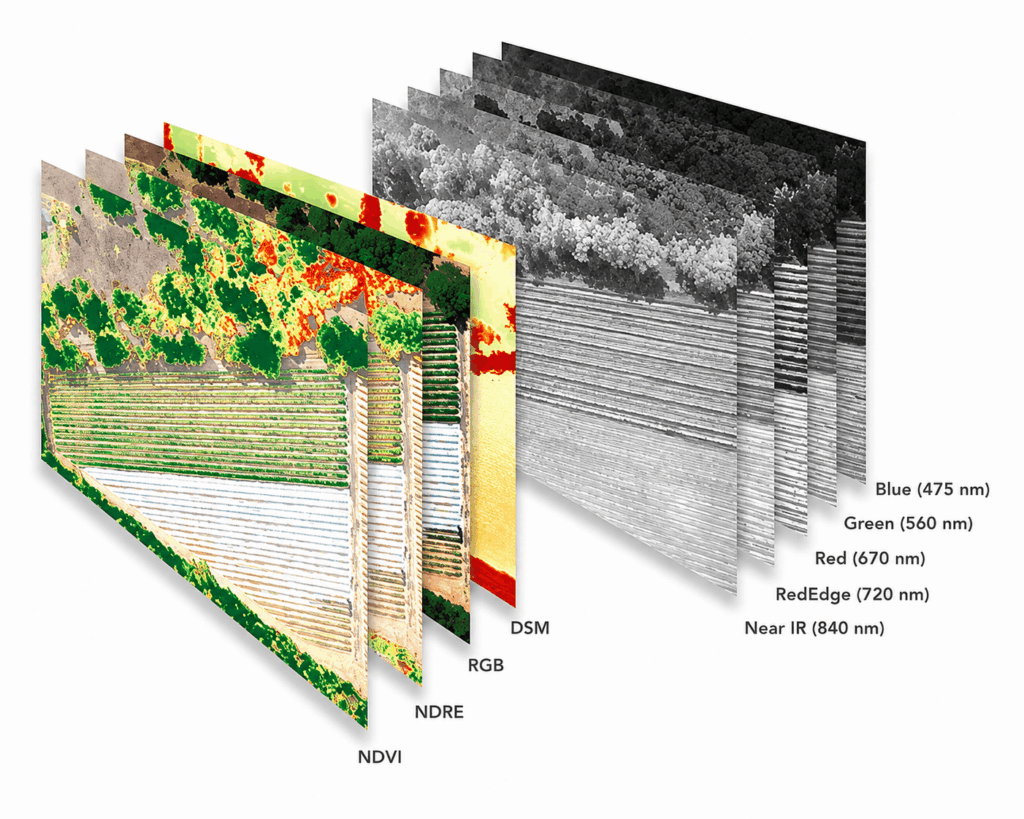
The defining feature of the RedEdge-MX is its selection of spectral bands. For cameras with serial numbers RX02 and higher, the configuration is:
Spectral band | Center wavelength | Bandwidth | What it can reveal |
Blue | 475 nm | 32 nm | Visible reflectance, water characteristics, vegetation and pigment-related information |
Green | 560 nm | 27 nm | Green vegetation reflectance, canopy characteristics and visible plant differences |
Red | 668 nm | 16 nm | Strong chlorophyll absorption; useful for vegetation indices and plant condition analysis |
Red Edge | 717 nm | 12 nm | Rapid transition from red absorption to high NIR reflectance; sensitive to chlorophyll and vegetation condition |
Near-Infrared (NIR) | 842 nm | 57 nm | Strong vegetation reflectance, canopy structure, biomass-related information and separation of vegetation from many other surfaces |
The value of these five bands becomes particularly clear when looking at vegetation.
A healthy leaf does not reflect all wavelengths equally. Chlorophyll absorbs much of the blue and red light but reflects more green, which is why leaves look green to us.
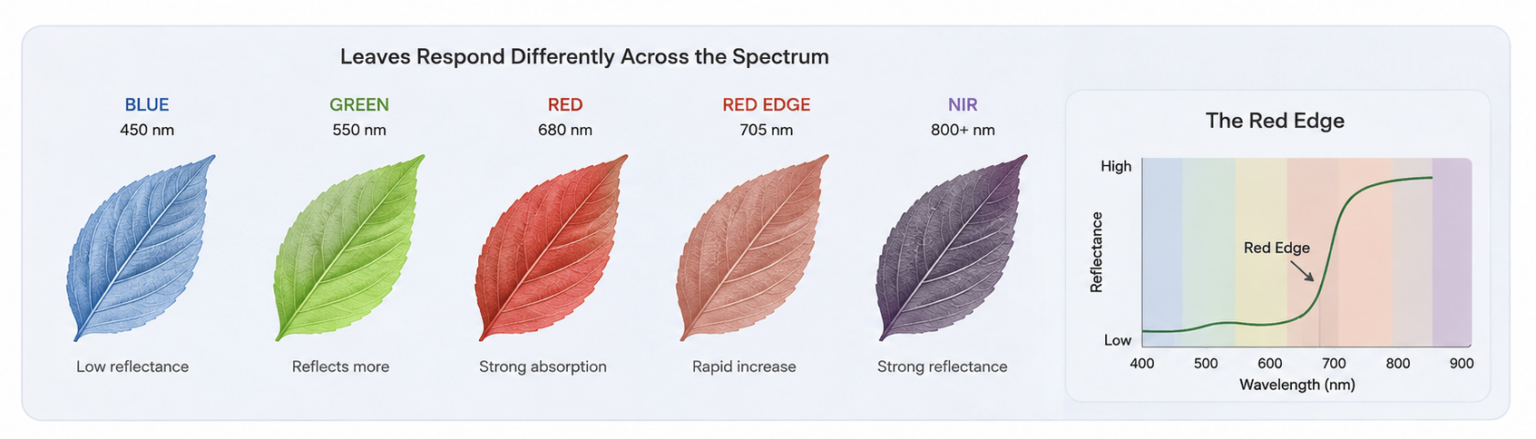
Beyond visible red, the picture changes. Reflectance rises quickly in the red-edge region and becomes much stronger in near-infrared (NIR). Healthy vegetation typically reflects a large amount of NIR light, even though we cannot see it with our eyes.
This gives a multispectral camera information that an RGB camera misses. Two plants may look almost identical in a normal photograph but show noticeably different responses in the red-edge or NIR bands. These differences can help reveal changes in plant health and condition.
One common way to use this information is the Normalized Difference Vegetation Index (NDVI):
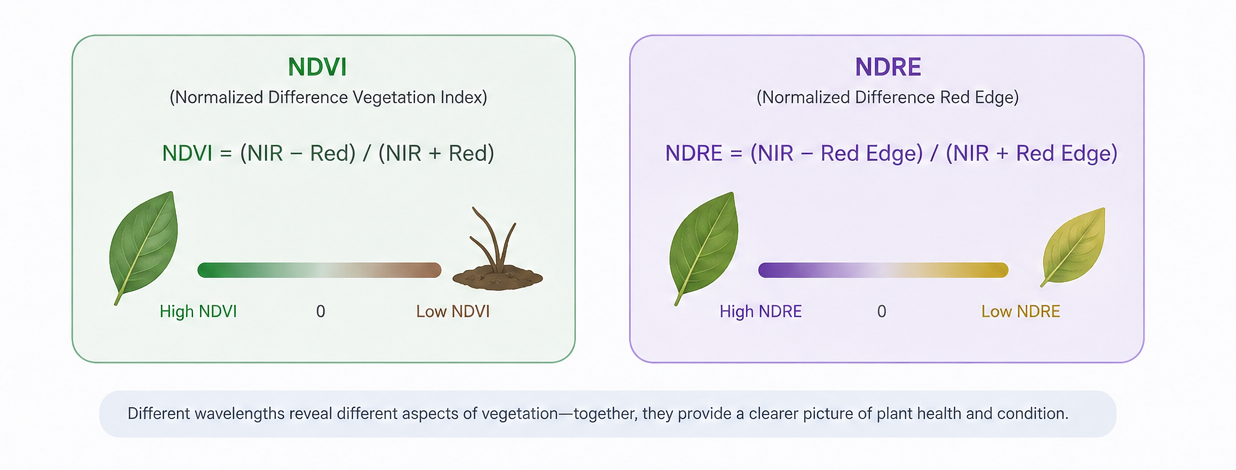
NDVI = (NIR − Red) / (NIR + Red)
Healthy vegetation usually absorbs red light and strongly reflects NIR, resulting in higher NDVI values. Lower values can indicate sparse or stressed vegetation, bare soil, or other non-vegetated surfaces.
RedEdge-MX also captures a dedicated red-edge band, which can be used to calculate the Normalized Difference Red Edge (NDRE):
NDRE = (NIR − Red Edge) / (NIR + Red Edge)
NDRE is particularly useful for detecting differences in chlorophyll and plant condition, especially in dense vegetation where NDVI can become less sensitive.
NDVI and NDRE are only two examples. The five bands can also be used together for vegetation and land-cover classification, or combined with other spatial data for more detailed analysis.
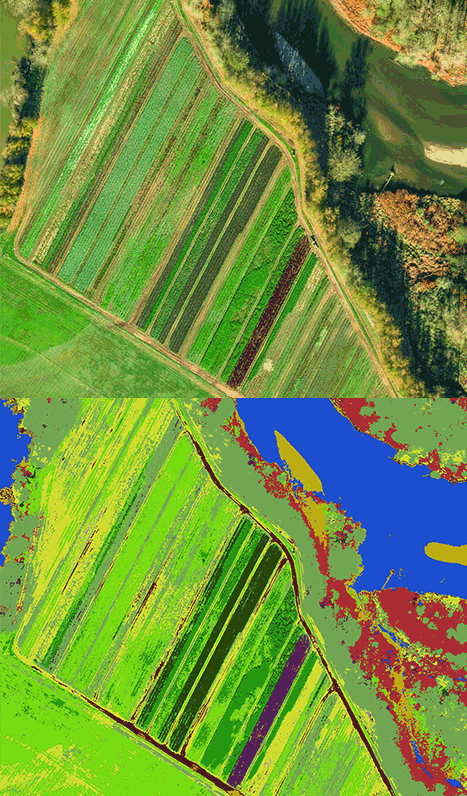
RedEdge-MX data can be processed into vegetation indices and maps that highlight patterns which may be difficult to distinguish in a conventional aerial photograph.
These outputs can reveal:
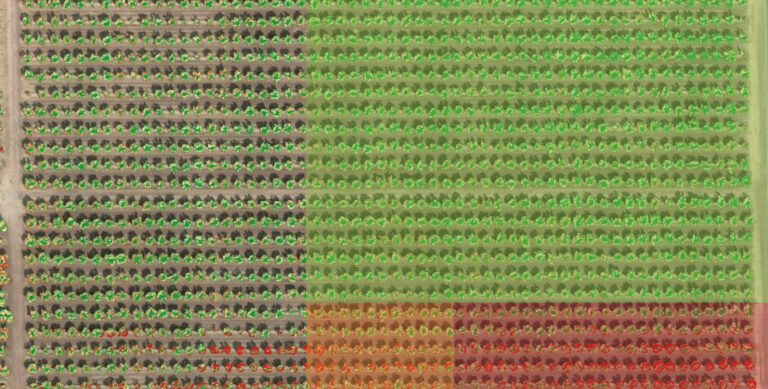
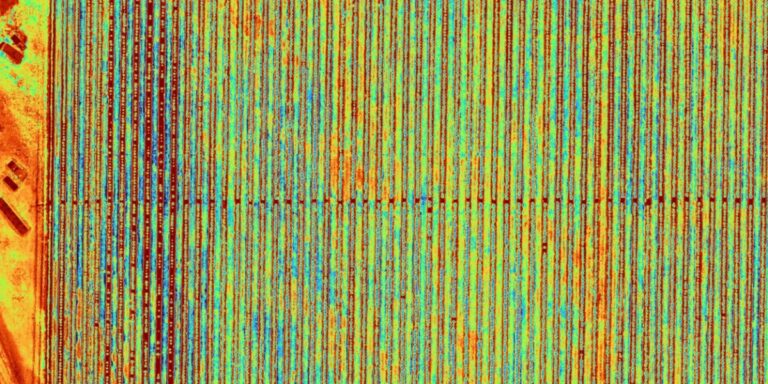
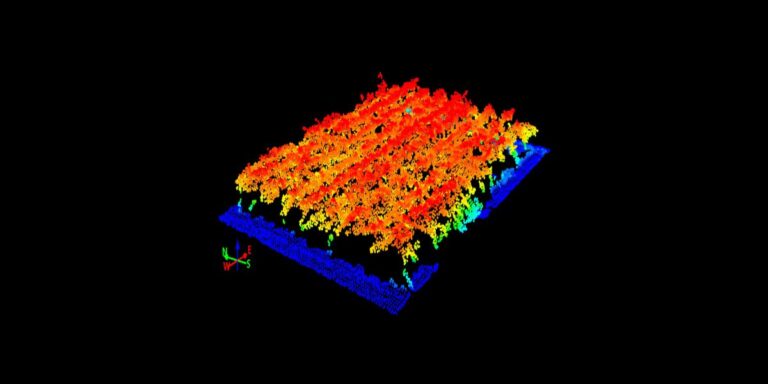
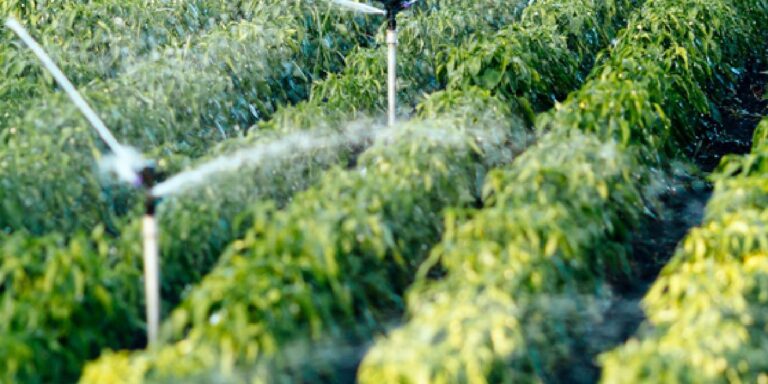
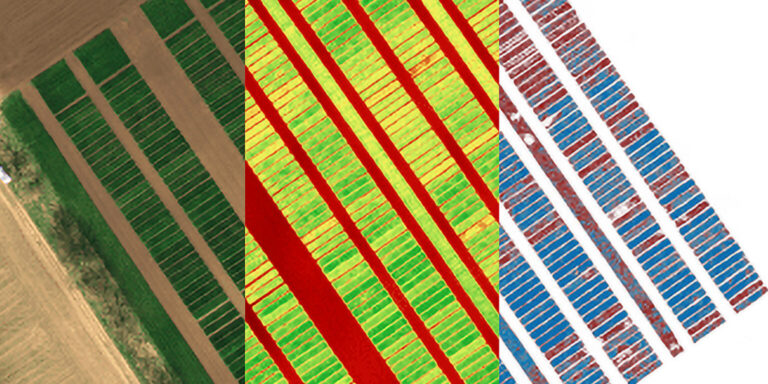
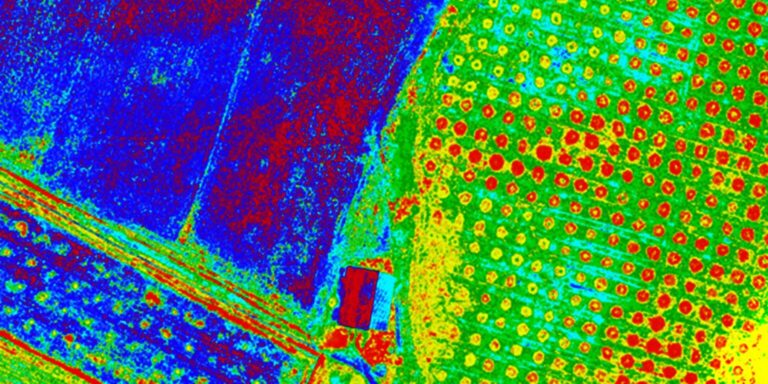
For example, the red-edge band makes NDRE particularly useful for detecting differences in chlorophyll and crop vigor. EagleNXT also highlights an interesting application in irrigation monitoring: excessive watering can produce unusually high NDRE values as vegetation around a leak responds to the additional water, making the affected area stand out from the surrounding field.
Each RedEdge-MX capture produces five separate TIFF images, one for each spectral band. Because the five lenses are physically offset, these images must first be aligned. During mapping missions, overlapping captures can then be processed into georeferenced orthomosaics.
The more important challenge is radiometric calibration. Changes in sunlight during a flight can alter pixel values even when the surface itself has not changed. To account for this, RedEdge-MX works with the Downwelling Light Sensor 2 (DLS 2), mounted on top of the aircraft. It measures incoming light and sun angle during the flight, recording this information in the image metadata so that compatible processing software can correct for changing illumination.
A Calibrated Reflectance Panel provides a second reference. Because its reflectance properties are known, images of the panel can be used to convert sensor measurements into estimates of surface reflectance.
The complete workflow can be summarized as:
Reflectance panel → RedEdge-MX + DLS 2 → band alignment → radiometric calibration → orthomosaic → reflectance maps → spectral analysis
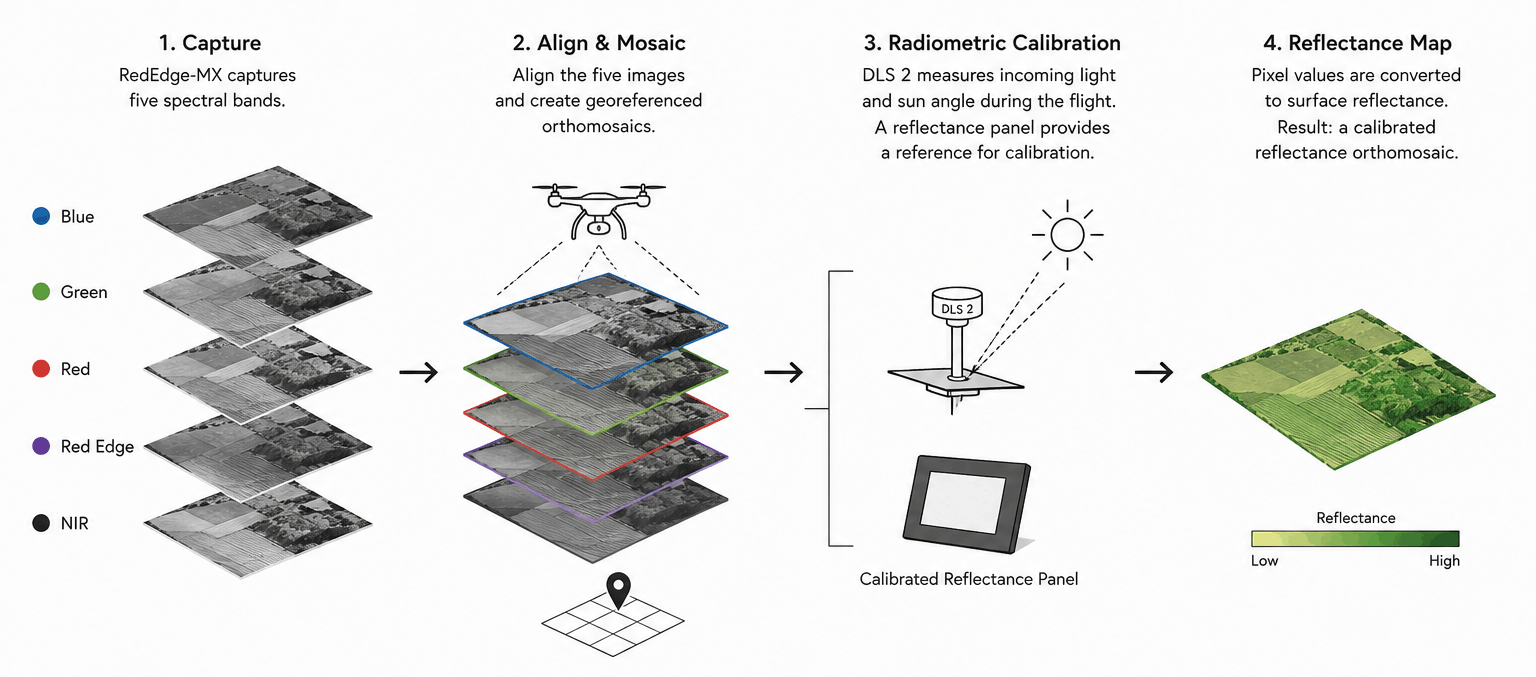
The result is a calibrated dataset that can be compared across different parts of a survey and used to calculate vegetation indices or perform spectral classification.
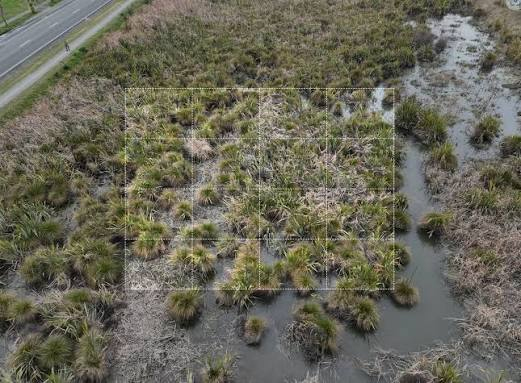
The RedEdge-MX is used across a range of applications where spectral differences can reveal information that is difficult to capture with conventional RGB imagery.
Forestry
Water Monitoring
Wetlands and Environmental Monitoring
Remote Sensing and Research
A good example comes from a 2022 study published in Computers and Electronics in Agriculture. Researchers used RedEdge-MX imagery collected during four seasons to classify 32 urban tree species. By combining spectral information with image texture and digital surface model features, they achieved an overall classification accuracy of 92.16%. With spectral features alone, the accuracy was 72.76%, demonstrating how multispectral measurements can become substantially more informative when combined with spatial and seasonal data.
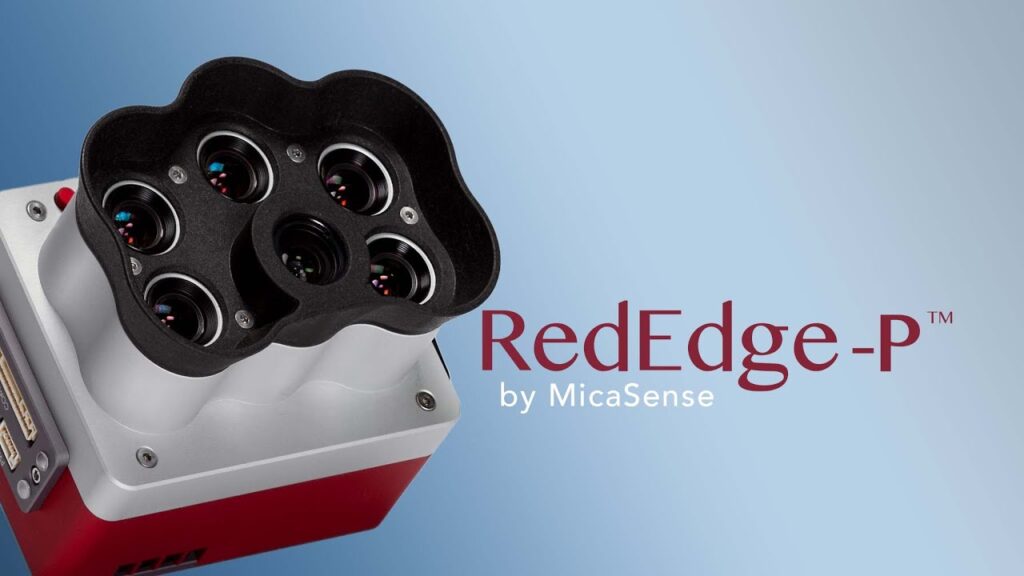
Newer MicaSense cameras retain the multispectral capabilities of the RedEdge-MX while adding higher spatial resolution and, in the case of Altum-PT, thermal imaging.
Camera | Imaging system | Multispectral resolution | GSD at 120 m | Additional imaging | Best suited for |
5 multispectral bands | 1.2 MP per band | ~8 cm/pixel | — | Standard multispectral mapping and vegetation analysis | |
5 multispectral bands + panchromatic | 1.6 MP per spectral band | ~7.7 cm/pixel multispectral; ~3.98 cm/pixel pan-sharpened | 5.1 MP panchromatic | Multispectral mapping where higher spatial detail is important | |
5 multispectral bands + panchromatic + thermal | 3.2 MP per spectral band | ~5.3 cm/pixel multispectral; ~2.49 cm/pixel pan-sharpened | 12.4 MP panchromatic + 320 × 256 thermal | Projects requiring spectral, high-resolution spatial and temperature data |
The RedEdge-P uses its panchromatic channel for pan-sharpening, combining higher spatial detail with the multispectral bands. The Altum-PT adds a thermal sensor, allowing surface temperature to be mapped alongside spectral reflectance.
The RedEdge-MX has also recently returned to production. EagleNXT, the company behind MicaSense, announced an updated version of the camera with modernized interfacing, manufactured at its facility in Allen, Texas. The relaunched MX remains focused on calibrated, repeatable multispectral data for agricultural, environmental, academic, and government applications.
RedEdge-P offers higher spatial resolution through its panchromatic channel, but not every multispectral survey needs that additional detail. For vegetation analysis, environmental monitoring and many research applications, the five dedicated bands of the RedEdge-MX already provide the spectral information required for indices, reflectance analysis and classification.
The MX also remains attractive as a UAV payload. The camera and DLS 2 weigh about 232 g, compared with 315 g for the RedEdge-P, and the MX with DLS 2 consumes around 4 W on average. Its five global-shutter imagers are housed in a rugged metallic enclosure, while the DLS 2 and calibrated reflectance workflow support repeatable measurements under changing field conditions.
Its relatively simple five-band architecture is another practical advantage. There is no additional panchromatic or thermal imaging system to carry and process when the application does not require one. RedEdge-P makes more sense when fine spatial detail is important; RedEdge-MX is a focused alternative when the priority is reliable multispectral data in a compact, field-ready package.
That combination has proved valuable enough for EagleNXT to bring the RedEdge-MX back into production. The relaunched camera retains the established five-band multispectral design and metallic enclosure while adding modernized interfacing. It is now manufactured at EagleNXT’s facility in Allen, Texas, with the company positioning it for agricultural analysis, environmental research and other applications where calibrated, repeatable data matters.
The return of the RedEdge-MX is a useful reminder that a newer or more complex sensor is not automatically the better choice for every project. RedEdge-P offers higher spatial detail, and Altum-PT adds thermal imaging, but many agricultural, environmental, and research applications still depend primarily on accurate, repeatable measurements across a well-chosen set of spectral bands.
That is where the RedEdge-MX remains relevant. It combines five established multispectral bands with a compact, rugged design and a calibration workflow built for field measurements. EagleNXT’s decision to bring the camera back with updated interfacing suggests there is still demand for exactly that combination: a focused multispectral sensor that provides the data researchers and professionals need without adding imaging capabilities they may not use
The MicaSense RedEdge-MX is a multispectral camera designed for drone-based mapping, agriculture, environmental monitoring, and research. It captures five separate spectral bands, including red edge and near-infrared wavelengths that conventional RGB cameras cannot record.
The RedEdge-MX captures five bands: Blue (475 nm), Green (560 nm), Red (668 nm), Red Edge (717 nm), and Near-Infrared (842 nm). This combination supports vegetation indices, reflectance analysis, and multispectral classification.
RedEdge-MX uses five 1.2 MP sensors, each producing 1280 × 960 images. Its ground sample distance is approximately 8 cm/pixel per band at an altitude of 120 meters and about 4 cm/pixel at 60 meters.
Yes. Its Red and NIR bands can be used to calculate NDVI, while the dedicated Red Edge and NIR bands support NDRE. These indices are commonly used to examine vegetation vigor, chlorophyll-related differences, and plant stress.
Both cameras capture five multispectral bands, but RedEdge-P adds a high-resolution panchromatic sensor that enables pan-sharpened imagery with greater spatial detail. RedEdge-MX offers a simpler and lighter five-band system for applications where high-resolution panchromatic data is not required.
Yes. After previously being discontinued, the RedEdge-MX has been returned to production by EagleNXT in an updated version. The relaunched camera retains its five-band multispectral design and rugged metallic enclosure while adding modernized interfacing.