As enterprise drone programs mature, attention is increasingly shifting beyond the aircraft itself. Modern drones can carry advanced payloads, fly longer missions, and perform automated tasks with limited operator involvement. However, their effectiveness still depends on one essential requirement: maintaining a reliable communication link throughout the operation.
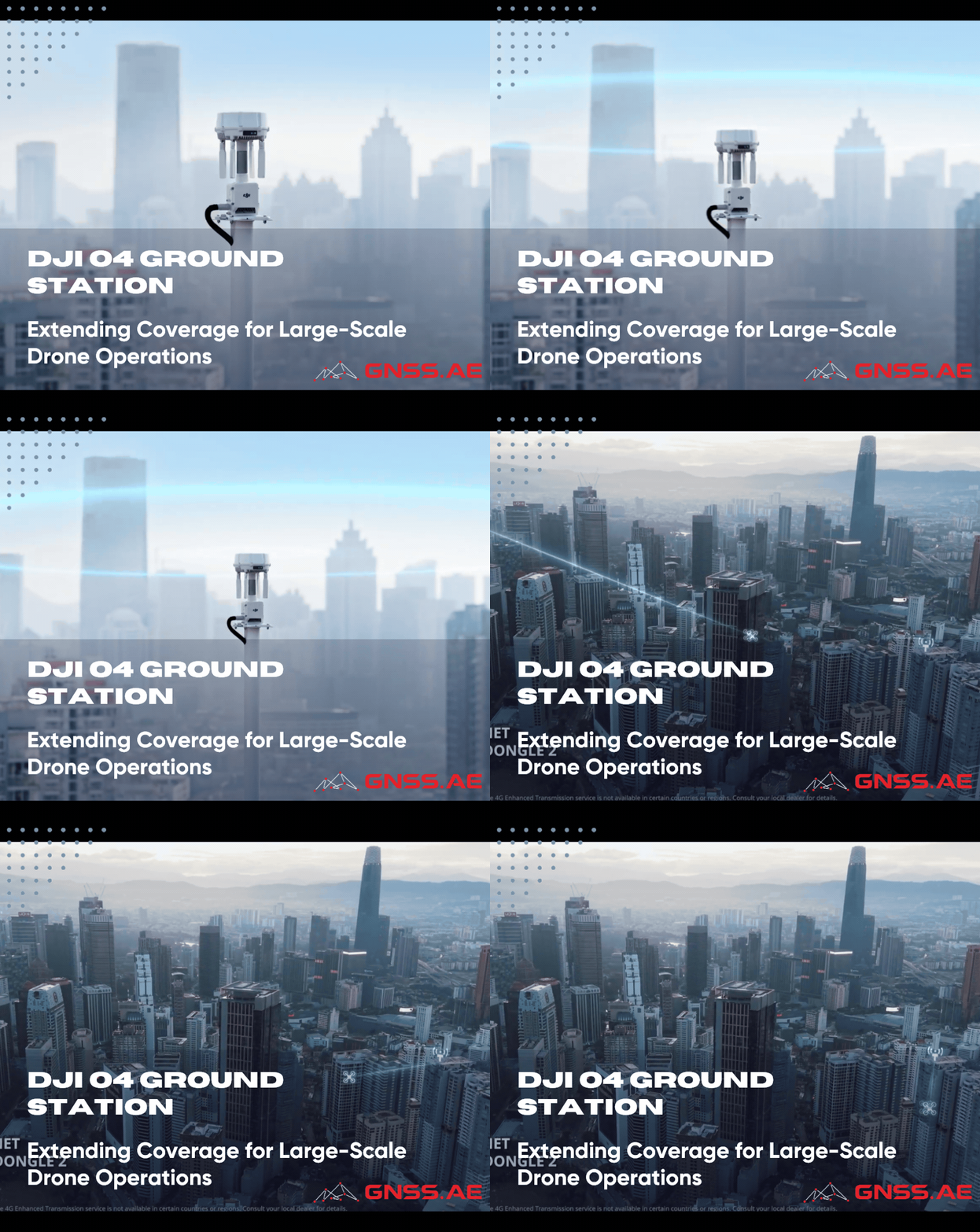
To help address these challenges, DJI has introduced the O4 Ground Station, a communications platform designed for large-scale drone operations. Working alongside DJI Dock 3 and compatible aircraft, the system combines O4 transmission technology, cloud connectivity, relay capabilities, and a rugged outdoor design to support reliable communications across complex operating environments.
In this article, we look at the key capabilities of the new platform and the workflows it is designed to support.
Unlike portable communication equipment typically deployed with the operator, the DJI O4 Ground Station is intended to function as a fixed infrastructure component within a drone operation.
Rather than relying solely on the location of a pilot or drone dock, organizations can position the ground station where it provides the most effective coverage for the mission area.
The system integrates a high-performance RF unit, a multi-antenna transmission array, RTK positioning, and support for both cloud-connected and offline communication architectures. Depending on operational requirements, it can function either as a network-connected gateway for centralized drone management or as a relay station that extends communication coverage into areas where direct links would otherwise be difficult to maintain.
The O4 Ground Station is built around a high-power RF transmission system designed for environments where maintaining a stable communication link can be challenging.
Industrial facilities, transportation infrastructure, and dense urban areas often contain significant sources of radio-frequency interference. To improve communication reliability in these conditions, DJI has optimized the system for stronger signal reception and more effective interference resistance, helping maintain connectivity when electromagnetic conditions are less predictable.
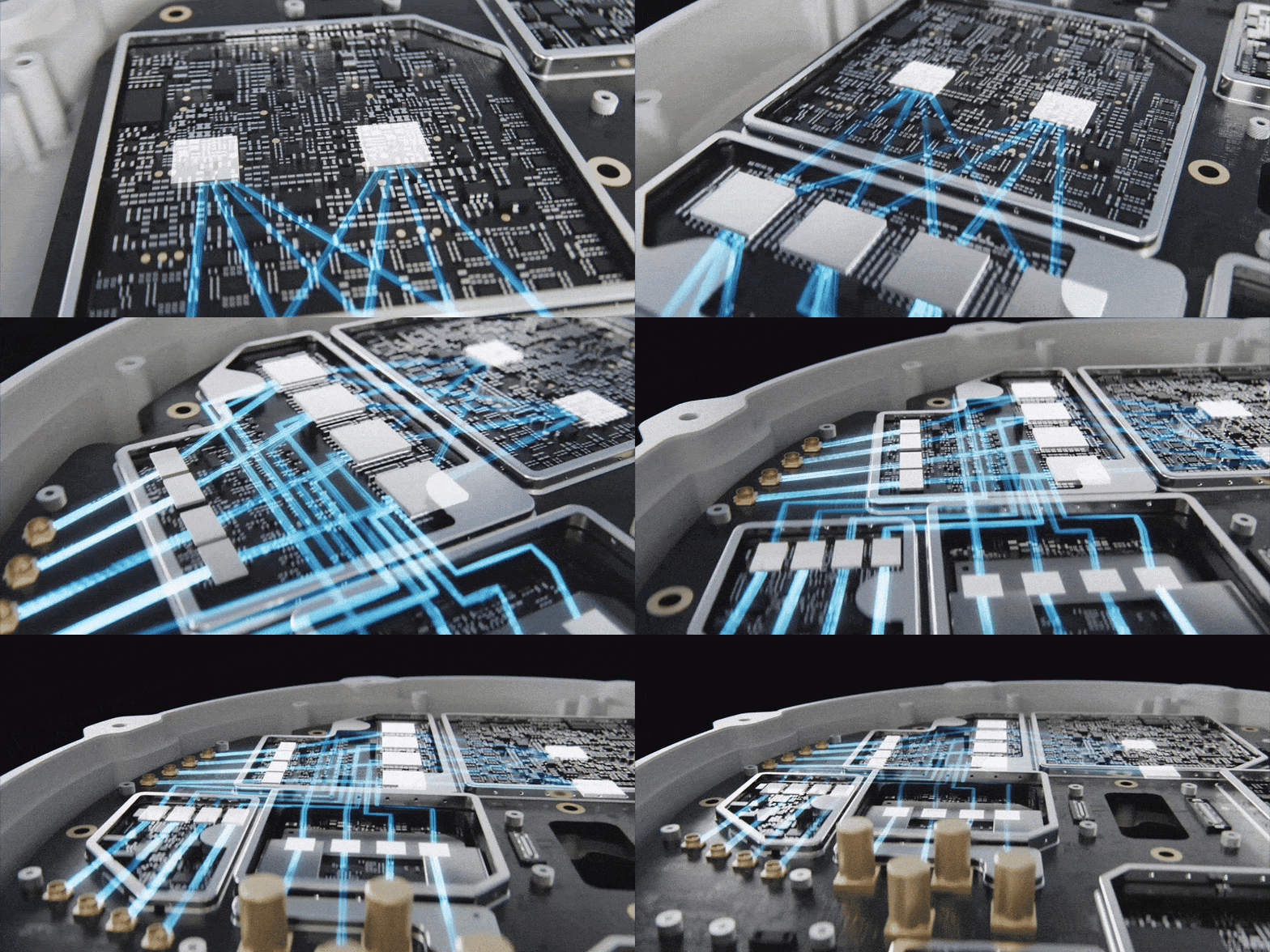
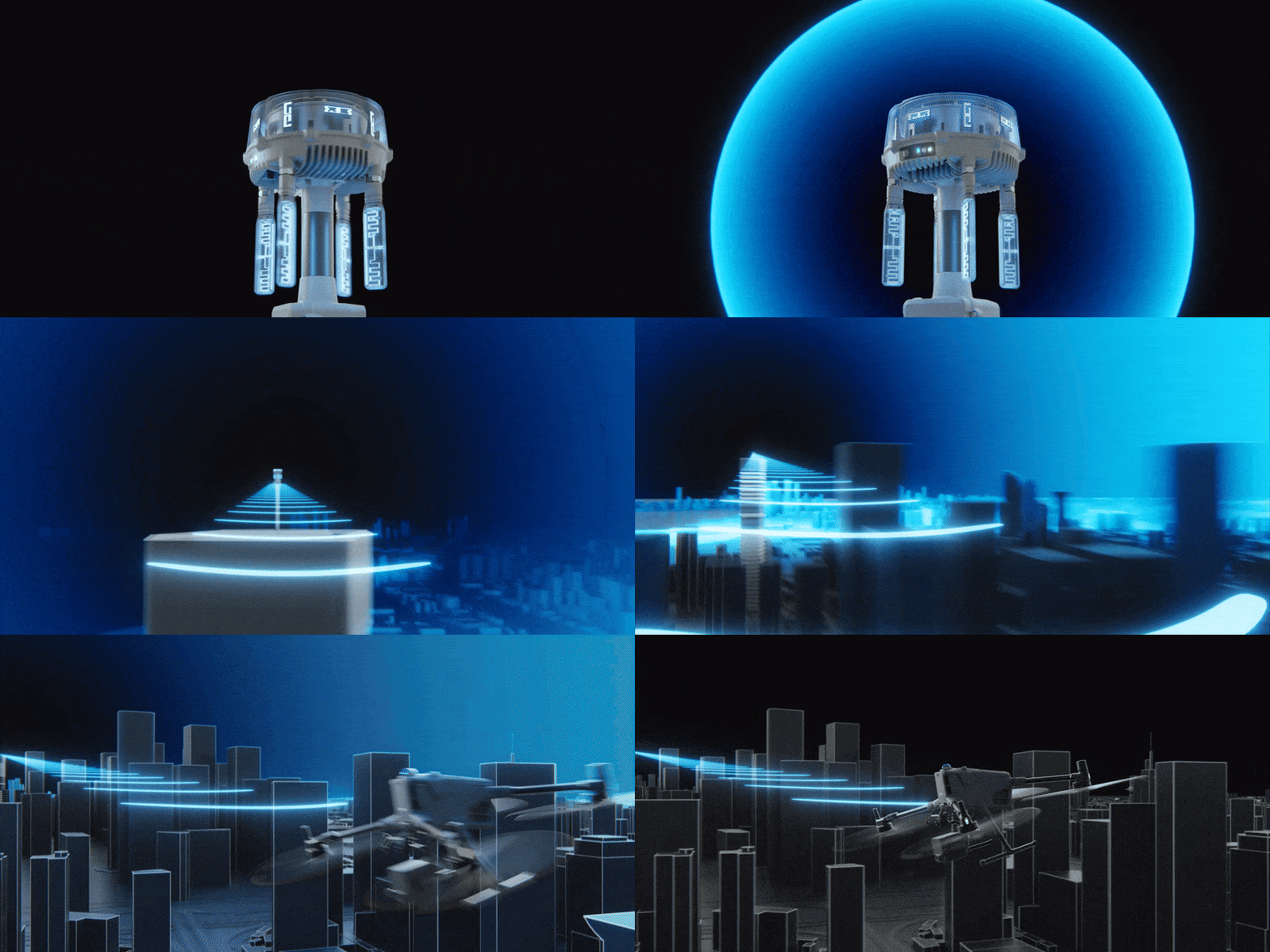
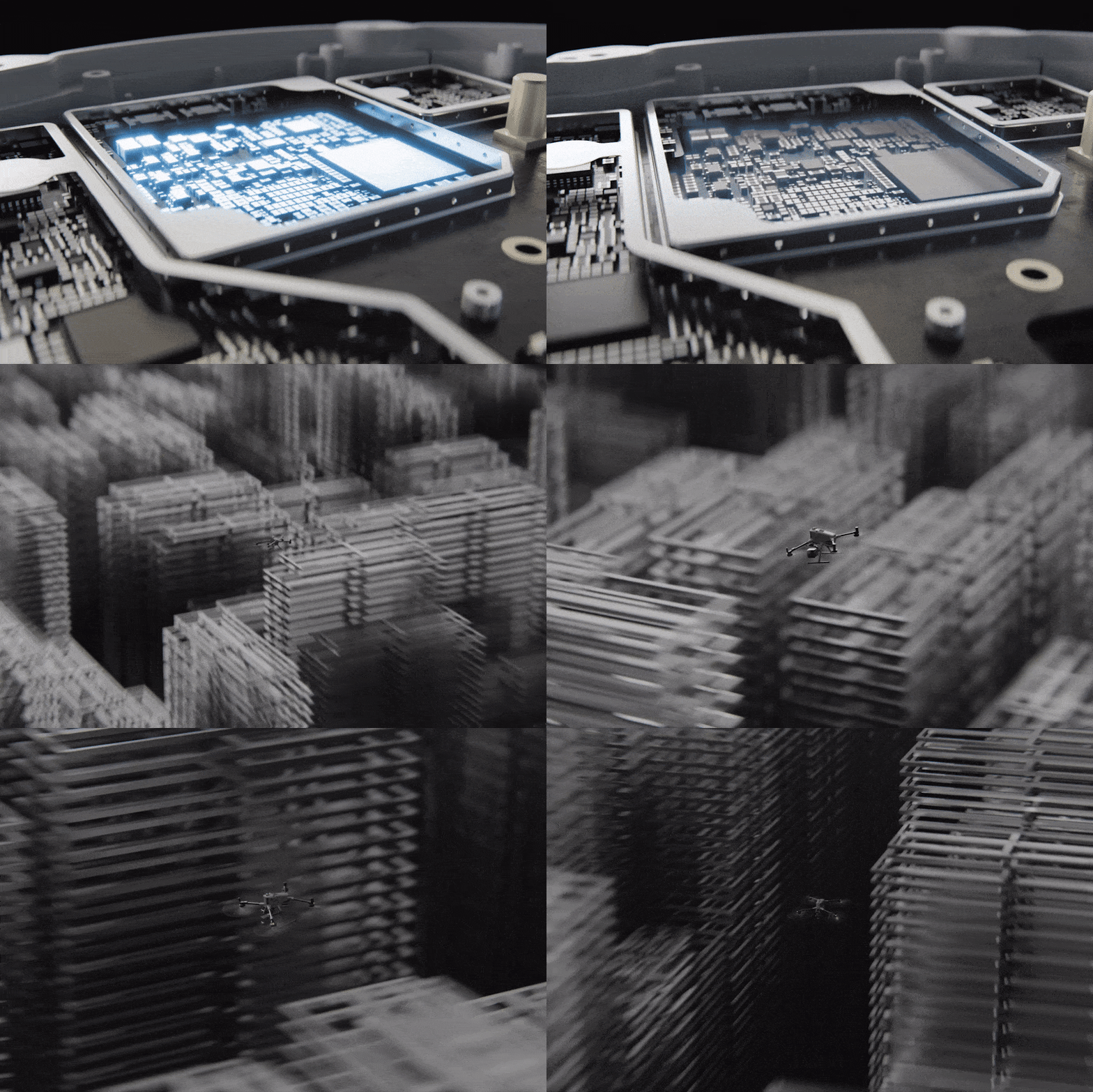
The transmission system incorporates 12 antennas with both horizontal and vertical polarization.
Instead of concentrating coverage in a single direction, the antenna array is designed to provide high-gain omnidirectional performance across the operating area. As the aircraft changes position or orientation, the system continuously evaluates available signal paths and maintains the strongest connection possible.
This architecture is intended to reduce communication disruptions during complex missions where the aircraft may frequently change direction or operate around obstacles.
Radio frequency congestion remains one of the most common challenges for enterprise drone operations.
To reduce the impact of interference, DJI O4 Ground Station automatically switches between multiple transmission bands, including sub-2G, 2.4 GHz, 5.2 GHz, and 5.8 GHz frequencies, selecting the most suitable option as conditions change.
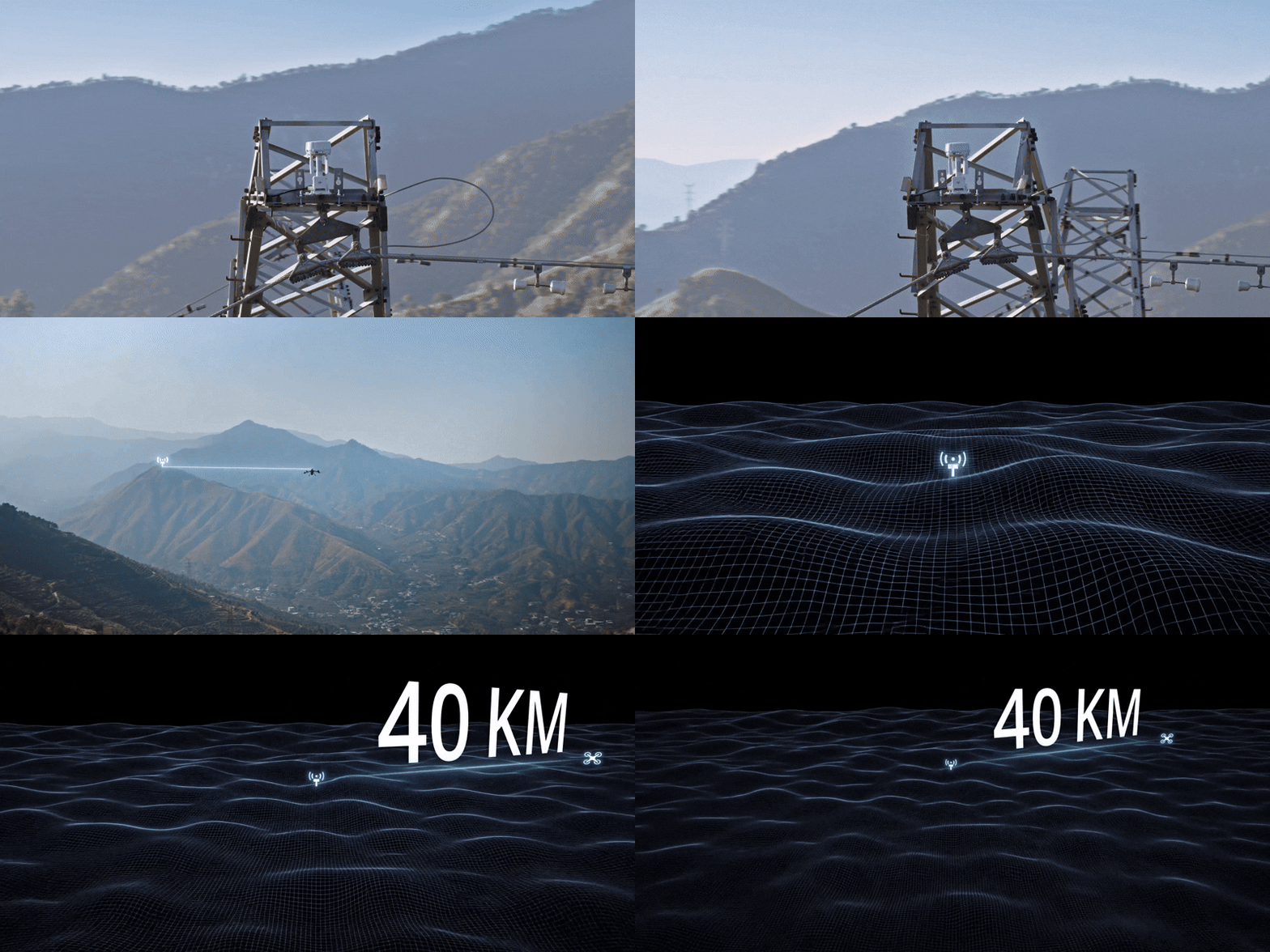
This dynamic approach helps maintain stable video transmission and telemetry links without requiring operator intervention. When paired with DJI Matrice 400, the system supports transmission distances of up to 40 km under suitable operating conditions.

The station also incorporates a high-gain RTK module capable of tracking 19 frequencies across five global satellite navigation systems.
In locations where satellite visibility may be affected by terrain, vegetation, or nearby structures, access to multiple constellations can improve positioning availability and reduce the likelihood of signal interruptions during operation.
One of the primary deployment scenarios for O4 Ground Station is Gateway Mode, which connects the communication infrastructure directly to DJI FlightHub 2.
Using Ethernet connectivity or DJI Cellular Dongle 2, the station delivers low-latency, high-bandwidth communication between aircraft and the management platform. This architecture removes many of the coverage limitations traditionally associated with dock-based deployments and can extend operational coverage to distances of up to 30 km.
Communication coverage is not always uniform across a site. Buildings, terrain features, and industrial infrastructure can create unexpected weak zones that are difficult to predict before deployment.
To address this, FlightHub 2 can generate a Signal Map using data collected during previous flights. The map highlights areas where signal quality may be reduced, allowing operators to identify communication gaps and optimize future ground station placement.
Gateway Mode also enables integration with the FlightHub 2 Virtual Cockpit.
Through this interface, operators can remotely monitor flights and take manual control of the aircraft when required. This capability provides additional flexibility during complex inspections, incident response scenarios, or missions where conditions change unexpectedly after launch.
Not every operation takes place within reliable network coverage.
Utility inspections, environmental surveys, mining projects, and emergency response missions frequently occur in locations where cellular infrastructure is unavailable or where terrain obstructs direct communication paths.
For these situations, O4 Ground Station supports Relay Mode.
By installing the station at an elevated location, operators can overcome obstacles such as valleys, hills, dense urban development, or industrial structures that would otherwise block communication.
This approach extends video transmission and control links into areas that are difficult to reach using conventional deployment methods.
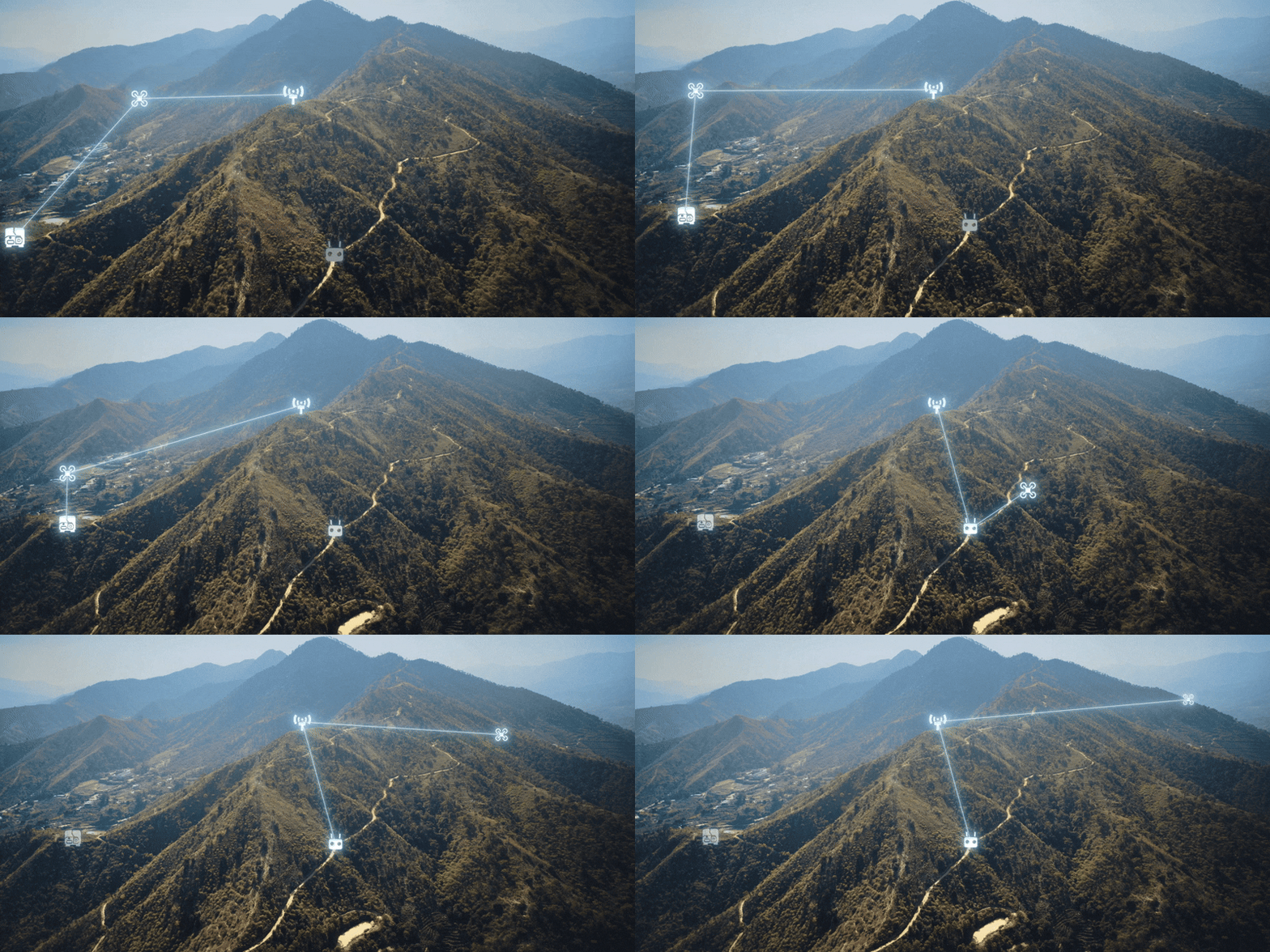
Relay Mode also supports remote connection and switching between multiple compatible DJI devices operating within range.
Remote controllers and DJI Dock installations can scan for and connect to the station as required, allowing a single communication node to support multiple aircraft sequentially.
Unlike portable field equipment, O4 Ground Station is intended for long-term outdoor installation.
The system carries an IP67 protection rating and is designed to operate in temperatures ranging from -40°C to 55°C. These specifications allow deployment in demanding environments including industrial facilities, remote infrastructure corridors, mountainous regions, and coastal locations.
Because communication infrastructure is often installed at elevated positions, DJI has incorporated dedicated lightning protection components and grounding measures that comply with EN/IEC 61643-21 Category C requirements.
This helps reduce the risk of damage when the station is deployed on towers, rooftops, or other exposed locations.
To minimize service requirements, the system uses passive fanless cooling and incorporates self-recovery functionality.
Following power interruptions or certain software anomalies, the station can automatically restore operation without requiring on-site intervention. By eliminating moving cooling components and reducing maintenance demands, organizations can lower operational costs while improving system availability.
For remote installations, power consumption can be as important as communication performance.
In Gateway Mode, the station enters a low-power standby state when no aircraft are connected, reducing consumption to approximately 7 watts. It can also be integrated with DJI Power solutions or third-party solar systems, making it suitable for off-grid deployments where conventional power infrastructure is unavailable.
Many organizations require drone infrastructure to operate alongside existing monitoring and security systems.
O4 Ground Station supports integration with standard IP cameras using ONVIF and GB/T 28181 protocols, allowing operators to combine aerial and ground-based monitoring within a single FlightHub 2 interface. Connected cameras can stream live video, generate alerts, and support remote PTZ control.
For developers and system integrators, support for MQTT-based ESDK 2.0 and Cloud API enables the creation of custom workflows and third-party integrations. The platform can also connect to external Remote ID and ADS-B receivers, improving awareness of nearby air traffic and supporting more advanced airspace management strategies.
Relay Mode
The introduction of DJI O4 Ground Station reflects a broader shift in enterprise drone operations. As organizations move toward larger fleets, remote management, and autonomous workflows, communication infrastructure is becoming just as important as the aircraft themselves.
By combining long-range transmission, cloud connectivity, relay functionality, rugged outdoor deployment, and integration with existing operational systems, DJI O4 Ground Station provides a foundation for more scalable drone operations. Whether supporting a DJI Dock 3 network, extending coverage into challenging terrain, or enabling continuous monitoring of remote assets, the system is designed to help keep aircraft connected when communication becomes the critical factor in mission success.