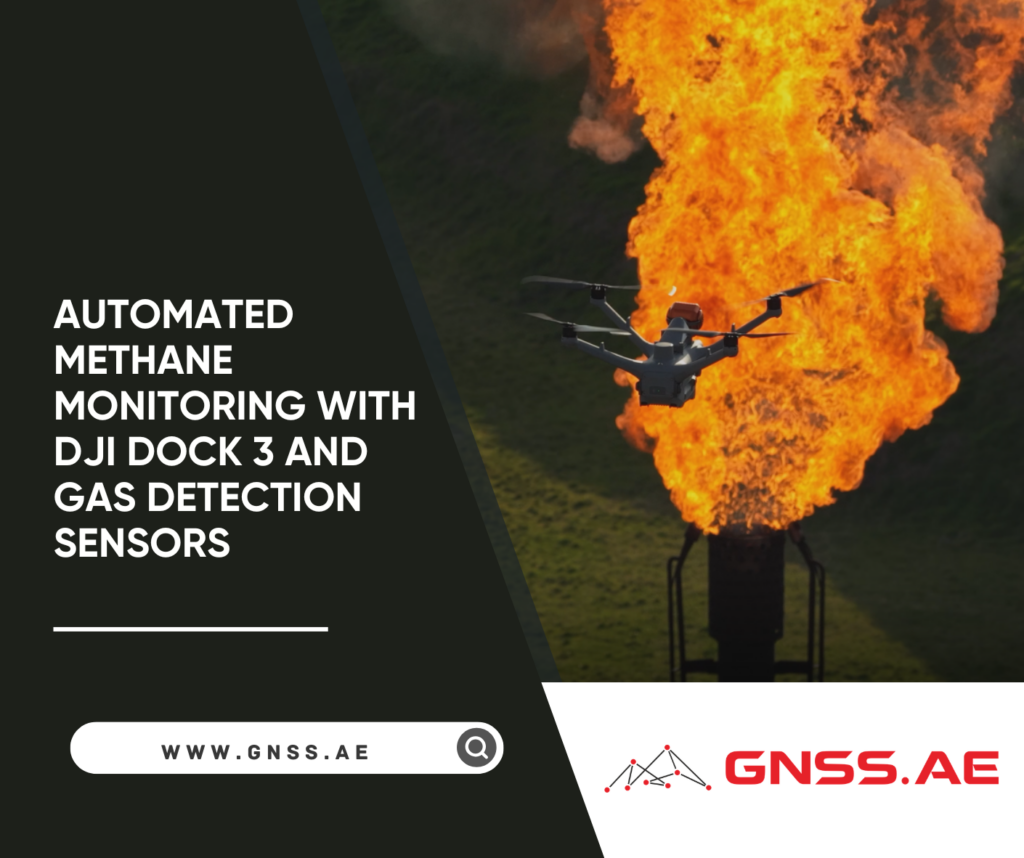
A large oil terminal can contain hundreds of valves, kilometers of pipelines, multiple storage tanks, loading facilities, and countless connection points where methane emissions may occur. Monitoring all of them consistently is a challenge because inspections are still often limited by time, personnel, and access restrictions.
As energy operators continue to expand their infrastructure, the traditional model of periodic manual inspections is becoming increasingly difficult to maintain. Facilities require more frequent monitoring, faster response times, and better visibility into emissions across the entire site.
In this article, we’ll look at how automated methane monitoring works, why autonomous drone deployments are gaining traction in the oil and gas sector, and what advantages they offer compared to conventional inspection workflows.
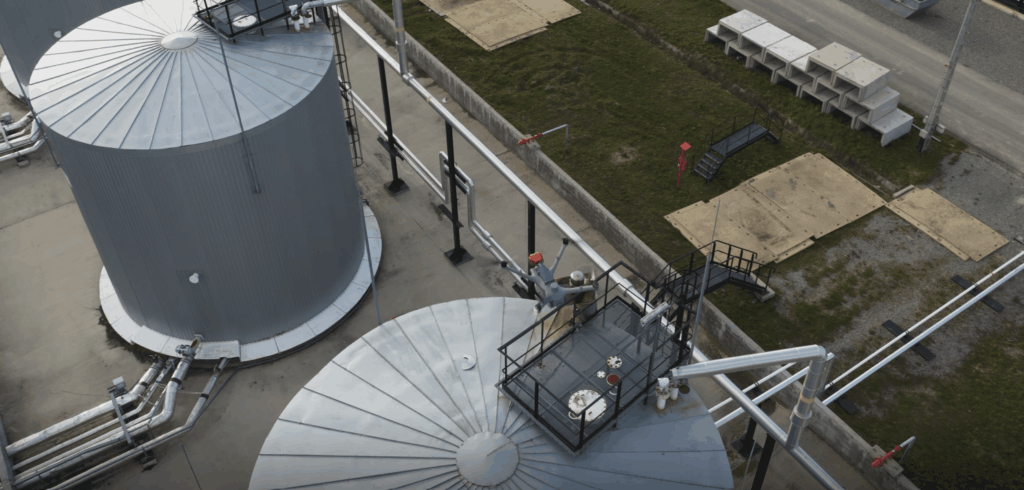
Many oil and gas facilities still depend on ground teams using handheld detectors or inspections conducted from vehicles. These methods remain a core part of methane monitoring, but they come with practical constraints.
Inspecting large sites thoroughly requires time and personnel. Assets located in remote sections of a facility may only be checked during scheduled rounds. Night operations are often limited, while severe weather can postpone surveys altogether. Some inspection routes may also expose personnel to additional risks, including vehicle traffic, hazardous atmospheres, and difficult terrain.
As a result, methane monitoring often provides only a periodic view of site conditions rather than continuous awareness.
If a leak develops shortly after an inspection, it may go unnoticed until the next scheduled visit. Depending on how frequently surveys are performed, that delay could last hours, days, or even weeks.
Autonomous drone systems address this gap by changing how inspections are carried out.
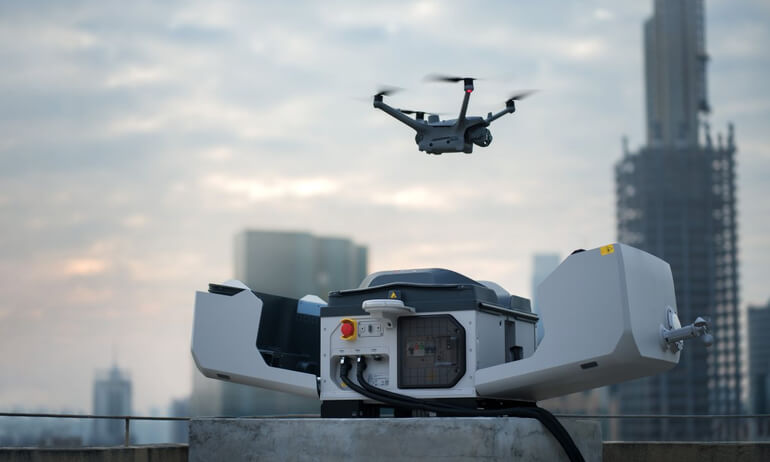
Automated drone docks allow unmanned aircraft to operate as part of the facility’s infrastructure instead of being deployed only when an operator is available.
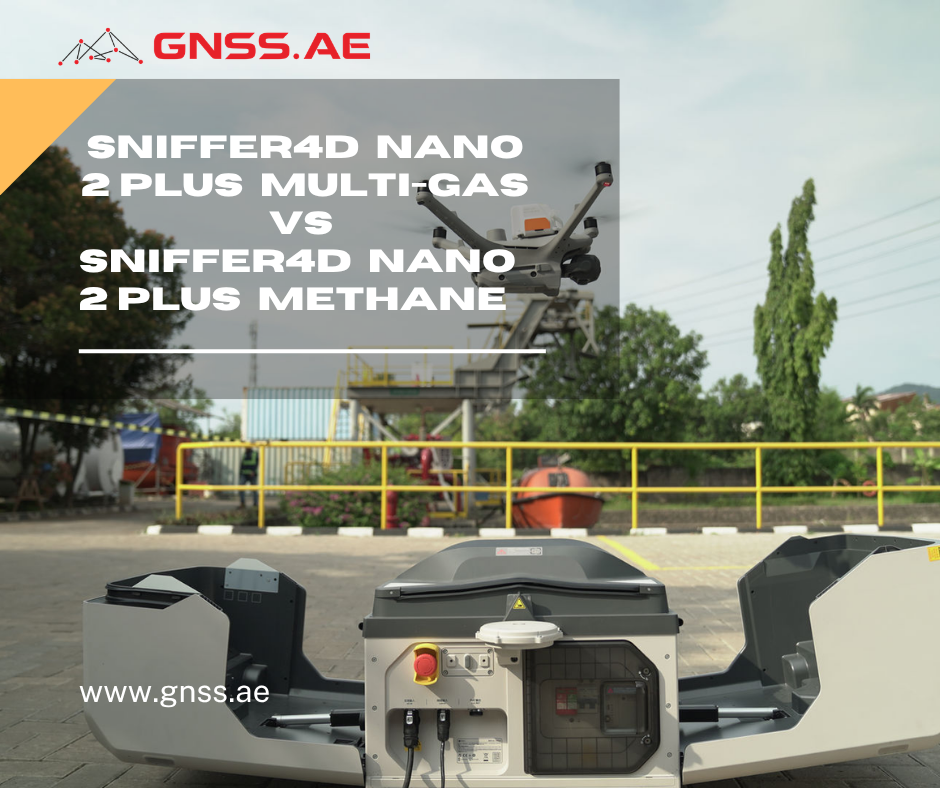
DJI Dock 3 serves as an autonomous base station that manages battery charging, mission scheduling, takeoff and landing, and data transmission. Once installed on-site, it can execute pre-planned inspection missions with minimal operator involvement.
Rather than waiting for personnel to travel to the location and launch a drone, inspections can be performed automatically based on a predefined schedule.
For methane monitoring, this approach offers several operational benefits:
In practice, the dock becomes a fixed monitoring resource capable of providing regular aerial observations of the facility.
Modern methane detection payloads often rely on laser-based remote sensing technologies that can identify gas concentrations without requiring direct contact with the leak source.
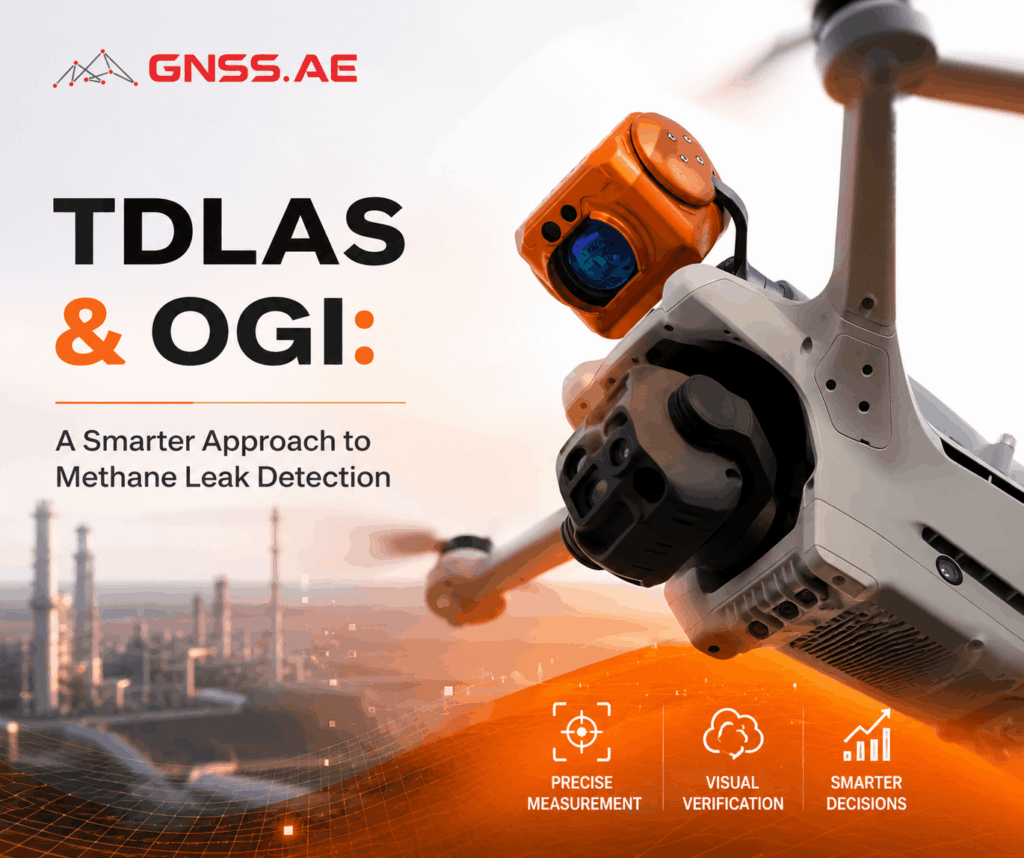
One of the most widely adopted technologies for drone-based remote methane detection is TDLAS (Tunable Diode Laser Absorption Spectroscopy). The sensor emits a laser beam and measures how specific wavelengths are absorbed along the optical path. Because methane absorbs light at characteristic wavelengths, the system can detect its presence and estimate methane concentration-path values (ppm·m) without physically sampling the gas.
This approach offers several operational benefits:
Mounted on a drone, these sensors can survey storage tanks, flare systems, loading areas, pipeline corridors, compressor stations, and facility perimeters during a single flight.
When combined with DJI Dock 3, methane surveys become part of a routine inspection process rather than a task that requires crews to mobilize each time a site needs to be checked.
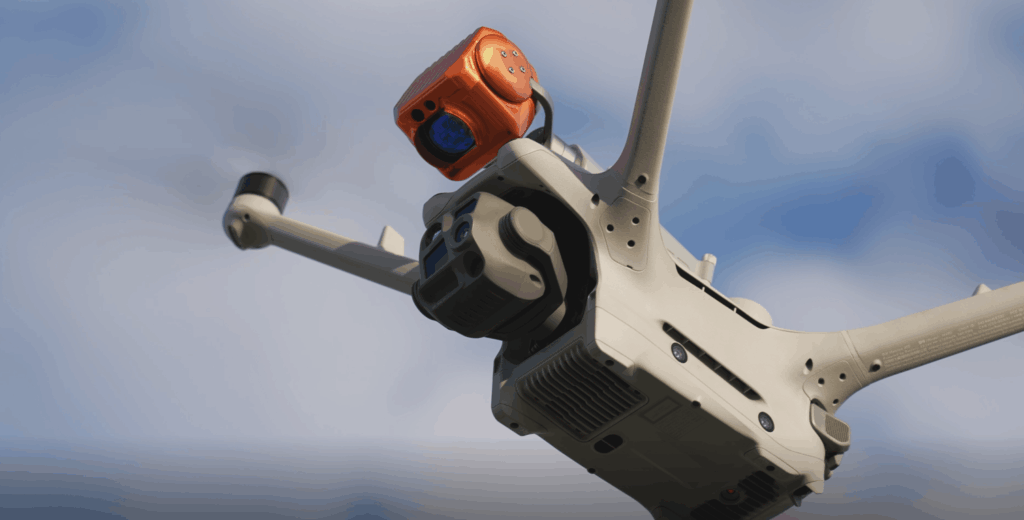
While DJI Dock 3 provides the automation framework, methane detection depends on the sensor carried by the aircraft.
One example is the BL-CH4 MINI 3 Pro, a lightweight methane detection payload developed for drone-based inspections. During flight, it records geo-referenced methane measurements that can be associated with specific assets and locations across the site.
The sensor uses Tunable Diode Laser Absorption Spectroscopy (TDLAS), a technology widely applied for remote gas detection in industrial environments. Instead of requiring direct contact with the gas plume, the system measures methane by detecting how laser energy is absorbed at characteristic wavelengths.
This allows operators to assess infrastructure from a safe distance while identifying low-level methane emissions. Storage tanks, valve assemblies, loading facilities, pipeline corridors, and other critical assets can be inspected without disrupting normal operations.
Combined with automated flight missions, laser-based methane sensing enables facilities to conduct inspections more frequently than traditional approaches while generating datasets collected under consistent routes and inspection procedures.
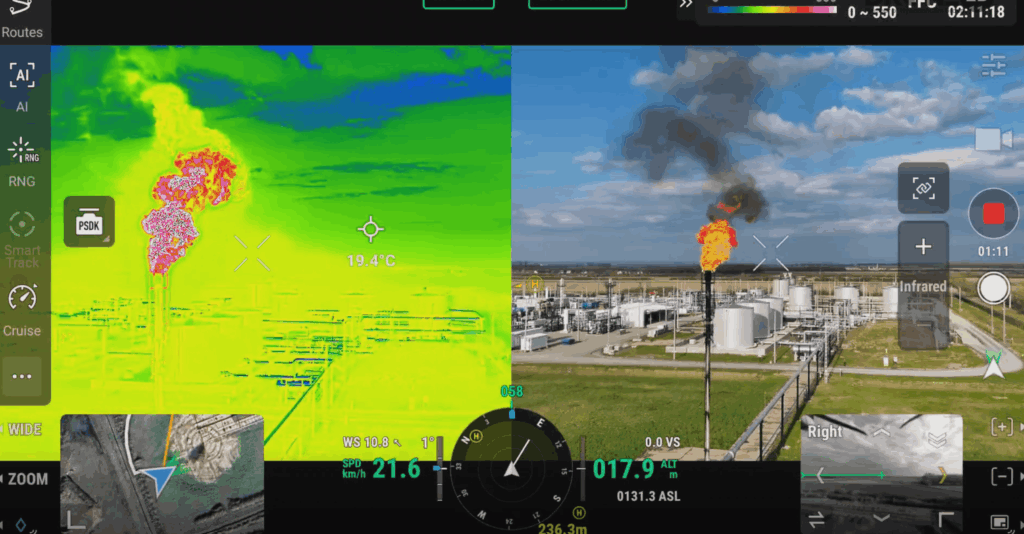
A typical autonomous methane monitoring deployment consists of three core components.
The first is the dock itself, which serves as the operational hub. DJI Dock 3 automatically manages charging, mission execution, communication, and aircraft readiness.
The second component is the drone platform. Depending on the mission profile, the aircraft follows predefined flight routes covering key infrastructure areas.
The third component is the methane sensor payload, which continuously scans for methane signatures during flight and records geo-referenced measurements.
Together, these components enable repeatable inspections across:
Scheduled flights can follow the same predefined routes and inspection logic, producing standardized datasets that can be compared over time. This consistency is difficult to achieve with manual inspection programs.
One of the key benefits of routine monitoring is the ability to establish a methane baseline for an entire facility.
Not every methane detection event indicates a leak. Oil and gas terminals naturally contain background methane, while tank breathing, loading activities, and minor fugitive emissions from valves and fittings can contribute to low methane concentrations.
Without historical data, distinguishing normal operating conditions from emerging issues becomes difficult.
Regular drone inspections help operators understand what normal methane levels look like across the site. Once that baseline is established, they can track trends, investigate anomalies, and identify areas where methane concentrations begin to deviate from expected patterns.
The value of this approach becomes particularly apparent in demanding environments.
A field evaluation conducted at the Valdez Petroleum Terminal in Alaska examined how drone-based methane sensing performs under real operating conditions. The terminal presents several challenges for gas monitoring: sub-zero temperatures, strong coastal winds that can affect flight operations, and infrastructure spread across a large operational area.
The trial used the BL-CH4 400 methane detection system, a TDLAS-based sensor developed for industrial methane monitoring. Although it differs from the BL-CH4 MINI 3 Pro commonly considered for Dock-based deployments, the results illustrate the capabilities of laser-based methane sensing technologies in harsh environments.
During the evaluation, the drone surveyed storage tanks, pipeline corridors, and loading facilities. No significant methane leaks were identified. However, the system consistently detected low-level methane signatures ranging from approximately 30 to 206 ppm·m across different parts of the terminal.
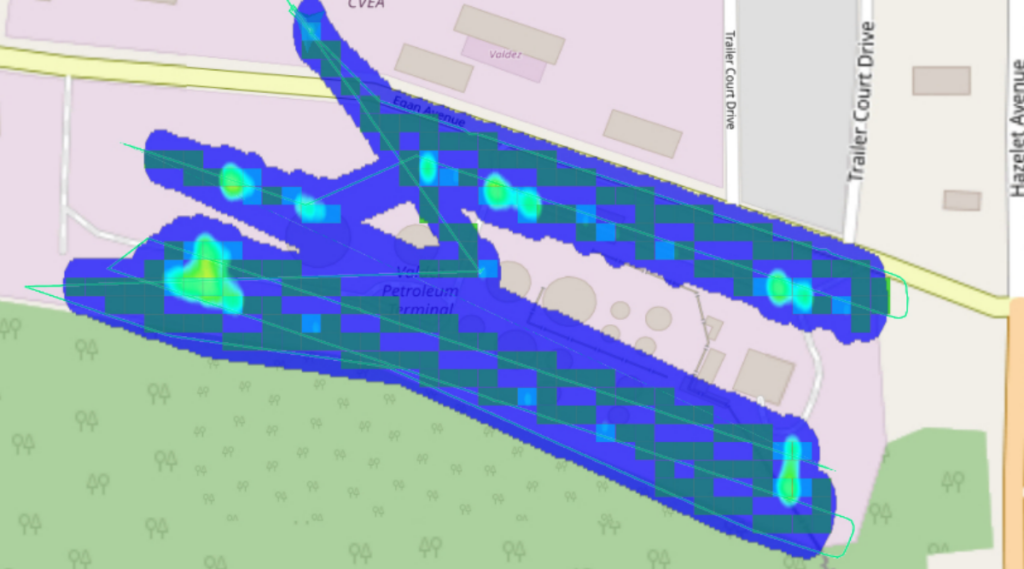
These measurements were not necessarily indicators of equipment failure. Instead, they reflected a combination of background methane, normal operational emissions, and dispersed micro-emissions associated with routine industrial activity.
The importance of the field test lay in its ability to detect and characterize these low methane concentrations under challenging environmental conditions. For operators, this level of sensitivity provides a basis for long-term trend analysis and may support earlier identification of abnormal changes requiring further investigation.
Methane reporting requirements continue to evolve across many jurisdictions, increasing the importance of reliable inspection documentation.
Autonomous drone missions automatically generate digital records that can be retained and reviewed over time, including:
Because missions follow predefined routes and procedures, the resulting records are more consistent and easier to review than documentation compiled through manual inspections. This can simplify internal reporting processes and provide supporting evidence for emissions management and compliance activities.
Across the oil and gas sector, operators are increasingly looking for ways to perform inspections more frequently without placing additional demands on field personnel.
Methane monitoring is gradually shifting away from isolated surveys conducted at fixed intervals toward programs built around regular data collection and historical comparison.
Systems that combine DJI Dock 3 with airborne methane sensors support this operating model by enabling scheduled inspections that can be repeated under the same procedures over long periods of time.
The value of these systems extends beyond the identification of individual leaks. Repeated measurements collected across the same assets allow operators to establish baseline conditions, monitor changes, and prioritize follow-up investigations when unusual patterns emerge.
For large terminals, storage facilities, and pipeline networks, autonomous methane monitoring is no longer limited to pilot projects. It is increasingly being evaluated and deployed by operators seeking to expand inspection coverage for expanding inspection coverage and improving situational awareness across complex sites.