Construction projects generate an enormous amount of information. Drone surveys, laser scans, BIM models, schedules, field reports, photographs, sensor readings, and contractor updates all provide valuable insights into project status. Yet the challenge is rarely the availability of data. Instead, critical information is often spread across multiple disconnected systems, making it difficult for project teams to maintain an accurate, real-time understanding of site conditions.
Traditional inspections only partially solve this issue. Site visits offer valuable first-hand observations, but they require travel, consume engineering resources, and frequently reveal issues only after they have begun affecting project schedules, costs, or quality.
Virtual inspections provide a more scalable and data-driven alternative. By combining reality capture technologies, digital twins, and increasingly, artificial intelligence, construction teams can monitor progress remotely, compare actual conditions against design intent, and make faster decisions based on continuously updated project data.
In this article, we explore how virtual inspections work, how AI and digital twins improve construction progress monitoring, and how platforms such as Bentley iTwin and PIX4Dcloud support these workflows.
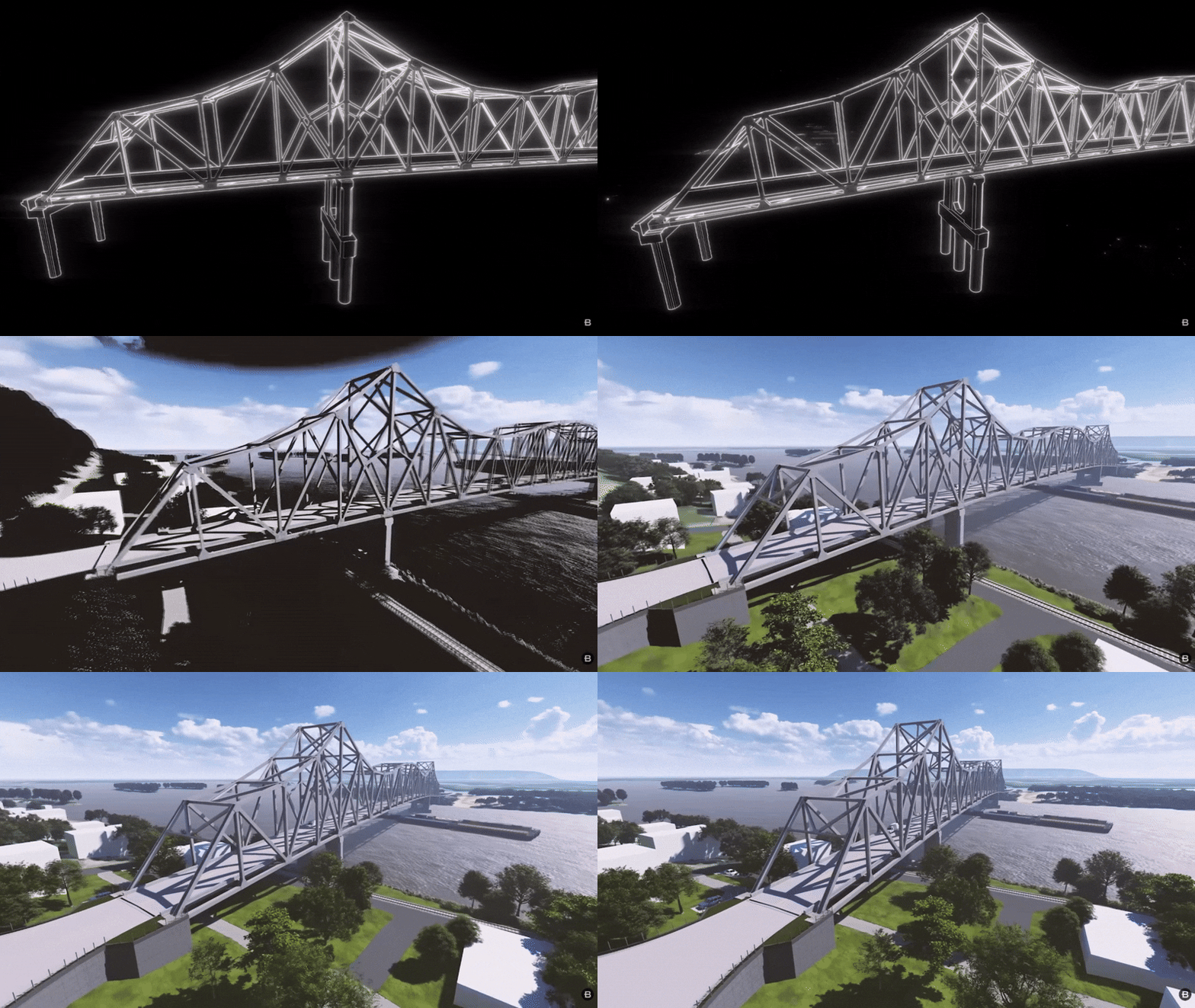
A virtual inspection is the process of assessing construction progress without being physically present on site. Instead of relying solely on field visits, project teams use digital representations of the construction environment generated from reality capture data.
These representations may include:
When these datasets are combined, engineers, project managers, owners, and contractors can review site conditions from anywhere and assess progress with a level of detail that would often be impossible during a traditional walk-through.
While early virtual inspection workflows focused primarily on remote access to reality capture data, artificial intelligence is adding a new layer of automation and analysis.
Instead of requiring engineers to manually compare survey results, photographs, models, and schedules, AI can automate much of this analysis.
One of the most widely adopted applications of AI is automated progress tracking. AI systems can compare drone-derived reality models against BIM designs and construction schedules to determine:
This allows project teams to identify delays early, often before they become major scheduling issues.
AI is also improving the efficiency of quality control and inspection workflows. By analyzing imagery, point clouds, and inspection records, AI-assisted systems can help detect:
"You can have an AI agent connect into that common data environment and run quality validations at a much faster pace than humans."
Bentley Systems CTO Julien Moutte
This approach allows teams to identify issues earlier, reducing the likelihood that small problems develop into costly rework later in the project.
Perhaps the most significant advantage of AI is its ability to support predictive decision-making.
Traditionally, construction management has been largely reactive. Teams identify problems after they occur and then develop solutions.
By combining digital twins with AI-driven analysis, organizations can begin identifying patterns, forecasting risks, and anticipating future issues before they impact project delivery.
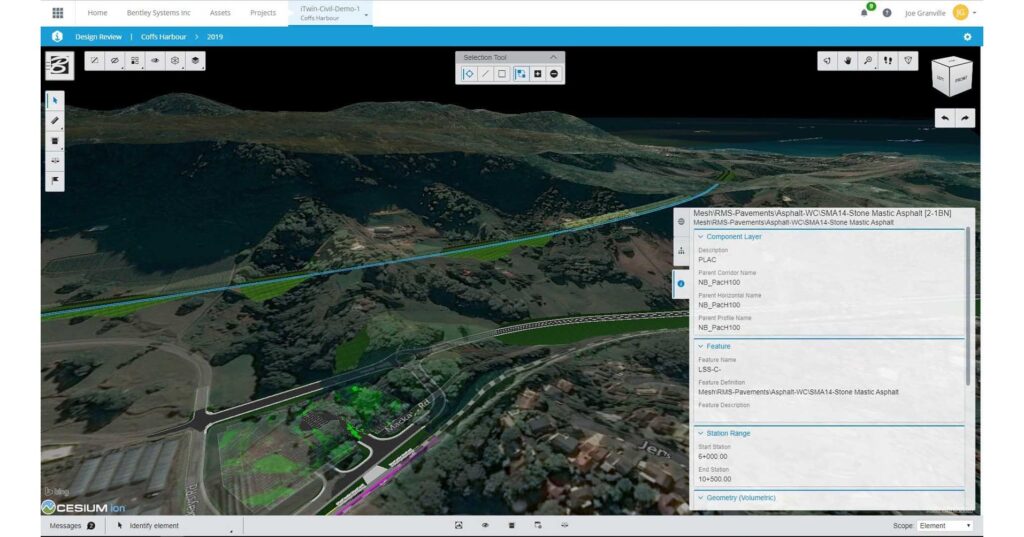
Platforms such as Bentley iTwin provide the digital foundation required to support virtual inspection workflows at scale.
Rather than functioning as a standalone visualization tool, iTwin acts as a digital twin platform that connects engineering information from multiple sources into a continuously updated representation of a project.
A persistent challenge during construction is the fragmentation of information across multiple systems.
Design teams may work in BIM software, survey teams generate drone models, contractors manage schedules in different systems, and operators maintain asset information elsewhere.
Bentley iTwin links these data sources within a single environment, making it easier for project participants to review information, understand relationships between datasets, and assess project status without switching between disconnected applications.
Reality capture data can be integrated directly into the digital twin, including:
Instead of reviewing isolated survey outputs, users can visualize construction progress within the broader context of the project.
Virtual inspections become particularly powerful when teams compare datasets collected over time.
By reviewing successive surveys, project stakeholders can identify:
This continuous comparison provides a far more complete picture than occasional site visits alone.
Bentley is also expanding the use of AI within engineering and project delivery workflows.
According to Julien Moutte, AI agents can automatically review information stored within common data environments and perform quality validations significantly faster than manual workflows.
The objective is not to remove engineers from the process. Instead, AI helps automate repetitive verification tasks while engineers remain responsible for reviewing findings and making final decisions.
As Moutte notes, engineers remain accountable for the work they approve, which is why Bentley focuses on combining AI-generated recommendations with proven engineering analysis tools.
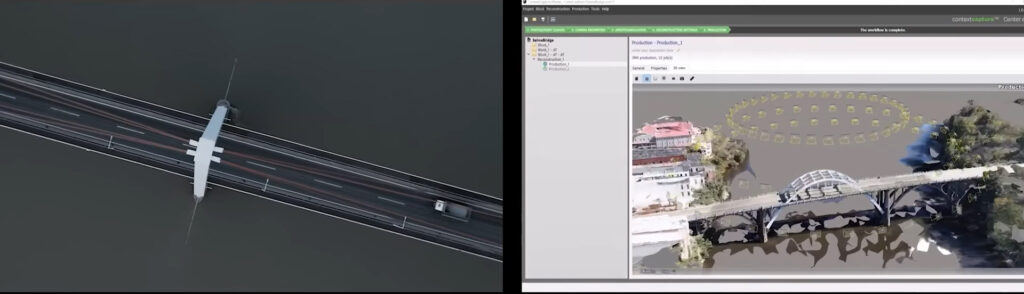
Virtual inspections are also proving effective on complex infrastructure projects.
Collins Engineers partnered with the Minnesota Department of Transportation to modernize inspections of the historic Robert Street Bridge, a 1,429-foot structure spanning the Mississippi River.
By combining digital twins with AI-assisted inspection workflows, the project achieved:
The project demonstrates how detailed digital representations can improve inspection efficiency while also supporting better planning decisions for future rehabilitation work.
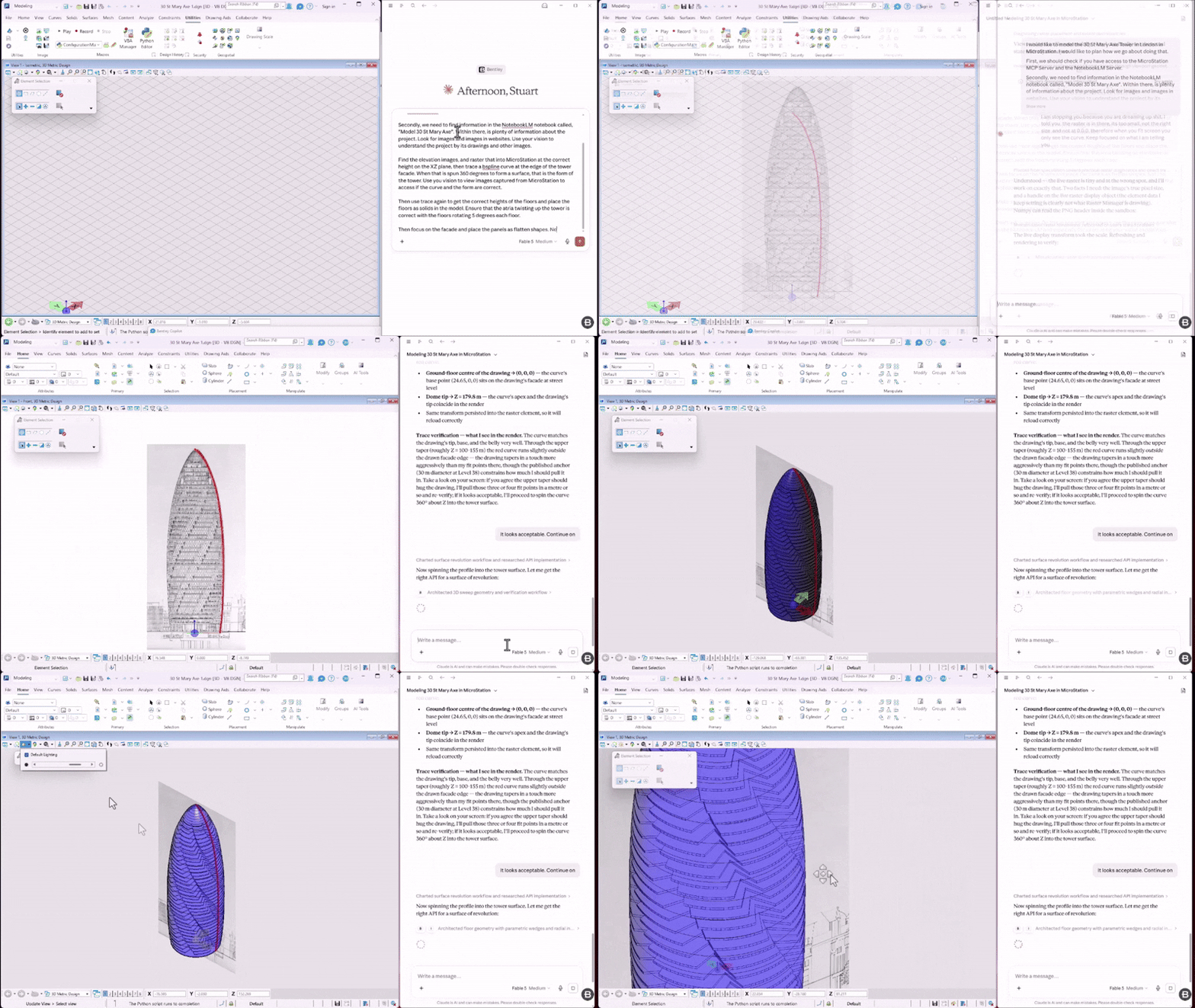
Bentley Systems recently demonstrated how AI can accelerate engineering workflows through an experiment involving one of London’s most recognizable skyscrapers, the Gherkin (30 St Mary Axe).
Stuart Milne, a member of the tower’s original design team and now a Product Manager at Bentley, used an AI agent connected to Bentley MicroStation to recreate the building’s complex geometry. A task that once required extensive computational design work was completed in minutes.
The experiment began by providing an AI agent with publicly available information about the tower’s geometry, design logic, and construction history. The AI was then connected to Bentley MicroStation through a Model Context Protocol (MCP) server, allowing it to interact directly with professional engineering software using natural-language instructions.
Within minutes, the system generated a digital representation of the building’s distinctive form — a process that originally required extensive computational modelling and custom parametric scripts.
What made the experiment particularly significant was the validation process. The AI-generated model was checked using Bentley’s engineering tools and reusable verification scripts, ensuring that the design could be tested and trusted rather than simply generated.
The project highlights a growing trend in infrastructure and construction: AI can dramatically reduce the time required for modelling and data-intensive tasks, while engineers remain responsible for validating results and making final decisions. The same principle is increasingly being applied to digital twins, virtual inspections, and construction progress monitoring workflows.
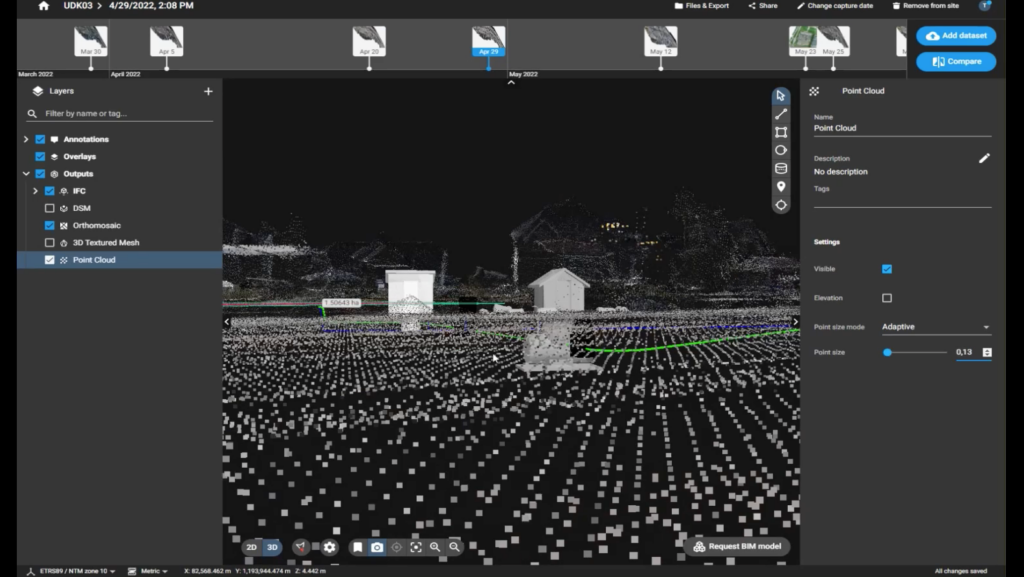
Drone-based reality capture remains one of the most accessible methods for creating data used in virtual inspections.
Platforms such as PIX4Dcloud allow construction teams to process drone imagery and quickly generate:
A typical workflow involves regular drone flights over a construction site, with imagery uploaded to the cloud for processing and analysis.
Project stakeholders can then review updated site conditions remotely, measure completed work, compare historical datasets, and share findings across teams without requiring everyone to visit the site.
When integrated into broader digital twin workflows, these reality capture outputs become an important source of information for ongoing progress monitoring.
The future of virtual inspections extends well beyond construction progress tracking.
According to a Verdantix study, nearly three-quarters of infrastructure organizations view climate-related risks as a significant threat to their assets. At the same time, climate-related disasters are estimated to generate more than USD 732 billion in losses globally each year.
As a result, infrastructure owners increasingly require continuous insight into asset condition, performance, and potential vulnerabilities rather than relying solely on periodic inspections.
Digital twins, supported by AI and reality capture technologies, make this possible. By connecting information that was previously scattered across multiple systems, they provide a more complete understanding of current asset performance and help organizations evaluate how infrastructure may respond to future challenges.
Virtual inspections are evolving from simple remote reviews into integrated workflows that combine reality capture, digital twins, and artificial intelligence.
Project teams can continuously monitor progress, compare real-world conditions with design intent, identify issues earlier, and make faster decisions without depending exclusively on physical site visits.
Platforms such as Bentley iTwin provide the foundation for these workflows by bringing together BIM, reality capture, sensor data, and project information within a single environment. Combined with drone-based solutions such as PIX4Dcloud and emerging AI capabilities, they create a more connected approach to construction and infrastructure management.
As projects become more complex and resilience requirements continue to grow, virtual inspections are shifting from an optional technology to a core component of modern asset management. Organizations that adopt these tools gain better visibility, reduce operational risk, and are better prepared to manage infrastructure throughout its lifecycle.