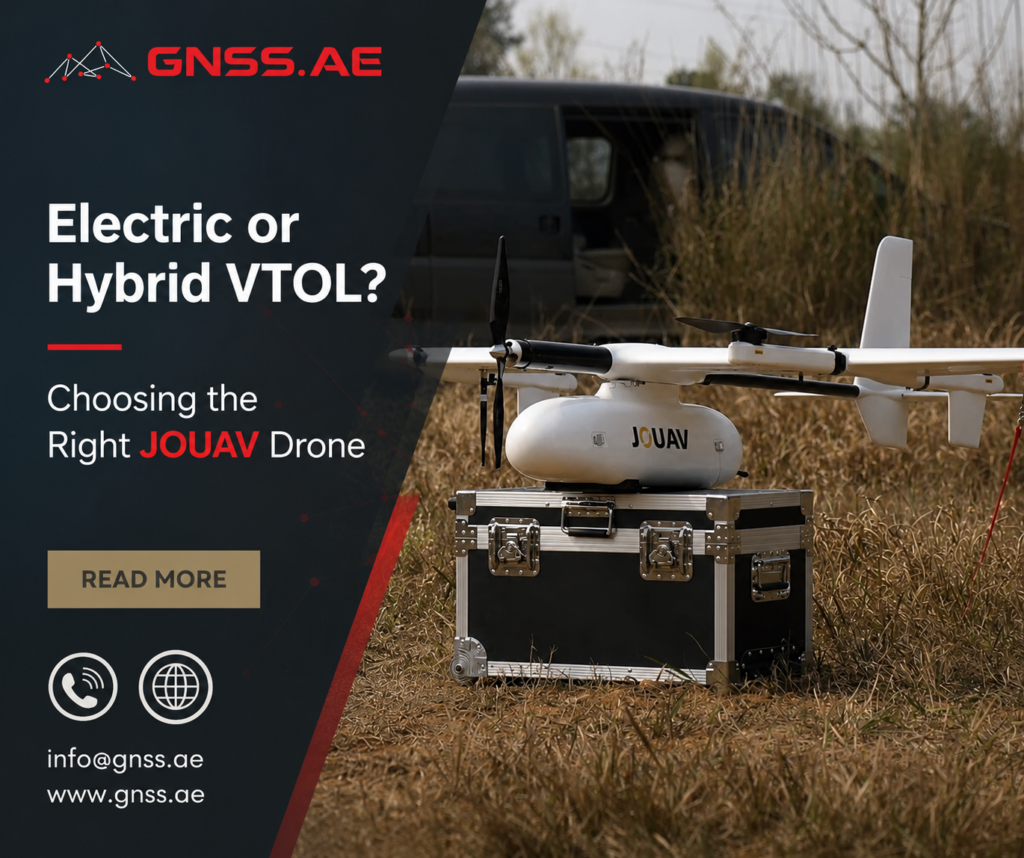
JOUAV offers several VTOL platforms designed for different types of aerial operations, from routine mapping and infrastructure inspections to LiDAR surveys, long-range surveillance, and remote-area missions.
While the CW-15, CW-20E, CW-25E, and CW-30E all share the same VTOL concept, they are built for different priorities. Differences in propulsion, payload capacity, endurance, and deployment workflow make each aircraft better suited to specific operational scenarios.
Flight time is only one part of the decision. Selecting the right platform also means considering sensor requirements, survey size, field logistics, and how long the aircraft needs to stay in the air without interruption.
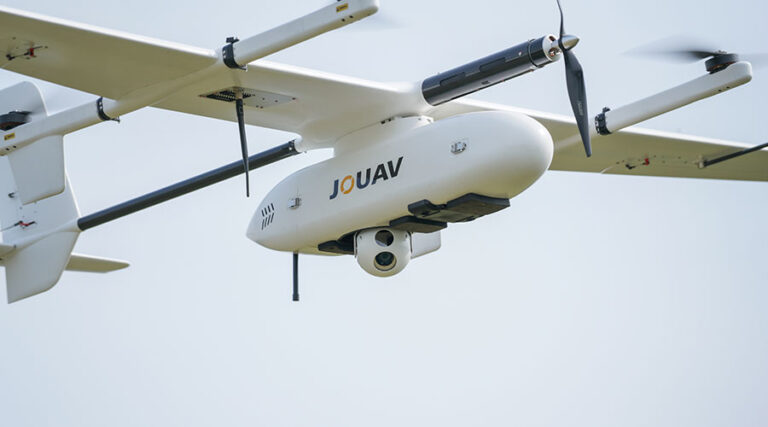
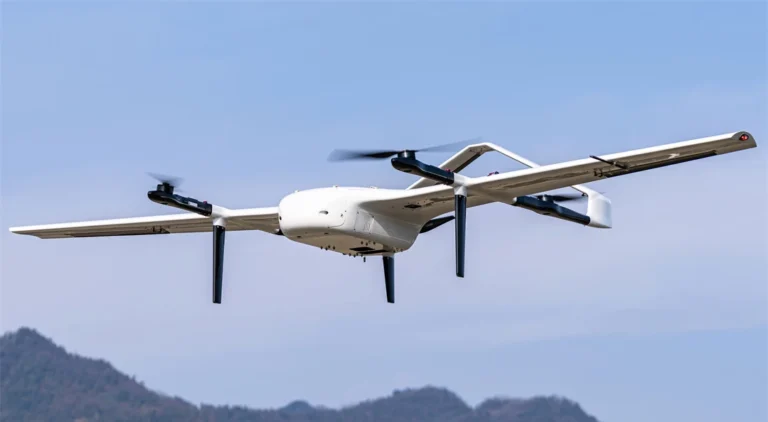
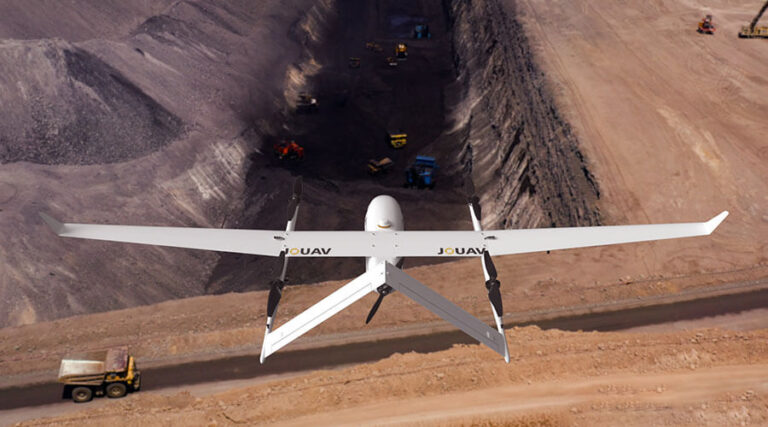
Electric VTOLs keep field operations straightforward. Charge the batteries, launch the aircraft, complete the mission, and prepare for the next flight. With no combustion engine or fuel system, routine maintenance is also simpler.
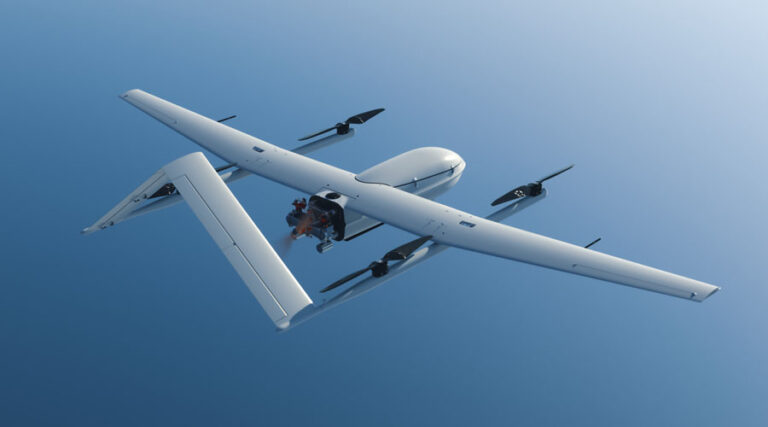
Hybrid aircraft introduce additional mechanical and logistical considerations, but they offer a clear advantage where endurance matters most. By combining a gasoline engine with battery power, platforms such as the CW-30E can remain airborne for significantly longer. The aircraft is rated for up to 480 minutes of endurance, cruises at 90 km/h, and supports payloads of up to 8 kg.
This extra endurance becomes valuable when surveying large territories or working far from the launch site, where repeated landings for battery replacement would slow the operation.
Neither propulsion system is universally better. Electric VTOLs are often the more practical choice for routine missions, while hybrid platforms are designed for applications where extended flight time provides a measurable operational advantage.
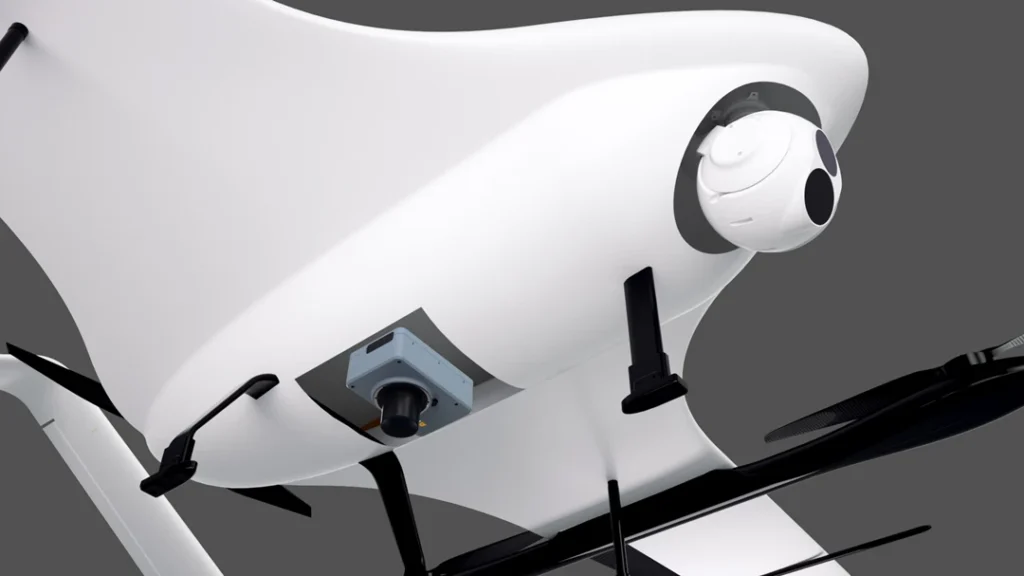
Maximum endurance is useful for comparing aircraft, but it should always be considered together with payload and operating conditions.
The CW-15, for example, is rated for 180 minutes empty but 120 minutes with the MG-120E payload. The CW-25E is specified for 150–210 minutes depending on configuration, while the CW-30E reaches up to 480 minutes with a 6 kg payload.
Model | Powertrain | Published endurance | Practical implication |
CW-15 | Electric | 180 min empty; 120 min with MG-120E | General survey and inspection sorties |
CW-20E | Electric | 180 min with 2 kg surveillance payload* | Longer linear missions with fewer battery changes |
CW-25E | Electric | 150–210 min | Large-area mapping and sensor-heavy missions |
CW-30E | Hybrid | Up to 480 min with 6 kg payload | Long-duration and remote-area operations |
The practical difference is not simply flight time. The CW-15, CW-20E, and CW-25E fit missions that can be completed within a few hours, while the CW-30E becomes valuable when returning to base or changing batteries would significantly interrupt the operation.
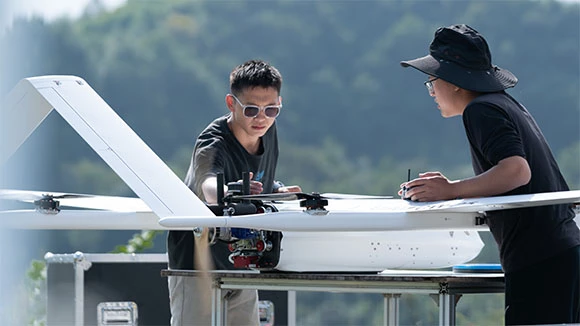
Payload capacity becomes increasingly important as sensor size and weight grow. While smaller UAVs can easily carry RGB cameras or compact EO/IR payloads, heavier systems such as LiDAR scanners, oblique cameras, SAR sensors, or multi-sensor configurations require larger aircraft.
Model | Maximum payload | Payload class | Examples of supported payloads |
CW-15 | 3 kg | Lightweight | RGB cameras, EO/IR, compact LiDAR and mapping payloads |
CW-20E | 5 kg | Medium | EO/IR gimbals, mapping cameras, LiDAR, multispectral sensors |
CW-25E | 6.6 kg | Heavy | LiDAR, oblique cameras, SAR, EO/IR and aeromagnetic sensors |
CW-30E | 8 kg | Heavy | LiDAR, industrial aerial cameras, oblique systems, SAR and EO/IR |
The main dividing line is sensor weight. The CW-15 and CW-20E cover most lightweight and medium payload configurations, while the CW-25E and CW-30E become more relevant when LiDAR, SAR, oblique imaging, or multi-sensor setups push the payload requirement higher.
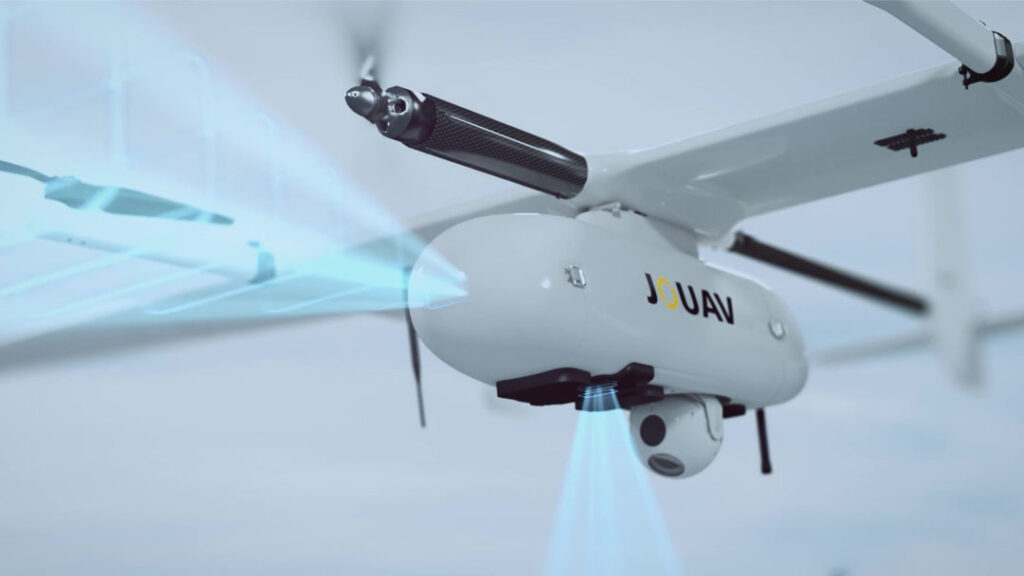
Coverage cannot be compared using a single number because different missions measure productivity differently.
A mapping project may be measured in hectares at a specified GSD. Pipeline and power-line inspections are more naturally measured in kilometers. LiDAR projects add another consideration: point density.
Model | Relevant coverage figure / example | Typical way to measure productivity |
CW-15 | Up to 1,200 ha at 3 cm/px in JOUAV’s mapping example | Area mapped per sortie |
CW-20E | More than 150 km of linear assets in one mission | Corridor length per sortie |
CW-25E | More than 2,100 ha per flight in a LiDAR mapping project | LiDAR area and point density |
CW-30E | Up to 8 hours endurance with 6 kg payload | Long-duration area or corridor coverage |
Because each application uses different performance metrics, there is no universal definition of “better coverage.” The CW-30E stands out in large-scale and remote operations where long, uninterrupted flights improve efficiency. The CW-20E and CW-25E, meanwhile, are often the better fit for shorter missions that involve frequent relocation or heavier sensor payloads.
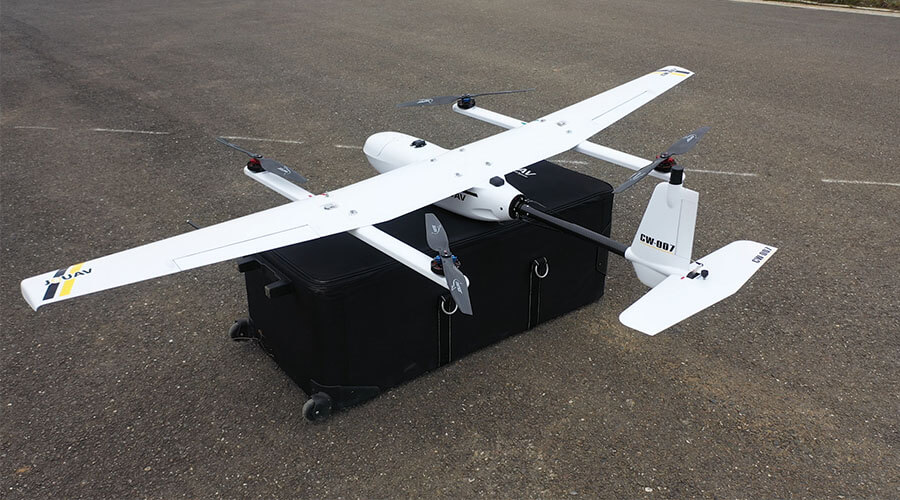
VTOL capability removes the need for a runway, but the four aircraft still differ considerably in how they are transported and prepared for flight.
Model | Deployment characteristic | Field implication |
CW-15 | Compact electric VTOL; 3.54 m wingspan | Practical for routine survey and inspection |
CW-20E | Foldable, tool-free; deployment in under 1 minute | Suited to rapid relocation |
CW-25E | Disassembles into 10 parts for transport | Designed for SUV-based field operations |
CW-30E | 4.4 m wingspan; 38 kg MTOW | VTOL deployment with greater logistics requirements |
The main trade-off is between portability and endurance. Thanks to its tool-free folding design, the CW-20E can be unpacked and launched in less than a minute, making it well suited to teams moving between multiple sites throughout the day. The modular CW-25E offers greater payload flexibility without requiring specialized transport equipment.
The larger CW-30E demands more planning and field logistics, but its extended endurance often offsets that additional effort during long-duration missions. Depending on the workflow, faster deployment and easier transportation can have a greater impact on productivity than maximum flight time alone.
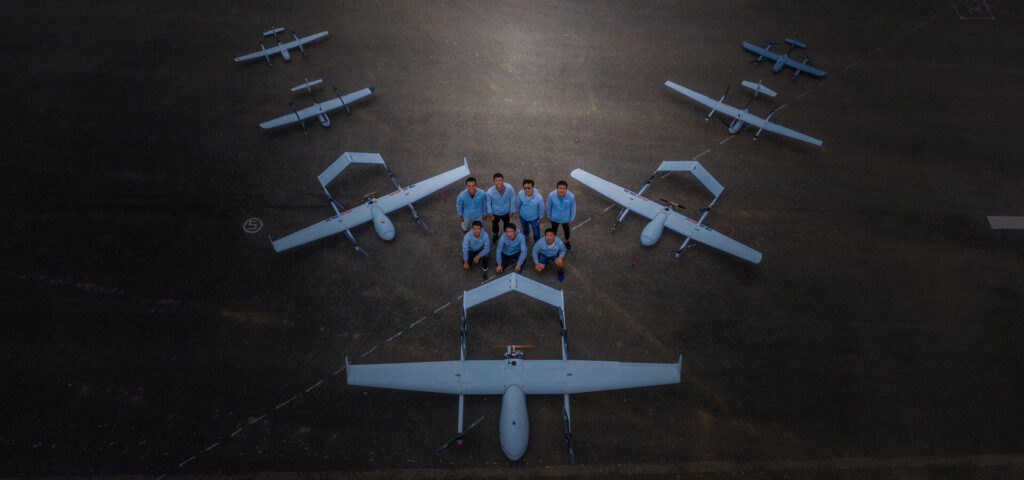
Maintenance is easy to overlook when comparing VTOL aircraft. Endurance and payload capacity are easy to compare in a specification sheet, while the time and effort required to keep an aircraft operational receive far less attention.
Maintenance factor | Electric VTOL | Hybrid VTOL |
Propulsion | Electric motors | Combustion engine + electric propulsion |
Fuel system | Not required | Required |
Engine servicing | Not required | Required |
Battery management | Required | Required |
Propeller and motor inspection | Required | Required |
Mechanical complexity | Lower | Higher |
Field consumables | Mainly batteries and standard service parts | Batteries, fuel, and engine-related consumables |
Main operational advantage | Simpler routine maintenance | Much longer continuous flight |
The fully electric CW-15, CW-20E, and CW-25E avoid the additional complexity of a combustion engine and fuel system. That does not make them maintenance-free, however. Batteries, motors, propellers, avionics, airframe components, and payload interfaces still require regular inspection. JOUAV also highlights the CW-25E’s maintenance-friendly design as one of the platform’s operational strengths.
The CW-30E takes a different approach. Its hybrid powertrain adds an engine and fuel system that increase maintenance requirements, but it also delivers endurance that battery-powered aircraft cannot match.
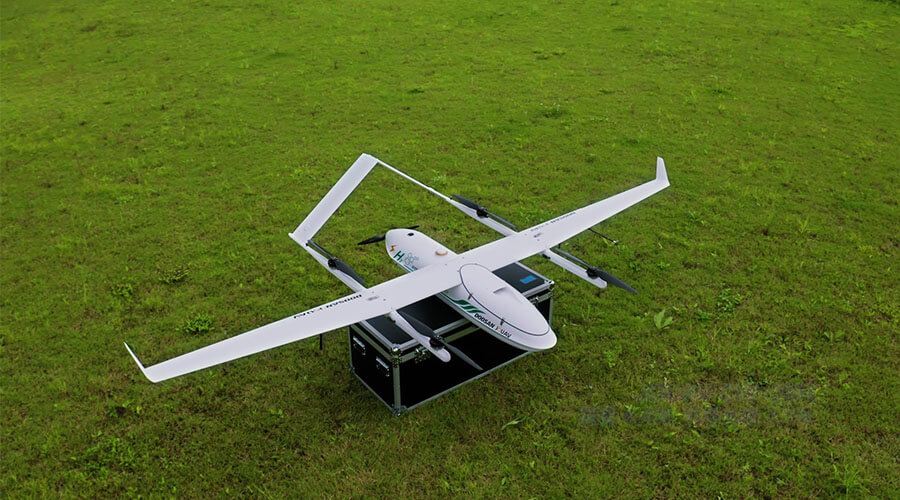
Cost factor | CW-15 / CW-20E / CW-25E | CW-30E |
Energy source | Electricity | Fuel + electricity |
Battery management | Required | Required |
Engine maintenance | — | Additional |
Fuel logistics | — | Required |
Sorties on very long missions | Potentially higher | Potentially lower |
Ground time between sorties | Can become significant | Reduced when long endurance is fully used |
Strongest economic case | Frequent short and medium missions | Long continuous missions |
Electric VTOLs follow a straightforward workflow: charge the batteries, fly the mission, replace or recharge the packs, and continue operating. This approach is efficient until mission duration exceeds what is practical for battery-powered flights.
Hybrid platforms such as the CW-30E introduce fuel consumption and additional engine maintenance, but they also reduce the number of sorties required for long-duration operations. JOUAV specifies up to 480 minutes of endurance with a 6 kg payload, allowing large areas to be covered in a single flight.
For this reason, mission output is often a more meaningful measure of operating cost than energy consumption alone. Mapping projects may focus on cost per hectare, utility inspections on cost per kilometer, and surveillance operations on cost per hour of effective time on station.
The lowest-cost aircraft is not always the one with the lowest energy consumption. If a hybrid platform can complete a project in a single sortie while an electric aircraft requires several flights, the time saved on landings, battery changes, and repositioning may outweigh the additional fuel expense.
After comparing the main criteria, the four aircraft can be viewed as four different operating profiles rather than a simple progression from smaller to larger.
Powertrain | Electric | Electric | Electric | Hybrid |
Endurance | Up to 180 min empty | Up to 180 min with 2 kg surveillance payload | Up to 210 min | Up to 480 min |
Maximum payload | 3 kg | 5 kg | 6.6 kg | 8 kg |
Cruise speed | 61 km/h | 72 km/h | 70 km/h | 90 km/h |
Deployment | Compact VTOL | Foldable, tool-free | Modular transport | Larger VTOL platform |
Maintenance | Simpler | Simpler | Simpler | More complex |
Energy logistics | Battery charging | Battery charging | Battery charging | Fuel + battery |
Main strength | Compact general-purpose platform | Rapid deployment and mobility | Heavy sensor and mapping capability | Long-duration operation |
Typical operational fit | Survey, inspection, monitoring | Linear assets, mobile operations | LiDAR, large-area mapping | Long-range and remote missions |
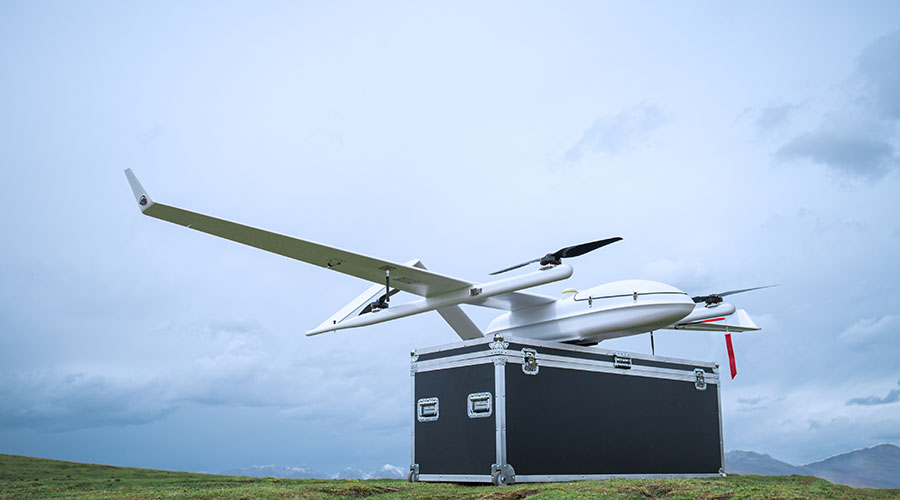
The best platform depends on the operational priority, whether that is payload capacity, survey size, deployment speed, or the ability to remain airborne for extended periods.
For conventional topographic surveys, the choice is usually driven by sensor requirements and project scale.
Pipelines, railways, roads, and transmission lines are measured by distance rather than area, making cruise speed and endurance key performance factors.
LiDAR mapping places high demands on both payload capacity and flight endurance.
The CW-25E was designed with these missions in mind. Its 6.6 kg payload capacity accommodates larger LiDAR systems while preserving the operational simplicity of an all-electric VTOL platform.
Real-world projects reflect this positioning. In one large-scale jungle mapping mission, a CW-25E equipped with a YellowScan Voyager covered more than 2,100 hectares in a single flight while capturing high-density LiDAR data.
Forestry surveys often rely on LiDAR to generate terrain models beneath dense vegetation, making payload capability and efficient area coverage more important than flight time alone.
Few applications benefit from hybrid propulsion more than persistent surveillance.
In these missions, maintaining continuous observation is often more important than covering a predefined area. Every landing interrupts monitoring and requires another launch sequence.
With up to eight hours of endurance using a 6 kg payload and a cruise speed of 90 km/h, the CW-30E is well suited to long-duration surveillance tasks.
Typical applications include border security, maritime patrol, perimeter monitoring, remote infrastructure protection, and other operations that require prolonged airborne presence.
Electric models in the CW series can also perform surveillance missions, but their shorter endurance generally makes them better suited to shorter deployments or operations that allow scheduled battery changes.
Emergency operations place a premium on mobility and deployment speed.
Response teams often need to arrive on site, launch quickly from confined spaces, collect critical data, and relocate without delay. In these situations, rapid deployment can be more valuable than maximum flight endurance.
The CW-20E was designed for this type of workflow. According to JOUAV, its tool-free folding design allows deployment in less than one minute, while its 5 kg payload capacity supports a wide range of inspection and surveillance sensors.
Operations at sea or in remote locations introduce challenges that go beyond flight performance. Battery charging opportunities may be limited, access to launch sites can be difficult, and returning to base after short sorties may significantly reduce productivity.
The CW-30E addresses these conditions with its hybrid propulsion system, extended endurance, and 90 km/h cruise speed. JOUAV also supports takeoff and landing from mobile platforms, making the aircraft suitable for maritime operations.
Choosing between electric and hybrid propulsion ultimately comes down to operational requirements rather than aircraft specifications alone.
The CW-15, CW-20E, and CW-25E cover the majority of professional mapping, inspection, and monitoring missions while benefiting from the simpler logistics of fully electric operation. Their primary differences lie in payload capacity, deployment workflow, and the amount of work they can complete during a single flight.
The CW-30E fills a different role. Its hybrid powertrain adds complexity but delivers endurance that can fundamentally change how long-range missions are planned and executed. When covering vast remote areas, inspecting lengthy infrastructure corridors, or maintaining continuous surveillance, reducing the number of landings may provide greater operational value than minimizing maintenance requirements.
Ultimately, the best aircraft is not the one with the longest endurance or the highest payload capacity. It is the one that best addresses the primary constraint of the mission at hand.
.
Flight time varies by model and payload. The CW-15 can fly for up to 180 minutes without a payload, the CW-20E for up to 180 minutes with a standard 2 kg surveillance payload, and the CW-25E for up to 210 minutes depending on configuration. The hybrid CW-30E provides up to 480 minutes with a 6 kg payload.
The main difference is the propulsion system and endurance. The CW-25E is a fully electric VTOL with up to 6.6 kg payload capacity and up to 210 minutes of endurance. The CW-30E uses hybrid propulsion, carries up to 8 kg, and can remain airborne for up to eight hours with a 6 kg payload. The CW-30E is therefore better suited to long-duration and remote missions, while the CW-25E offers a simpler electric solution for demanding mapping and LiDAR work.
The CW-25E is particularly well suited to LiDAR mapping because it combines up to 6.6 kg of payload capacity with up to 210 minutes of endurance. It can carry professional LiDAR systems and has been used by JOUAV for large-area LiDAR mapping projects. The CW-30E is worth considering when the main requirement is significantly longer flight time or operation in remote areas.
The JOUAV CW-30E is a hybrid VTOL drone. It combines a combustion engine with battery-powered VTOL propulsion. This architecture provides substantially longer endurance than JOUAV’s fully electric CW-15, CW-20E, and CW-25E, making the CW-30E suitable for long-range surveillance, large-area mapping, maritime operations, and other missions where minimizing landings is important.