In many drone inspection projects, the flight itself often takes center stage. But in reality, inspection is a complex process that involves several stages: starting the task, deploying the drone, gathering data, processing that data, and making decisions.
Just improving one part—like making the flight more efficient—won’t really boost the overall performance if the other stages stay the same. In traditional UAV workflows, even with advancements in flight capabilities, delays from logistics, operator availability, and coordination issues still persist.
In this context, dock-based systems should be considered not just in terms of their effect on the flight performance, but also how they impact the overall inspection workflow structure.
One major drawback of traditional inspection workflows is the downtime between flights, rather than the flights themselves. While a typical inspection mission may take less than an hour, the time required to initiate that mission can extend to hours or even days.
This delay is driven by several factors:
As a result, inspection frequency is constrained not by technical capability, but by operational overhead.
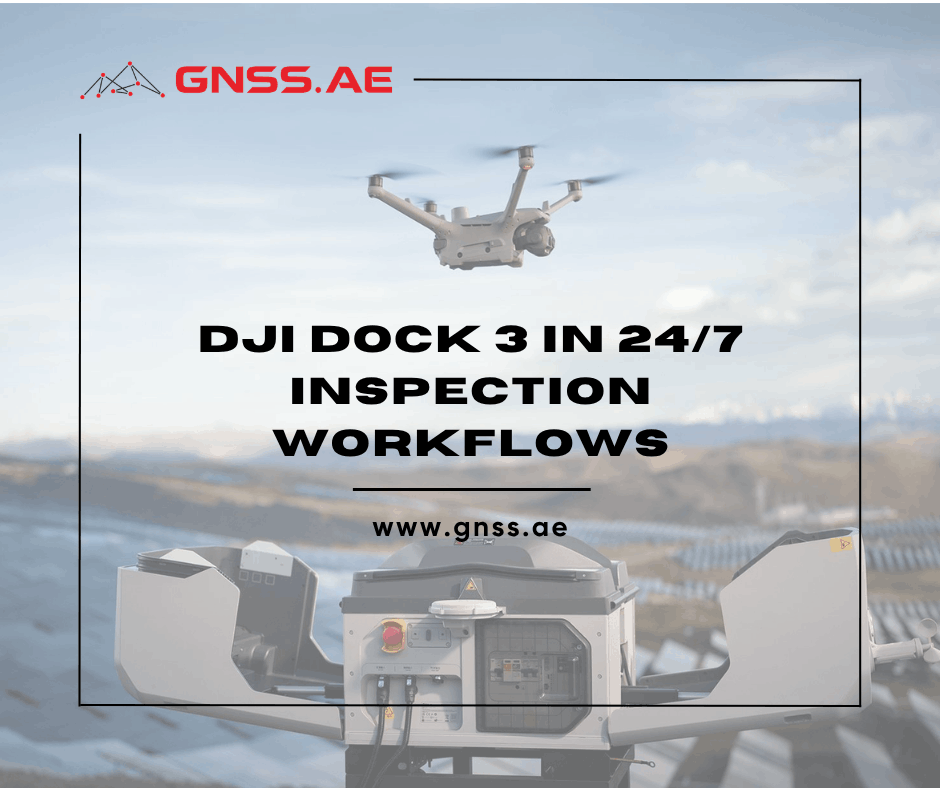
The introduction of the DJI Dock 3 changes how availability is treated within inspection systems. Instead of planning a flight for a specific mission, the system is readily available 24/7. This reduces the time required to initiate a flight from hours to minutes. More importantly, it removes the dependency on on-site personnel for routine deployment.
In this model, the drone is no longer a tool that is deployed when needed. It becomes a persistent resource that can be accessed when required.
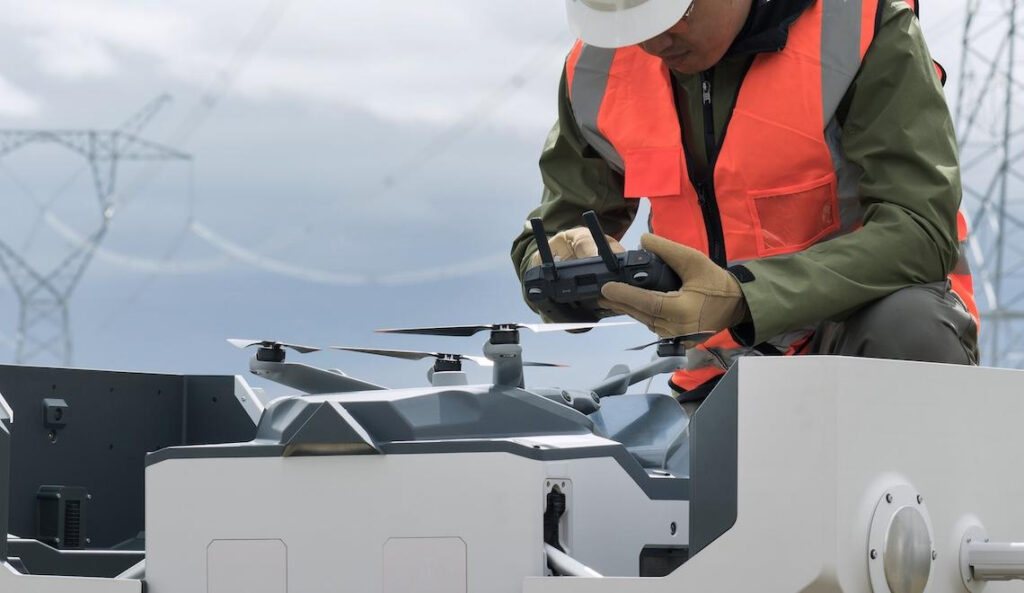
Dock-based inspection systems represent a proven concept of dividing up responsibilities between infrastructure and the aircraft. The DJI Dock 3 acts as a fixed operational node, while the DJI Matrice 400 serves as a flexible data acquisition platform.
Component | Primary Function |
Automated deployment, charging, environmental protection | |
Data acquisition, payload operation | |
Control system (e.g., FlightHub 2) | Mission coordination and monitoring |
The dock handles takeoff, landing, battery management, and environmental protection, allowing the aircraft to operate without continuous human presence. The drone, in turn, provides payload flexibility for different inspection tasks, including visual, thermal, and LiDAR data collection.
This setup allows for a system where operational readiness isn’t tied to human availability. From a technical perspective, the main advantages of this architecture include:
Most dock-based systems need a fixed setup that includes power, a secure mounting area, and network backhaul. This is usually planned as part of the site’s infrastructure rather than being thrown together on the fly.
For continuous operations, there’s an expectation of a reliable power supply—whether from the grid or a hybrid source—and a minimum network speed of about 4–10 Mbps for telemetry and video backhaul, which can vary based on the mission.
Unlike mobile UAV setups, moving these systems typically requires several hours to days for logistics, including site preparation, regulatory approvals, and system revalidation
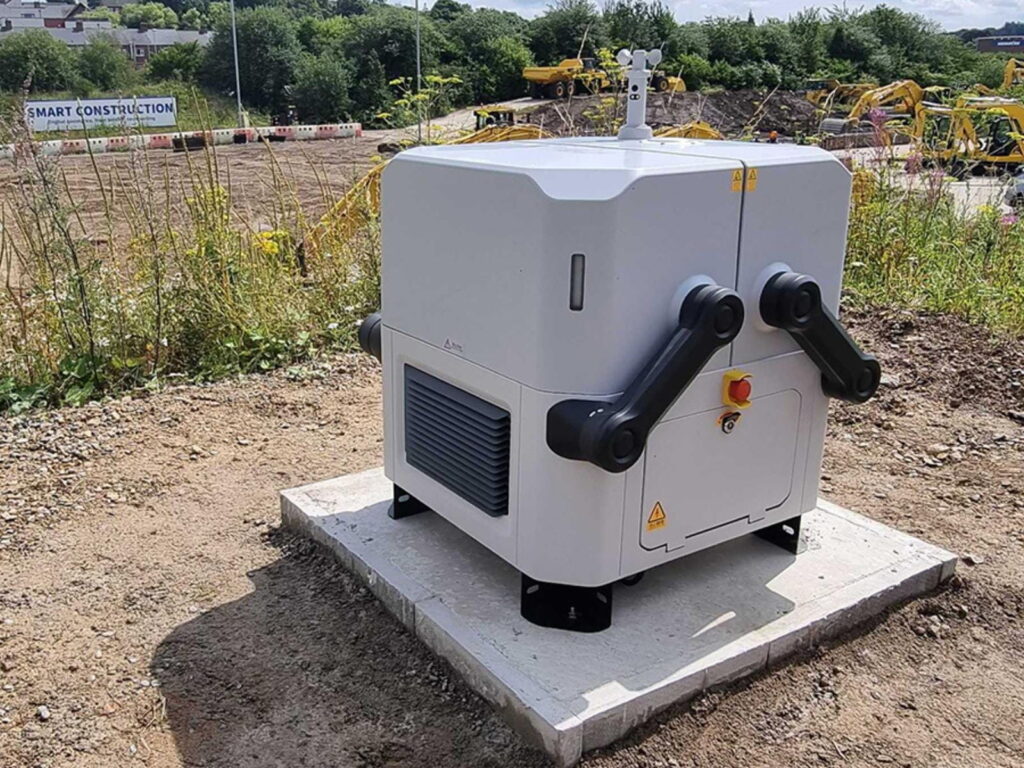
In traditional workflows, inspections are usually set up at regular intervals. This method is based on the idea that conditions change slowly and predictably, making periodic checks enough to catch any problems.
In practice, this model is widely used across industries. For example, in powerline inspections operators often conduct corridor surveys weekly or monthly. The drone follows specific routes, gathering visual or LiDAR data to assess the condition of the lines. While this regularity is beneficial, it also means that faults developing between inspection cycles may remain undetected.
A similar situation occurs in solar farm inspections. Thermal surveys are generally performed at scheduled times—often weekly or after significant weather events—using thermal cameras mounted on professional-grade drones. If a fault arises shortly after an inspection, it could remain hidden until the next scheduled check.
This approach has a fundamental limitation: the frequency of inspections is determined by operational needs rather than the actual behavior of the system.
On the other hand, dock-based systems offer a more flexible model, where flights can be triggered dynamically based on external conditions or system inputs. These inputs can include:
For instance, after a storm, a dock-based system can launch an inspection flight right away, without the delays of crew mobilization. In traditional setups, organizing a similar response could take hours or even days.
Importantly, this does not mean continuous flight operations. The system remains idle most of the time, but can quickly spring into action when needed.
The key difference is that inspection is no longer tied to a fixed schedule. Instead, it becomes condition-driven, allowing operators to respond to changes as they occur rather than after the fact.
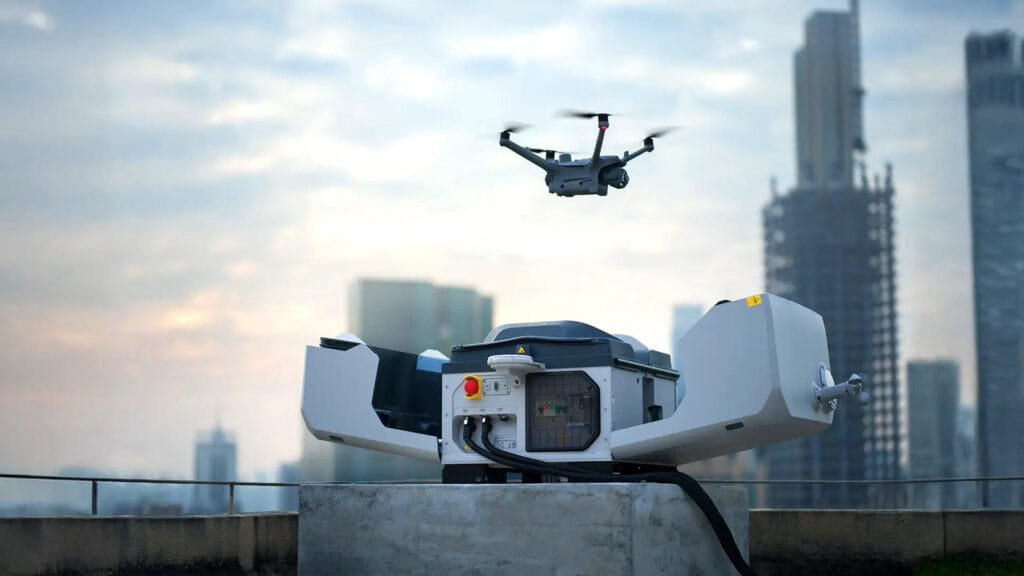
The economic effect of dock-based inspection systems becomes clearer when moving from qualitative comparisons to operational cost ranges. In traditional UAV inspection workflows, cost is primarily driven by:
Industry standards show that professional drone inspection services typically range from $300 to $2,000 per mission or asset, depending on complexity and sensor type. For example, infrastructure inspections such as wind turbines are commonly reported in the range of $300–$800 per unit for visual surveys, and up to $1,500–$2,000 per unit for thermal or electrical inspections.
However, these figures do not represent per-flight cost directly. In practice, one inspection mission will comprise amortized costs for:
As a result, the effective cost per inspection mission in structured industrial programs is commonly estimated in the range of $500–$1,500 per deployment.
Cost Component | Conventional UAV Workflow | Dock-Based Workflow (e.g. DJI Dock 3) |
Field deployment (travel + setup) | $100–$500 per mission | Near zero (remote launch) |
Operator labor per mission | $100–$400 | Reduced (remote supervision) |
Inspection flight execution | Included in service cost | Automated |
Data handling & reporting | $200–$600 | Partially automated |
Total estimated cost per inspection cycle | ~$500–$1,500 | Lower marginal cost after deployment |
In dock-based systems, the biggest change isn’t about cutting costs, but how those costs are spread out. Instead of paying for each mission, organizations are moving towards a model where they invest in infrastructure upfront (CAPEX) with lower ongoing costs (OPEX) for each inspection cycle.
This approach is especially important when inspections happen frequently. For instance, if you switch from weekly to daily inspections, the costs don’t rise dramatically in a dock-based setup, while in traditional operations, there will be almost a direct increase in expenses.
The adoption of dock-based systems requires a shift in how inspection workflows are designed. Instead of optimizing individual missions around parameters like flight time, overlap, or single-flight coverage efficiency, the system is optimized at the infrastructure level.
It means that performance is no longer defined by how efficiently a single UAV mission is executed, but by how reliably the system can remain operational and responsive over time. Three parameters become primary:
This leads to a different set of design priorities, where the goal is not to perform a single optimal inspection, but to maintain consistent situational awareness over time.
The DJI Dock 3 does not simply automate drone flights. It changes how inspection systems are structured by introducing persistent availability and reducing dependency on manual deployment.
When paired with platforms like the DJI Matrice 400, it transforms inspections from one-off tasks into a seamless, ongoing monitoring process. The real shift here isn’t just moving from manual to automated flights; it’s about evolving from isolated missions to a more integrated, infrastructure-based approach to inspections