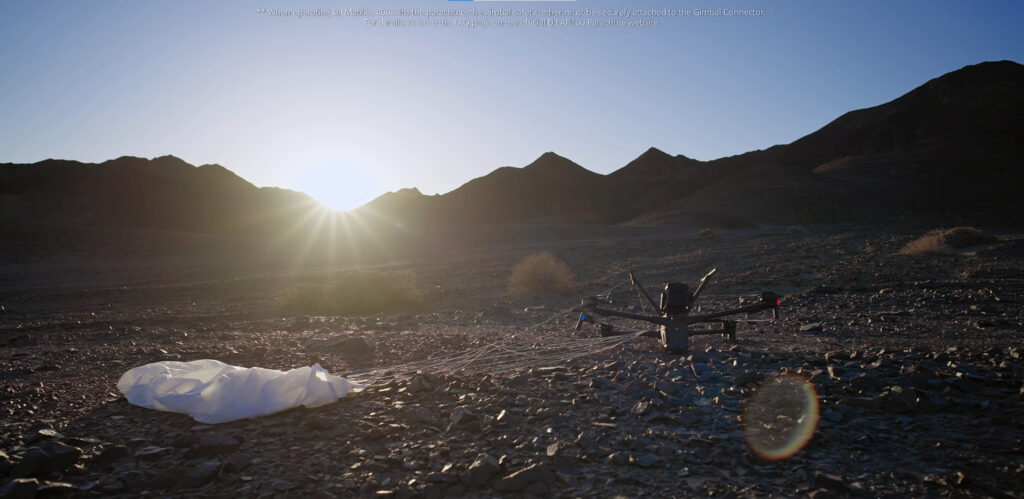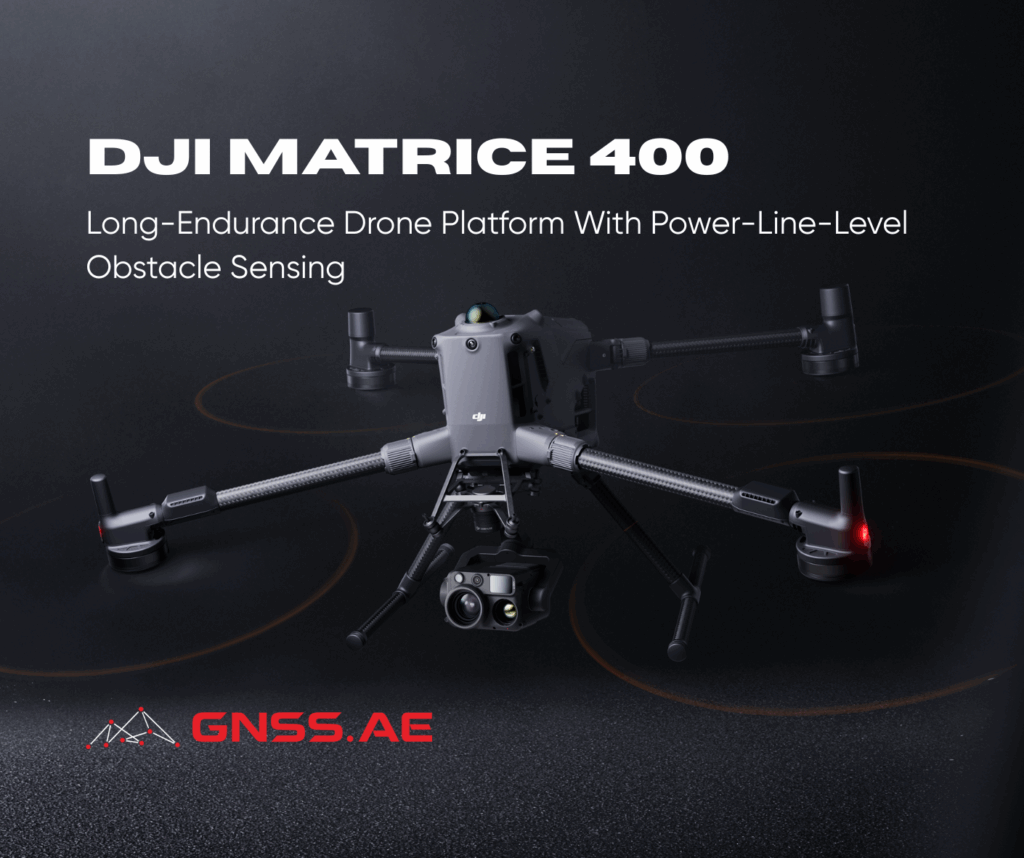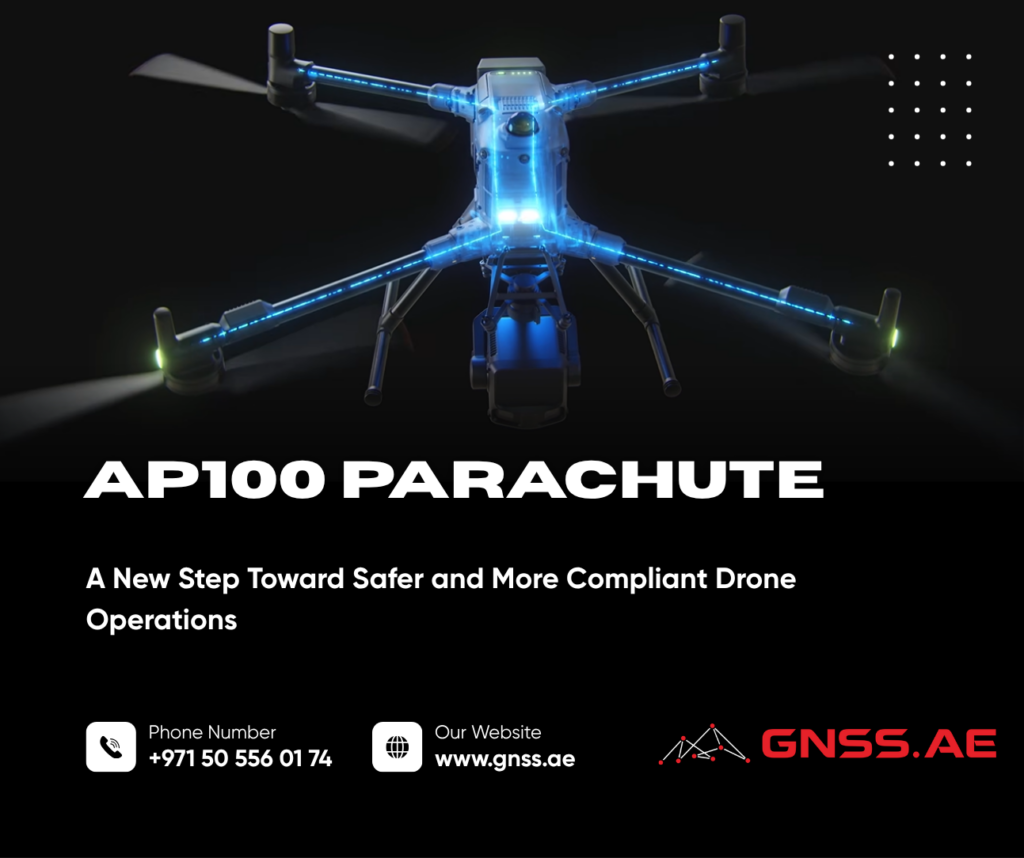
DJI has introduced the AP100 Parachute for the Matrice 400, adding an integrated emergency recovery system to its latest enterprise drone platform. Emergency parachutes themselves are not new, but the AP100 takes a different approach. Instead of serving as a standalone accessory, it is built into DJI’s enterprise ecosystem, bringing together aircraft safety, flight management, and regulatory tools within a single platform.
Enterprise drones are now handling tasks that would have seemed ambitious only a few years ago. They inspect power lines stretching hundreds of kilometers, survey active construction sites, support emergency responders, and carry increasingly advanced payloads. Many of these operations also involve BVLOS flights or take place in environments where risk management is a key part of mission planning.
Safety systems are evolving alongside these changing requirements. Features that were once viewed as optional are increasingly expected by regulators, clients, and operators, becoming part of standard operational practice rather than an extra layer of protection.
Seen in that context, DJI’s announcement is about more than adding another accessory to the Matrice 400. The AP100 reflects a broader shift toward embedding safety functions directly into the aircraft ecosystem instead of relying on third-party hardware and separate software workflows.
When installed on the Matrice 400, the AP100 allows the platform to comply with EASA C5/C6 and UK CAA UK5/UK6 requirements. This supports operators conducting missions under European Standard Scenarios, including:
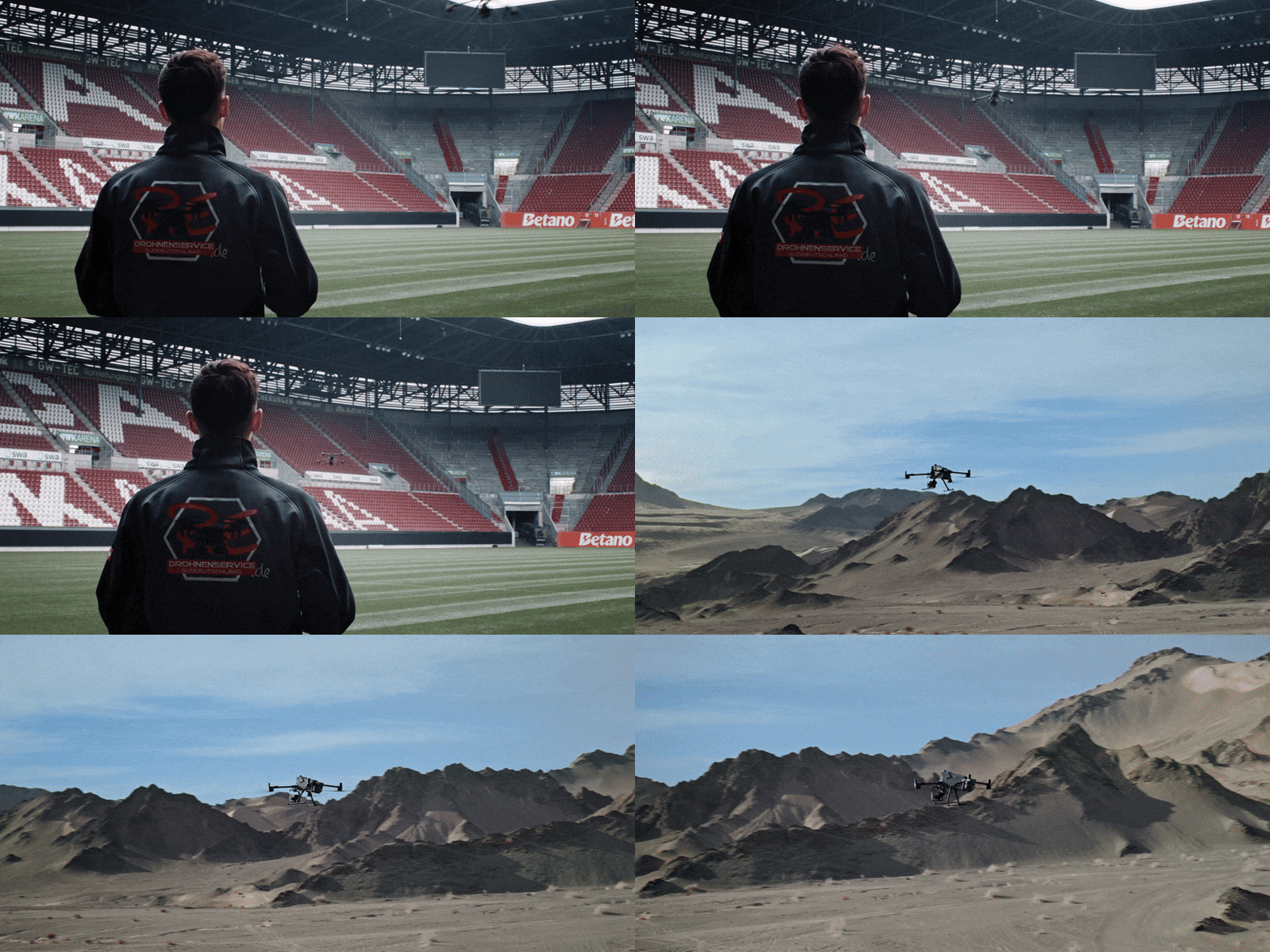
For organizations working within European regulations, the parachute provides an additional layer of safety while simplifying compliance for advanced drone operations.
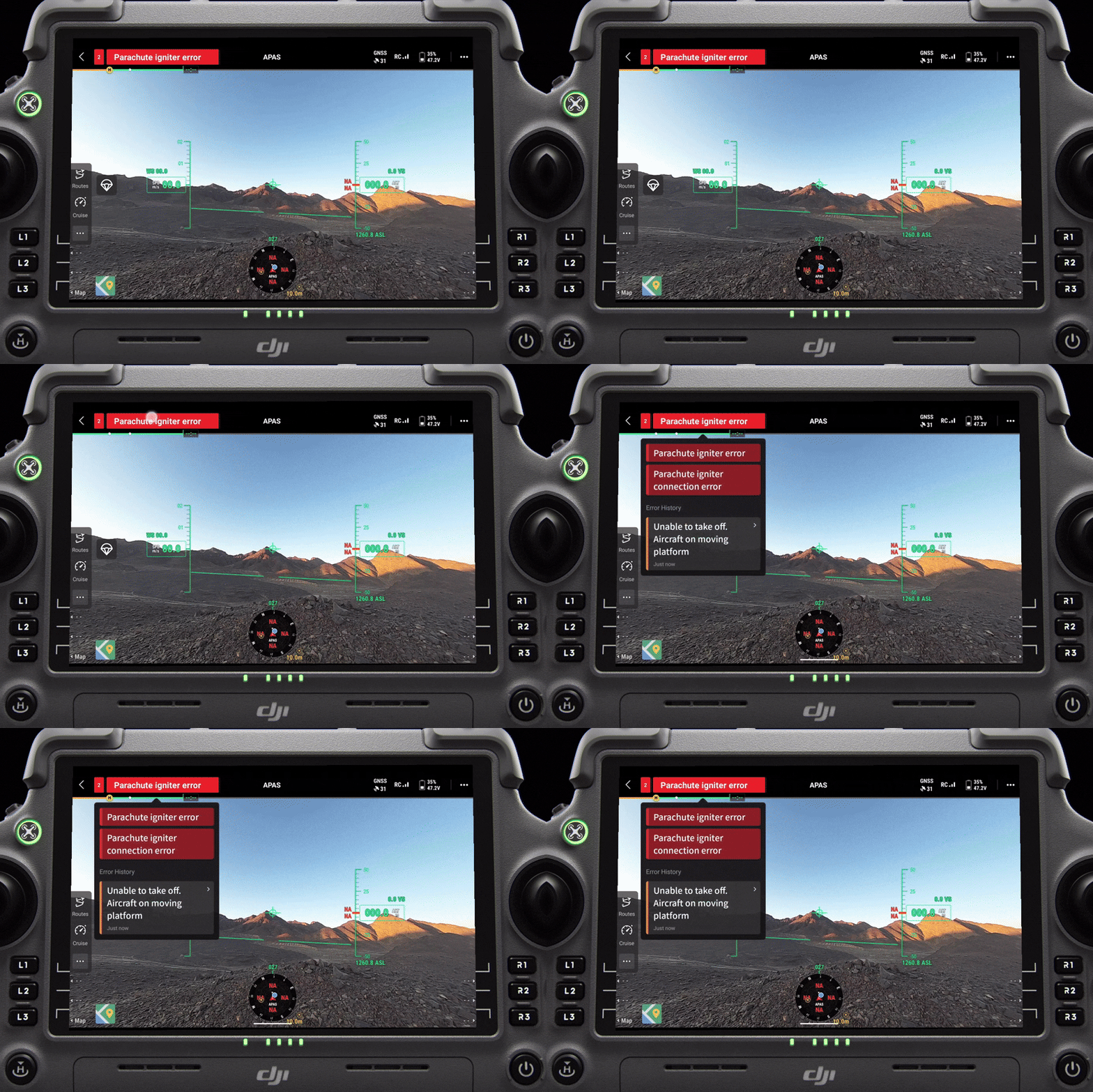
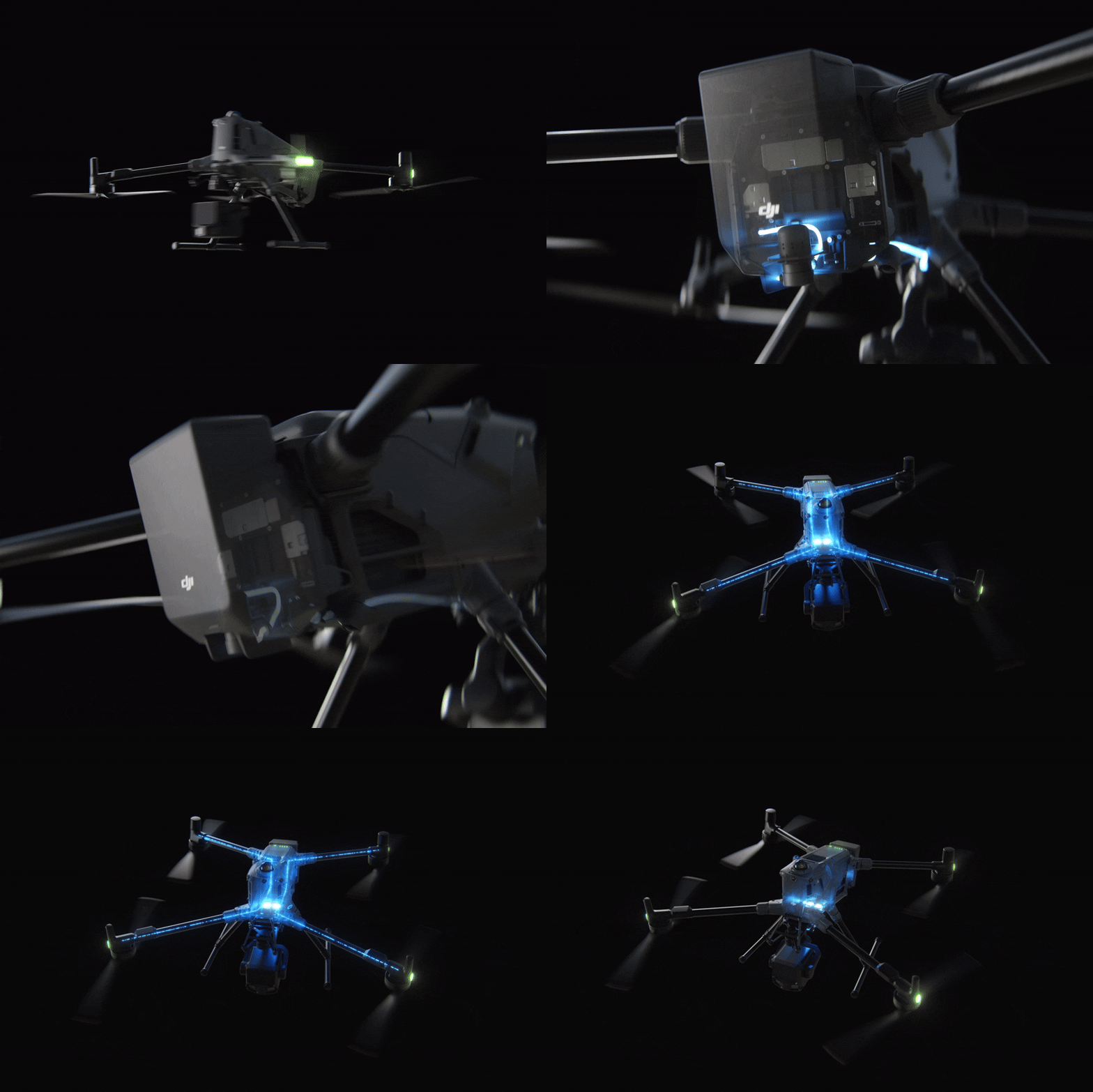
The AP100 constantly checks its own status throughout every flight.
From startup to landing, the system monitors critical components such as the gas generator and communication links. If it detects an issue, operators receive immediate notifications through the Health Management System (HMS) in DJI Pilot 2, allowing them to react before a minor problem becomes a larger one.
Rather than relying entirely on the aircraft, the AP100 operates as an independent safety system.
It features its own flight controller, IMU, and onboard intelligence that continuously compares its data with information received from the drone. This dual-layer validation helps minimize the chance of unintended parachute deployment while ensuring reliable activation during genuine emergencies.
The unit also includes its own backup power supply. Dual capacitors provide up to one hour of independent operation, allowing the parachute to continue monitoring flight conditions even if the aircraft loses primary power or its E-Port connection.
In an emergency, every fraction of a second matters.
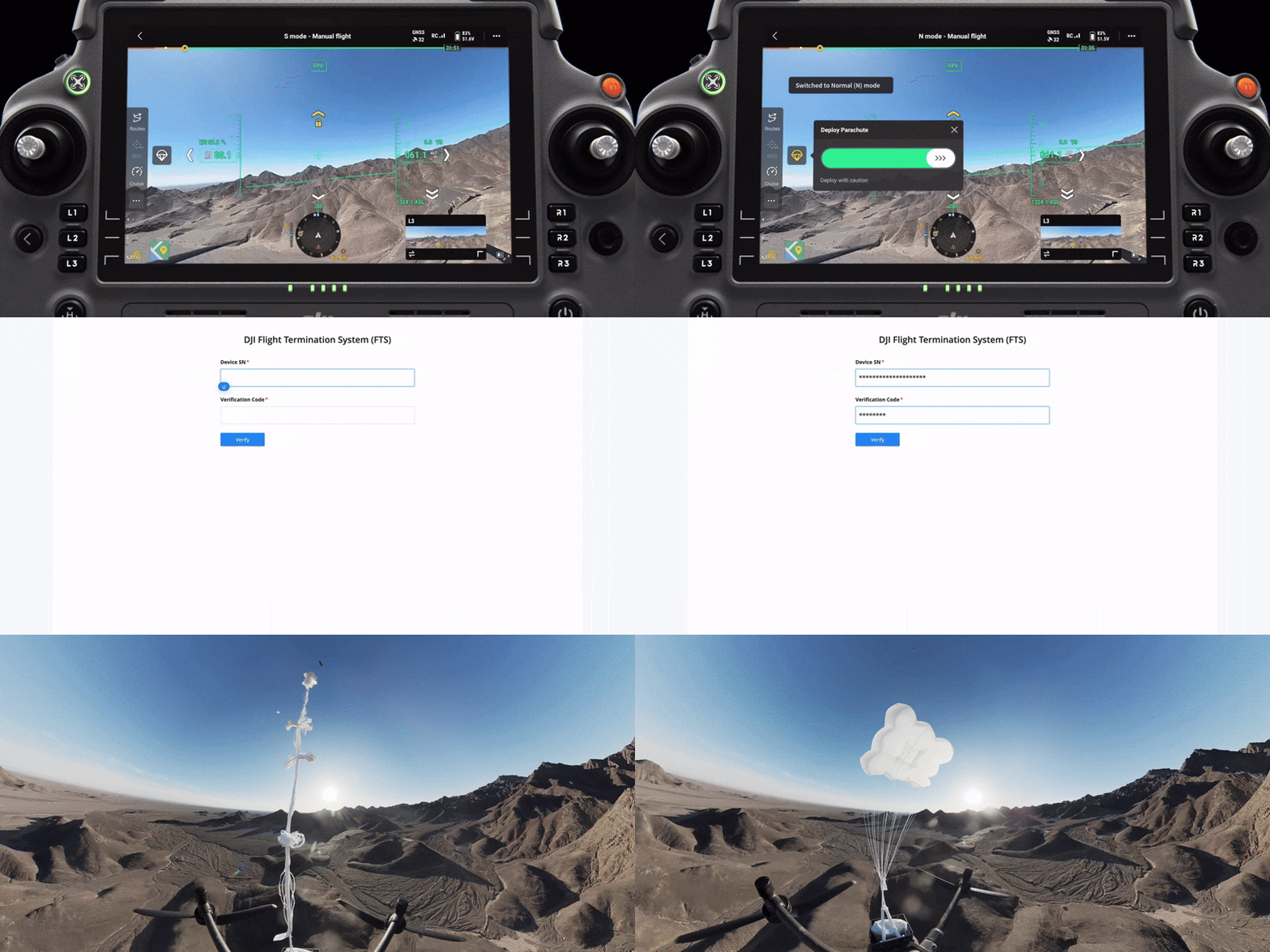
The AP100 can deploy in less than 600 milliseconds. Before the parachute is released, an independent Flight Termination System immediately stops the motors, reducing the risk of the parachute becoming tangled in the propellers.
Once deployed, the system slows the aircraft to a stabilized descent speed of less than 5 m/s, helping reduce impact forces during landing.
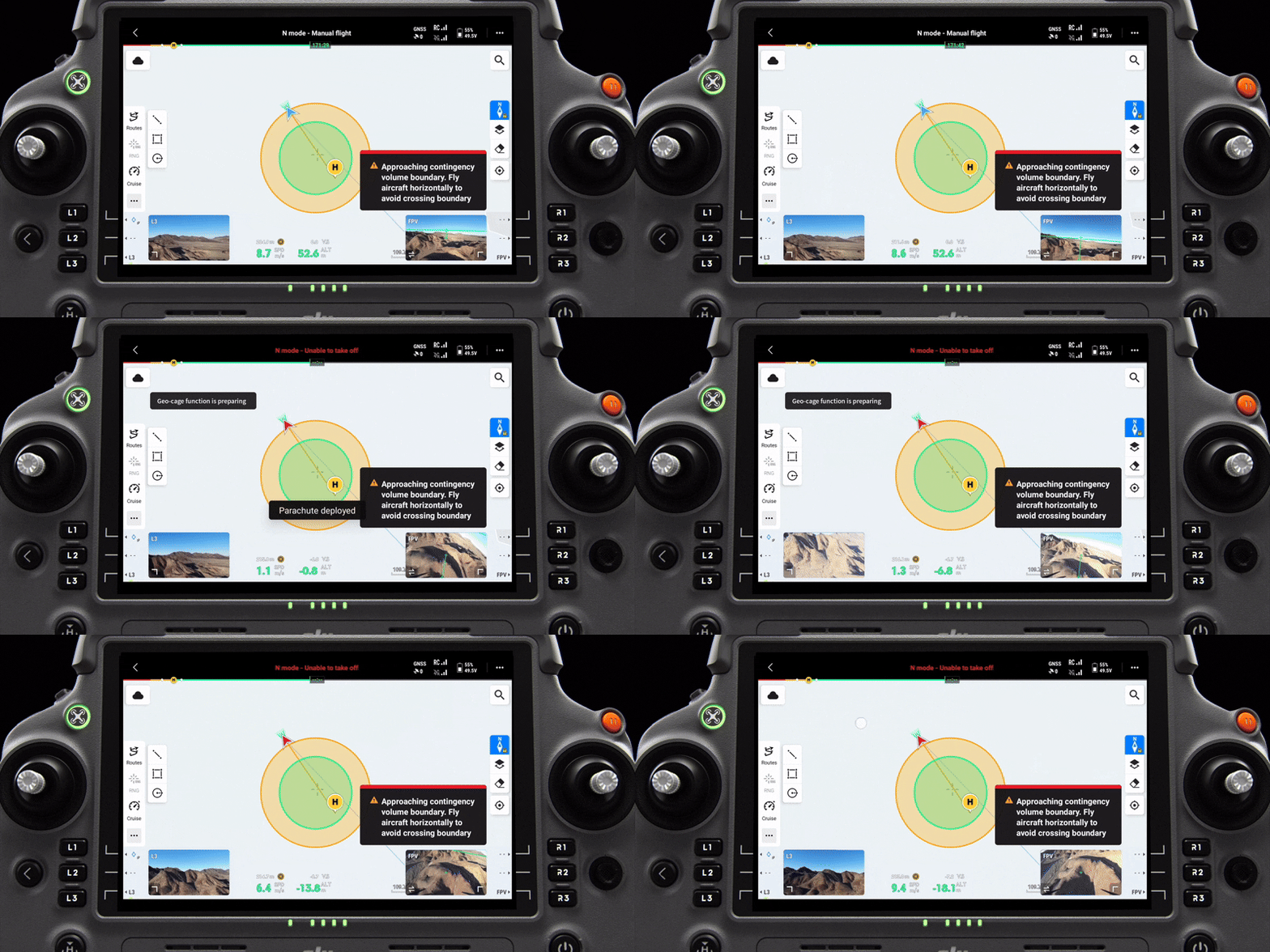
Operators can activate the parachute manually using the deployment control in DJI Pilot 2 whenever necessary.
The system can also deploy automatically if it detects abnormal flight conditions, such as unexpected changes in aircraft attitude or speed. In supported regions, including the EU and the UK, deployment can also be triggered remotely through DJI FlightHub 2 using the Flight Termination System, provided the aircraft is equipped with DJI Cellular Dongle 2 and a 4G connection.
Additionally, if a drone leaves a predefined Geocaging boundary, the system can automatically initiate deployment where supported by local regulations.
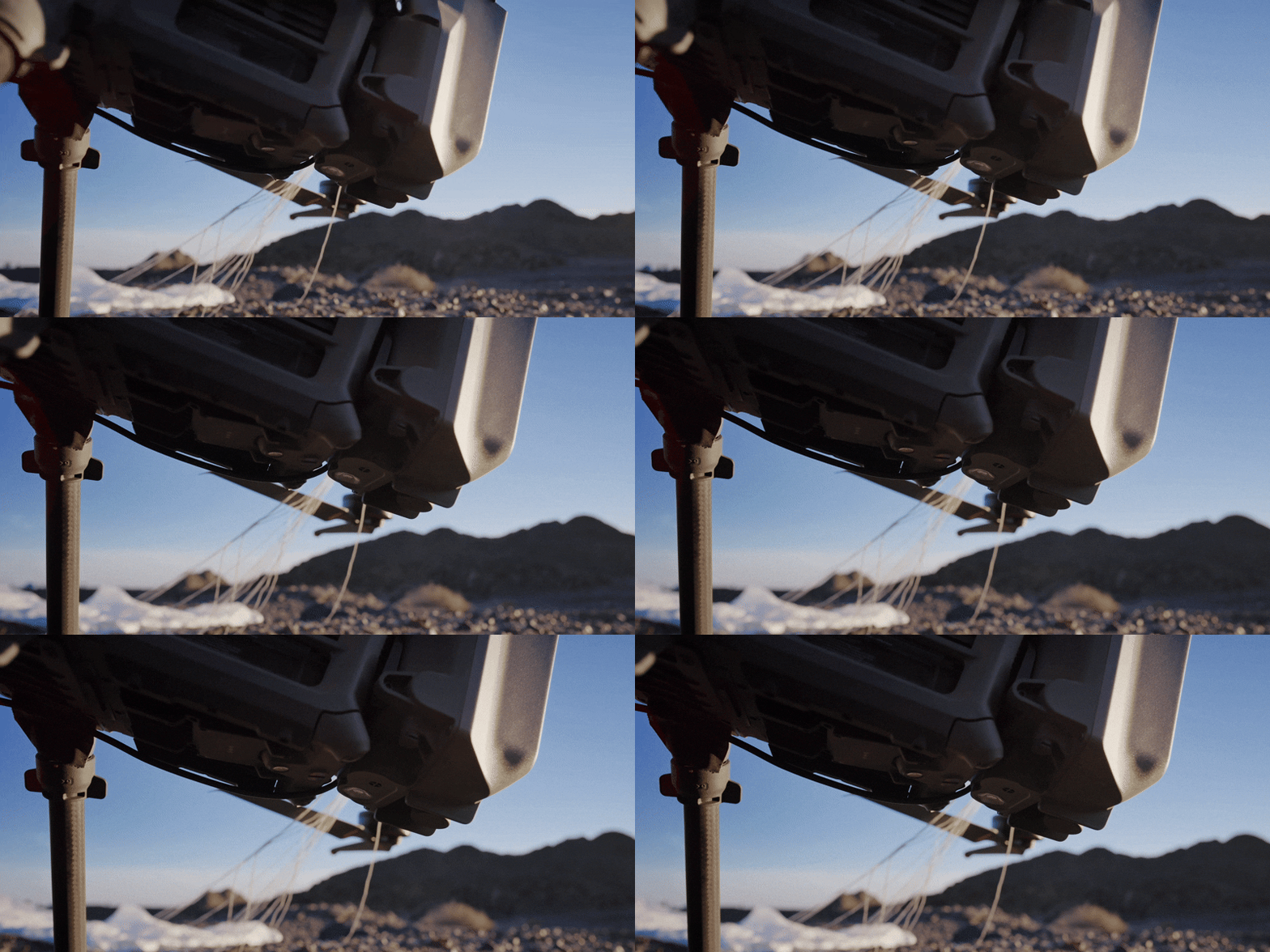
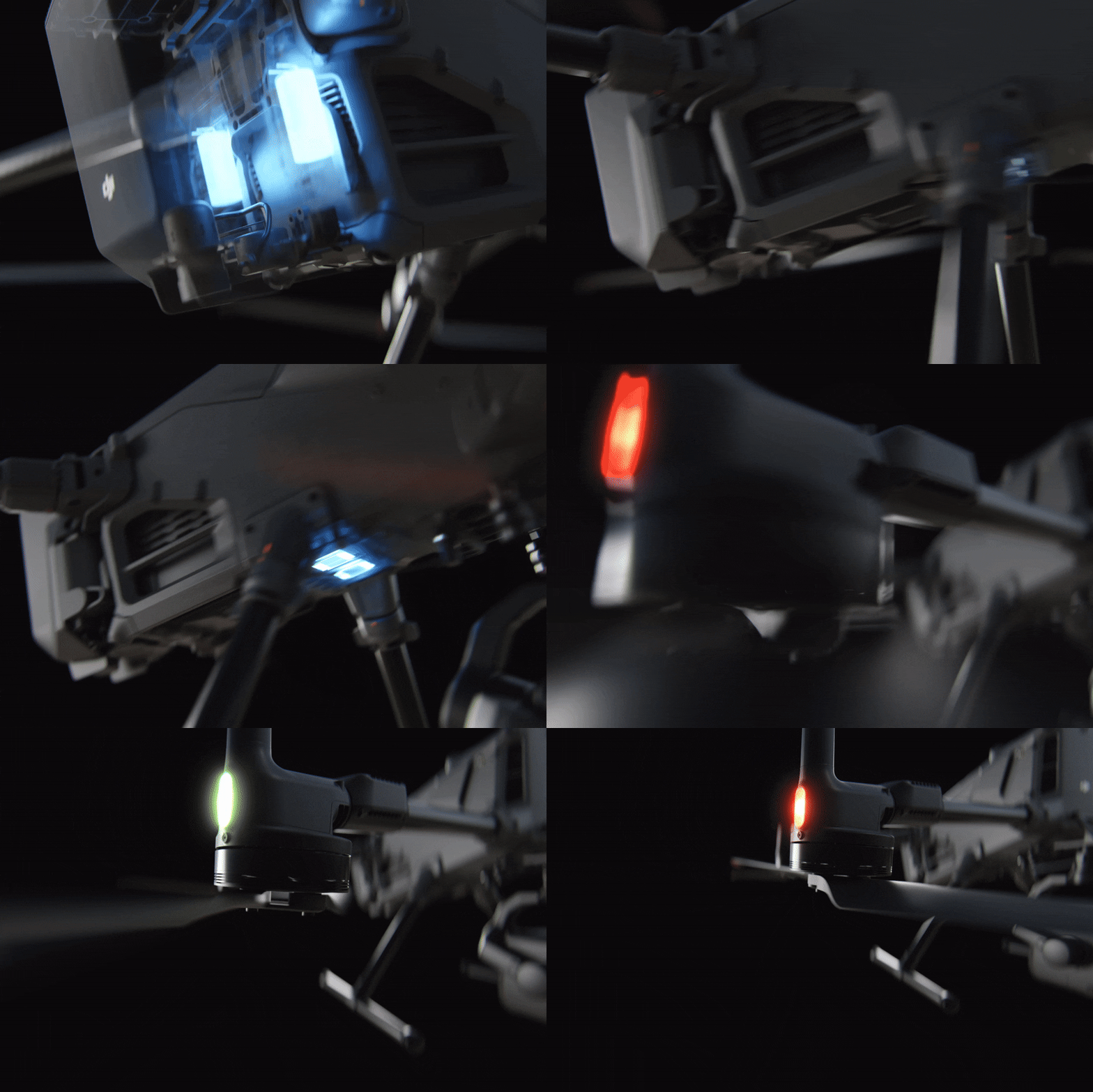
Following deployment, the AP100 activates bright flashing lights along with loud audible alarms that continue for approximately one hour.
These warnings help keep bystanders away from the landing area while making it easier for flight crews to locate and recover the aircraft after an incident.
The AP100 has been designed to fit naturally into the Matrice 400 workflow.
Its rear-mounted configuration avoids interfering with batteries or payload installation, allowing operators to leave the parachute attached while transporting the drone in its carrying case. This reduces setup time and makes field deployment more efficient.
Like the Matrice 400 itself, the AP100 carries an IP55 protection rating, allowing it to operate in dusty conditions and rain.
The system is also designed to perform across a wide operating temperature range, from -20°C to 50°C, making it suitable for missions in both cold and hot environments.
The AP100 is more than a new accessory for the Matrice 400. It reflects a broader direction in enterprise drone technology, where safety systems are becoming increasingly integrated with aircraft software, operational workflows, and regulatory requirements.
As commercial drone missions continue to expand, operators are looking for solutions that support not only safer flights but also smoother compliance and more efficient fleet management. By bringing emergency recovery, flight monitoring, and compliance features together within a single ecosystem, DJI is positioning the AP100 as part of that evolution rather than simply another piece of safety equipment.