Nighttime inspections and emergency response operations place unique demands on both personnel and equipment. Limited visibility can slow repairs, reduce inspection accuracy, and create additional safety risks—especially when work involves tall structures or damaged infrastructure.
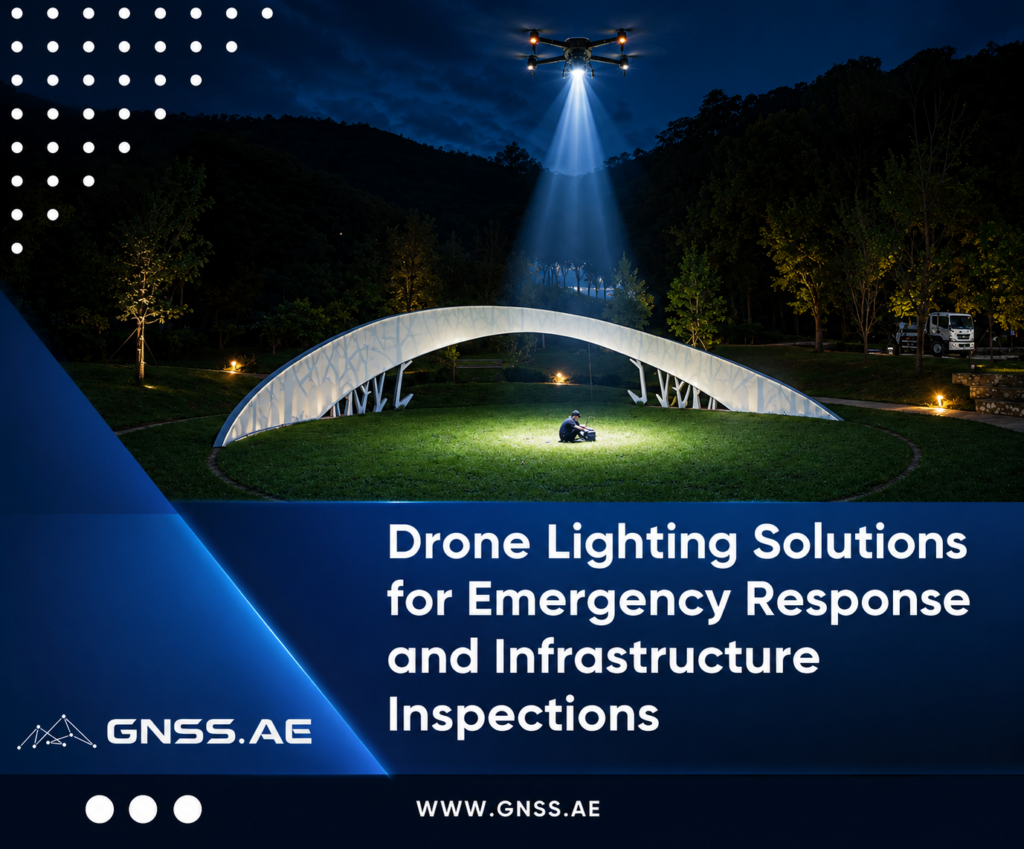
Conventional lighting systems remain an essential part of nighttime operations, but they are not always able to provide illumination where it is needed most. This has led utilities, emergency services, and industrial operators to increasingly adopt drone-based lighting solutions as a flexible complement to ground lighting.
In this article, we’ll look at how aerial lighting works, where tethered drone systems offer the greatest advantages, and how they are being used for infrastructure inspections, emergency repairs, and disaster response.
Unlike fixed lighting towers, aerial lighting adapts to the task in real time. Operators can reposition the light source within seconds, illuminate elevated structures from different angles, and follow crews as work progresses.
This flexibility offers several practical benefits:
High-resolution RGB cameras, thermal sensors, zoom payloads, and AI-assisted inspection software all perform better when the subject is evenly illuminated, resulting in clearer imagery and more reliable inspection data.
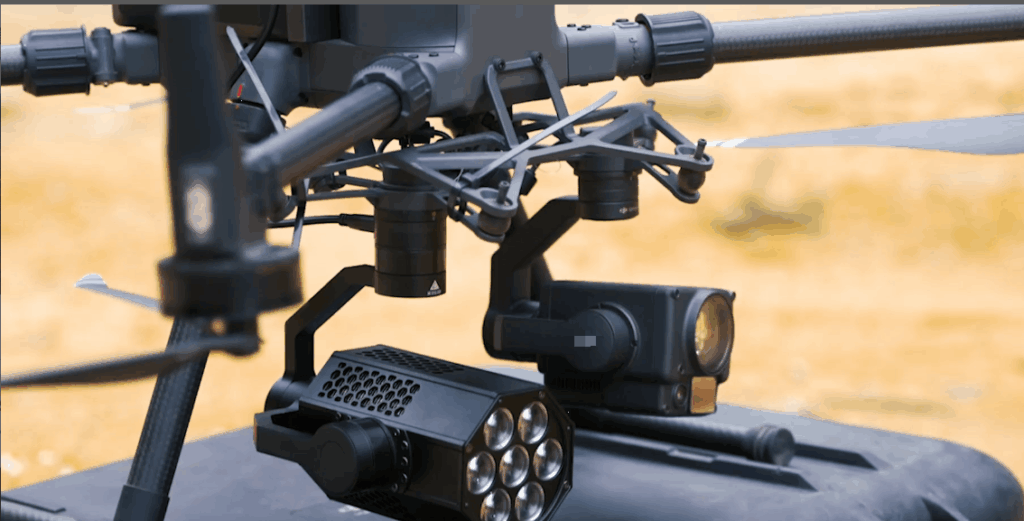
Battery-powered drones are well suited for inspections lasting 20 to 40 minutes, but emergency repairs rarely fit into a single battery cycle.
After severe weather, utility crews may spend hours restoring damaged transmission infrastructure. Rescue teams often work through the night following earthquakes, floods, or industrial accidents. In these situations, the objective is no longer simply to keep a drone airborne—it is to maintain a stable light source above the work area for as long as the mission requires.
This is where tethered drone systems offer a significant operational advantage. During rescue operations following the 2025 Myanmar earthquake, responders deployed the CZI TK3 Backpack Tethered Power System together with the GL60 Plus gimbal searchlight to provide continuous aerial illumination in areas where damaged infrastructure and prolonged nighttime operations made conventional lighting difficult to use.
Instead of relying solely on onboard batteries, the aircraft receives continuous power through a lightweight tether connected to a ground power station. The drone effectively becomes a mobile aerial lighting tower capable of hovering in a fixed position for extended periods while providing uninterrupted illumination.
Unlike a conventional lighting tower, however, the light source is not fixed. Operators can instantly reposition it to illuminate a damaged insulator, the underside of a bridge deck, or the top of a transmission tower without moving equipment on the ground.
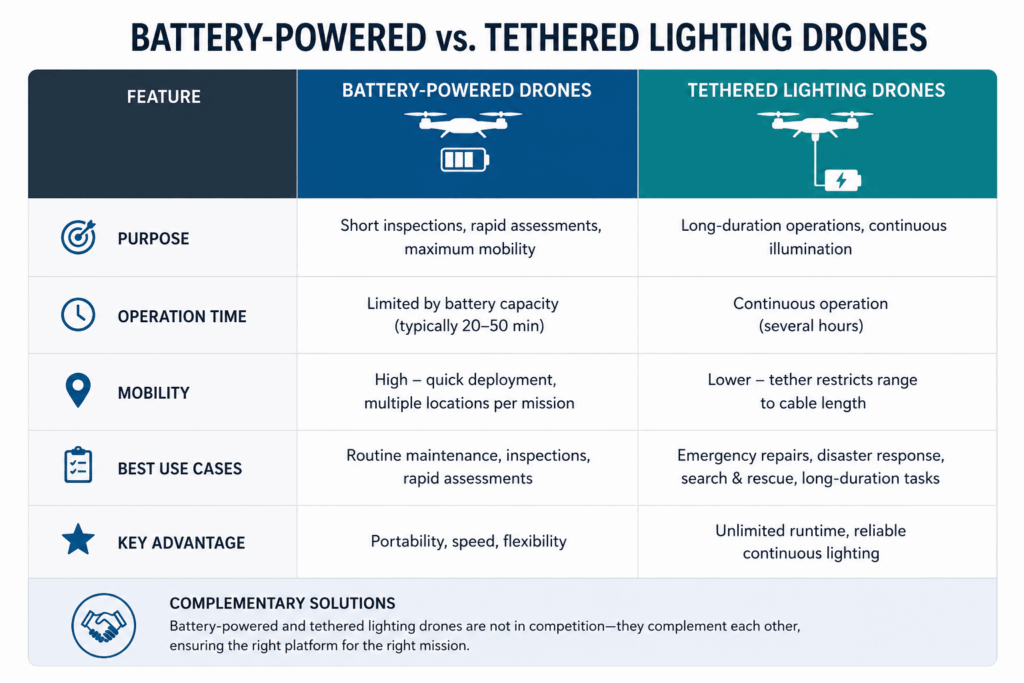
Both battery-powered and tethered drones have an important role to play, but they serve different operational needs.
Battery-powered platforms are ideal for short inspections, rapid assessments, and situations where maximum mobility is required. They can be deployed quickly, reach multiple locations in a single mission, and are well suited for routine maintenance.
Tethered systems are designed for a different purpose. By eliminating battery limitations, they provide continuous illumination during operations that may last several hours, making them particularly valuable for emergency repairs, disaster response, search and rescue missions, and other long-duration tasks.
Rather than competing with one another, the two approaches complement each other, allowing organizations to select the most appropriate platform for each mission.
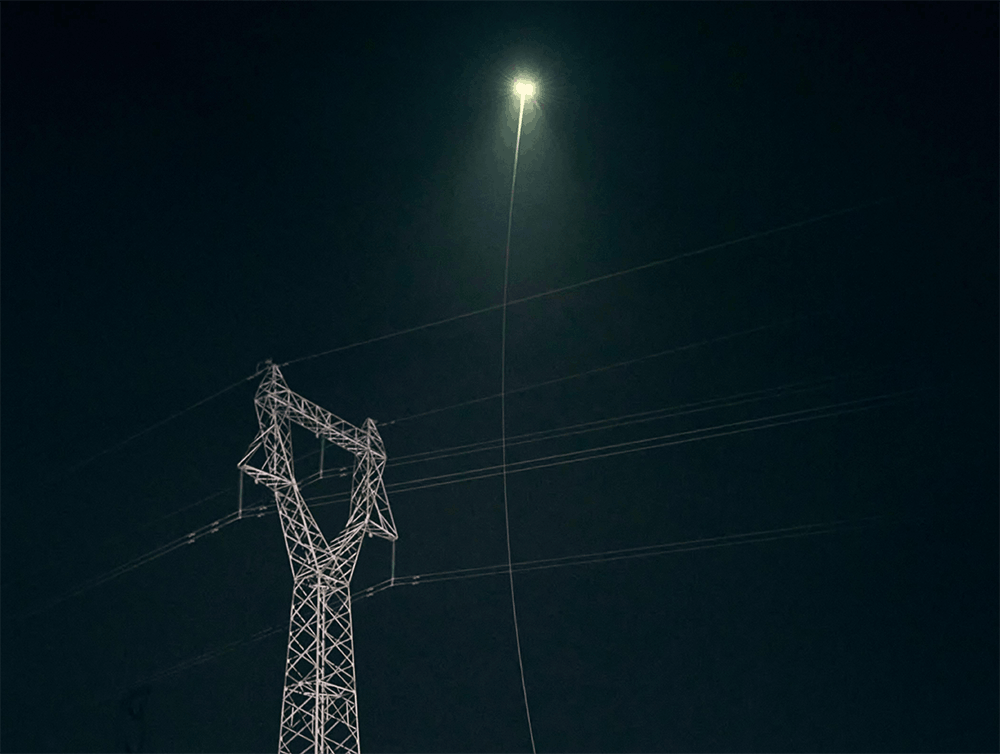
One example comes from a utility company responding to a nighttime power outage during a period of peak electricity demand.
Repair crews faced several challenges. Portable lighting provided insufficient illumination for work at height, battery-powered drones could not remain airborne for the duration of the repairs, and lighting from the ground created shadows around transmission equipment that complicated both inspection and maintenance.
To address these issues, responders deployed a tethered drone equipped with a CZI TK3 Backpack Tethered Power System and a GL300 high-power searchlight.
Rather than replacing conventional lighting, the aerial searchlight complemented existing floodlights. Ground lighting illuminated the general work zone, while the drone delivered adjustable overhead illumination directly onto towers, conductors, substations, and other elevated components. Continuous power supplied through the tether allowed the aircraft to remain airborne throughout the repair operation without repeated battery changes.
The result was a safer and more consistent lighting environment that reduced interruptions while improving visibility for technicians working at height.
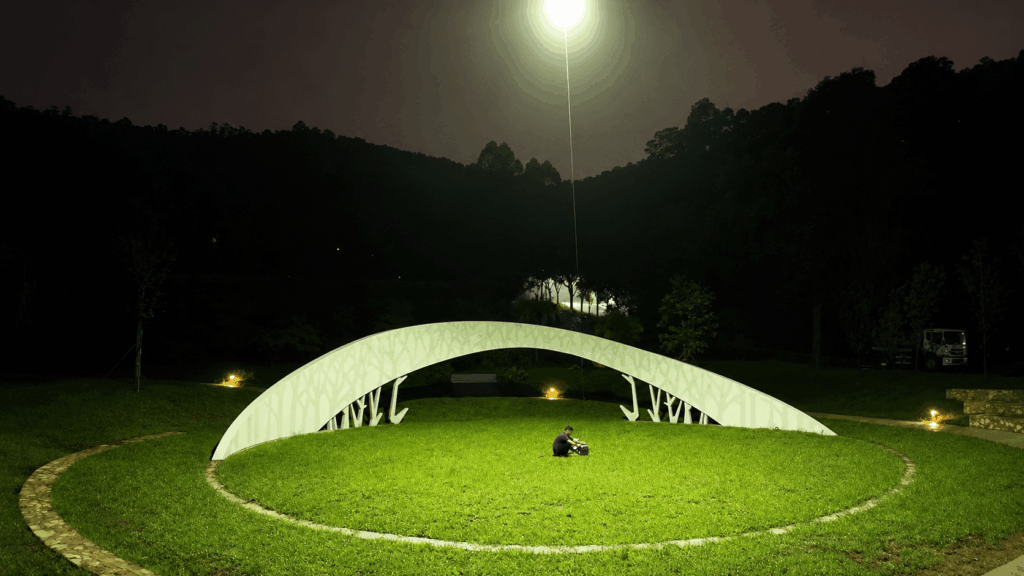
The benefits of aerial lighting extend well beyond helping technicians see more clearly.
Modern infrastructure inspections increasingly rely on high-resolution RGB cameras, thermal sensors, powerful zoom payloads, and AI-assisted defect detection. The quality of these tools depends heavily on image quality.
Poor illumination introduces image noise, reduces contrast, and creates deep shadows that can obscure critical details
These issues affect not only visual inspections in the field but also post-processing, where AI algorithms and image analysis software may struggle to detect defects hidden by uneven lighting.
By positioning the light source above or beside the inspection target, operators can illuminate surfaces more evenly and minimize shadowed areas.
The result is sharper images, clearer documentation, and more reliable inspection records, particularly when capturing complex structures such as transmission towers, bridge trusses, or industrial equipment
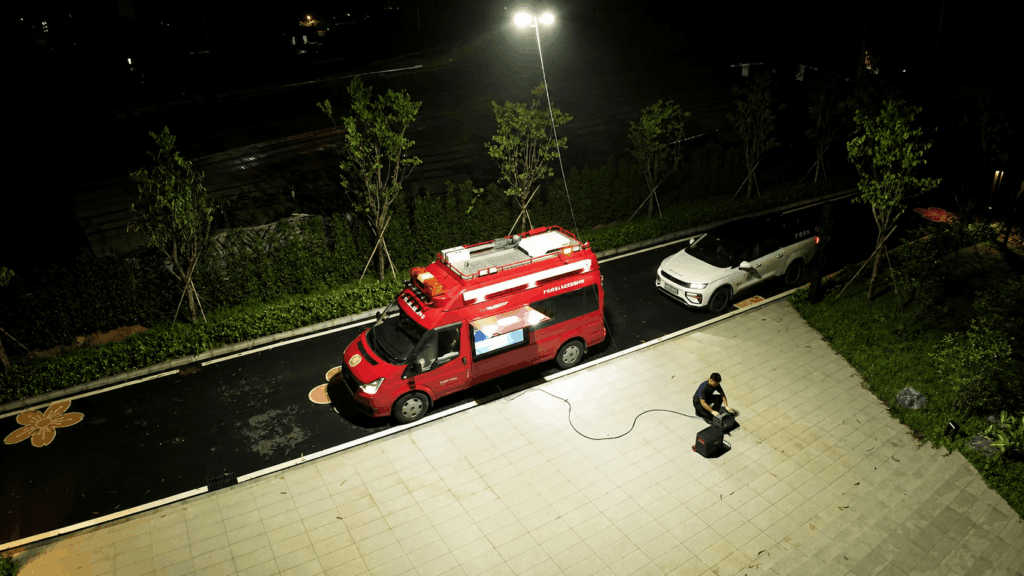
Drone-based lighting systems are not limited to a single configuration. The right solution depends on the mission requirements, including how long the aircraft needs to remain airborne, how much lighting power is required, and whether the organization already operates an existing UAV fleet.
Some missions require a dedicated aerial lighting platform designed for continuous illumination, while others can be solved by combining an enterprise drone with a tethered power system and a lighting payload. Heavy-lift UAVs can also be adapted for emergency response tasks where additional equipment, including lighting systems, needs to be carried into the air.
Solution type | Examples | Main advantage | Best suited for |
Dedicated aerial lighting platforms | Integrated lighting system with continuous power and high-output illumination | Emergency response, disaster zones, large work areas | |
Tethered drone + lighting payload | Long-duration flights using existing enterprise drones | Utility repairs, infrastructure maintenance, SAR operations | |
Heavy-lift industrial drones with lighting payloads | DJI FlyCart 100 and similar platforms | High payload capacity and mission flexibility | Large-area operations requiring additional equipment |
Multi-purpose tethered UAV platforms | Gesai 150M30T and similar systems | Extended hovering time and stable operation | Communication relay, monitoring, and specialized missions where lighting can be added |
For organizations that need reliable illumination for several hours, dedicated tethered platforms provide the highest level of integration and operational simplicity. Systems such as the CZI CZ100 combine the aircraft and lighting equipment into a single solution designed specifically for continuous aerial illumination.
Modular approaches, such as combining a tethered power system with a searchlight payload, offer greater flexibility. They allow operators to use existing enterprise drones while adapting the configuration for different scenarios, from power line repairs to disaster response.
The choice ultimately depends on the mission profile. Short inspections may only require a lightweight searchlight, while emergency repairs and rescue operations often benefit from tethered systems that can keep a stable light source above the work area for extended periods.
Aerial lighting is most valuable when work must be carried out above ground level, across large areas, or for extended periods. Typical applications include:
In each of these scenarios, the primary advantage is not simply brighter lighting, but the ability to position the light precisely where it is needed without disrupting ongoing operations.
Drone lighting systems are changing the way organizations approach nighttime operations. By relocating the light source from the ground into the air, they solve a problem that conventional lighting equipment cannot: illuminating complex infrastructure from the most effective angle.
When combined with tethered power technology, these systems become far more than drones carrying searchlights. They function as deployable aerial lighting platforms capable of supporting emergency repairs, infrastructure inspections, search and rescue missions, and disaster response for as long as the mission requires.
As utilities, emergency services, and industrial operators continue expanding around-the-clock operations, aerial lighting is becoming an increasingly practical part of professional UAV workflows—not because it replaces conventional lighting, but because it complements it in situations where ground-based illumination reaches its limits.
A drone lighting system is a UAV equipped with a high-power light source, such as an LED searchlight or lighting module, to provide aerial illumination for inspections, emergency response, and nighttime operations. Unlike fixed ground lighting, drones can position the light source above or around the target, reducing shadows and improving visibility in complex environments.
A tethered drone lighting system can remain airborne for significantly longer than a battery-powered drone because it receives continuous power through a cable connected to a ground station. Depending on the system configuration and power supply, tethered platforms can support operations lasting several hours, making them suitable for emergency repairs, disaster response, and long-duration inspections
Drone lighting systems are commonly used for nighttime infrastructure inspections, power line repairs, search and rescue missions, disaster response, and temporary illumination of large work areas. Typical applications include transmission towers, bridges, telecommunications infrastructure, industrial facilities, and emergency sites where conventional lighting is difficult to deploy.
Battery-powered lighting drones provide greater mobility and are suitable for short inspections or rapid assessments. Tethered lighting drones are designed for extended operations because they receive continuous power from the ground. They are better suited for missions where a stable light source must remain above the work area for hours without battery replacement.