Industrial drone technology is undergoing a fundamental transformation. What was once primarily a tool for aerial inspection and mapping is rapidly evolving into a platform for physical, task-driven execution. Today’s most advanced systems are no longer limited to observing infrastructure — they are actively involved in maintaining it.
This transition is particularly significant for industries that depend on large-scale, high-altitude assets, where maintenance has traditionally been costly, risky, and operationally complex.
Within this context, Wisson Robotics has positioned itself at the forefront of aerial robotic applications. Its integrated ecosystem — combining drone platforms, flexible manipulators, and specialized payload systems — enables a wide range of real-world maintenance tasks to be performed with precision and consistency.
The relevance of these solutions becomes even more pronounced in regions such as the UAE and the wider Gulf, where environmental conditions, architectural complexity, and rapid infrastructure growth create unique operational demands.
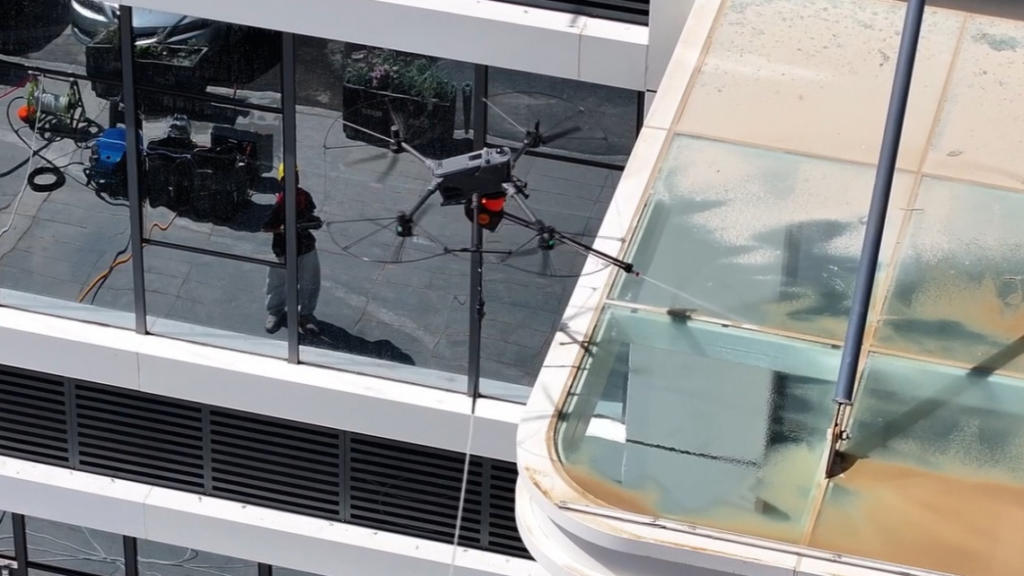
In dense urban environments across the Gulf region, facade maintenance is not merely aesthetic — it is a continuous operational requirement.
Unlike temperate climates, buildings in cities such as Dubai or Abu Dhabi are exposed to persistent airborne dust, sandstorms, and high humidity levels. Fine particles regularly settle on glass, steel, and composite surfaces, forming layers that not only degrade visual appearance but can also impact material longevity over time.
This environmental reality fundamentally alters the economics of facade cleaning. What might be a periodic activity in other regions becomes a high-frequency maintenance cycle in the Gulf.
Traditional cleaning approaches — including rope access teams, suspended platforms, and crane systems — are increasingly constrained by:
Modern architecture further complicates execution with:
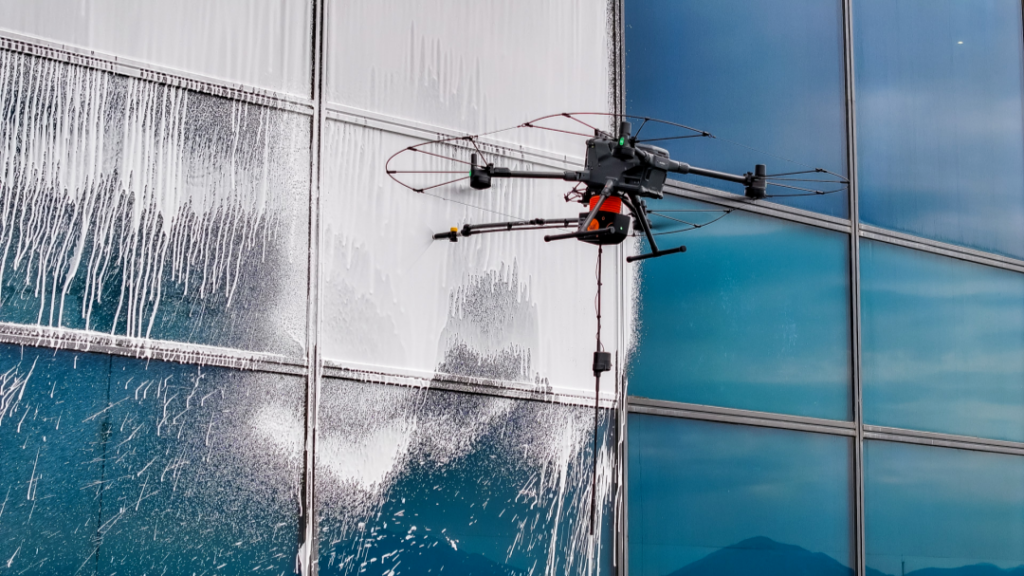
To address these challenges, Wisson deploys the Wisson AP3-P3 Tethered Cleaning System, specifically engineered for high-rise environments.
Unlike conventional drones, the AP3-P3 operates with a continuous tethered water supply, eliminating downtime caused by repeated landing and refilling cycles. This enables long-duration, uninterrupted cleaning operations — a critical advantage for large commercial towers.
Its high-pressure cleaning capability and adjustable spray angles allow operators to maintain consistent performance across complex surfaces, including recessed glazing and angled facades. In practice, this translates into:
In dust-intensive Gulf environments, this system transforms facade cleaning into a scalable, repeatable maintenance process rather than a reactive service.
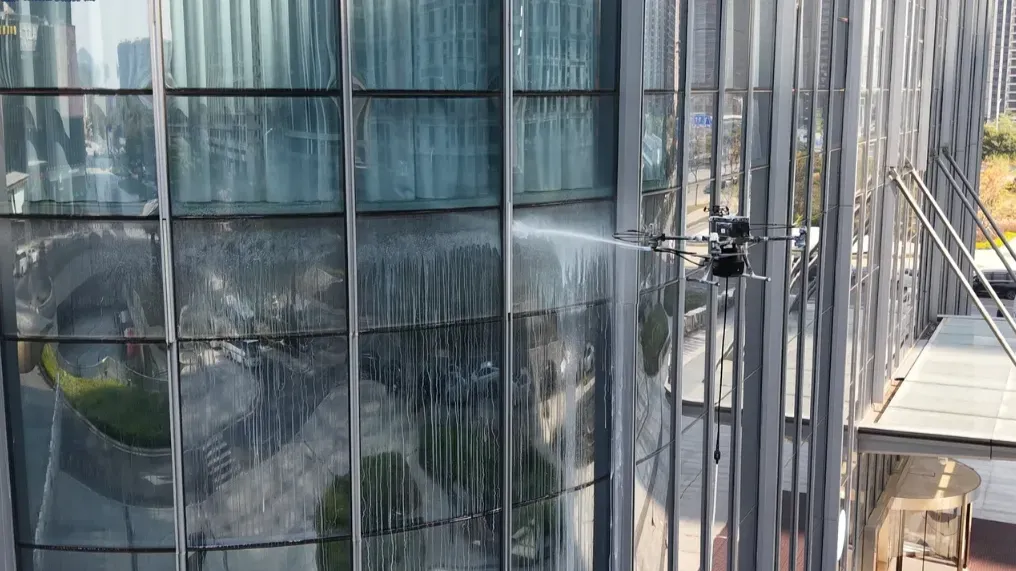
The rapid expansion of solar energy infrastructure across the UAE and the broader Gulf region has introduced a new category of maintenance challenges — directly tied to environmental conditions.
Solar panels in desert climates are subject to continuous dust accumulation, often without rainfall to naturally clean surfaces. Even minimal contamination can reduce efficiency by 10–30% or more.
At scale, this results in substantial energy and revenue losses.
Traditional cleaning methods are:
And here again, the Wisson AP3-P3 Tethered Cleaning System plays a central role.
Its tethered architecture allows drones to:
For utility-scale solar farms, this enables systematic, repeatable cleaning cycles, which are essential for maintaining peak performance in desert environments.
In rooftop and industrial solar installations, aerial cleaning significantly improves accessibility while reducing reliance on manual labor.
The result is not just operational efficiency, but a direct increase in energy yield and return on investment, positioning aerial cleaning as a strategic asset in solar energy management.
Wind turbines operate under continuous environmental exposure, accumulating:
These factors degrade aerodynamic performance and accelerate material wear.
Traditional maintenance methods — primarily rope access — are slow, risky, and operationally disruptive.
Wisson’s aerial robotic systems introduce a shift toward active, tool-based maintenance.
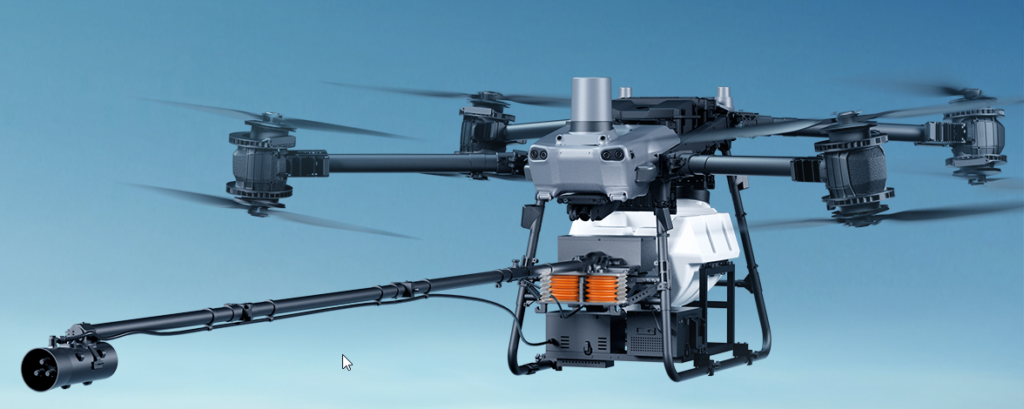
For cleaning and heavy-duty surface treatment, the Wisson Orion AP30-P4H Pliabot Aerial High Pressure Sprayer is deployed. This system is designed for high-pressure cleaning of stubborn contaminants, making it particularly effective for turbine blades and nacelles exposed to oil and environmental buildup.
In contrast, the Wisson Orion AP30-P4 Pliabot Aerial Atomized Sprayer is optimized for **fine, controlled spraying applications, such as:
The distinction between these two systems is operationally important:
Together, they enable a full maintenance workflow — from surface preparation to protective treatment — executed entirely via aerial platforms.
This reduces turbine downtime and enables more frequent maintenance cycles, supporting a shift toward proactive asset management.
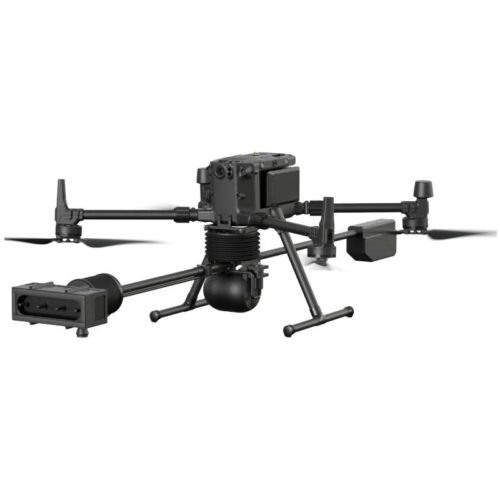
One of the most advanced developments in aerial robotics is the ability to perform contact-based diagnostics.
Certain maintenance operations — particularly lightning protection testing — require physical interaction with infrastructure.
This is where the Wisson Orion AP3-D1 Aerial Contact Detection Robot becomes critical.
Unlike traditional inspection drones, the AP3-D1 is designed to:
In wind turbines, this allows for direct testing of lightning protection systems without requiring technicians to climb the structure.
From an operational perspective, this delivers:
The ability to combine aerial mobility with physical interaction represents a major shift from passive inspection to active, data-driven maintenance.
Surface protection is essential in environments where heat, humidity, and airborne contaminants accelerate degradation.
Applications include:
Manual spraying often results in inconsistent coverage and material waste.
The Wisson Orion AP30-P4 Pliabot Aerial Atomized Sprayer addresses this by enabling highly controlled, uniform spray distribution across complex geometries.
Its atomized spraying mechanism ensures:
For more demanding applications requiring surface preparation or cleaning prior to coating, the Wisson Orion AP30-P4H Pliabot Aerial High Pressure Sprayer provides the necessary power to remove contaminants.
This combination allows aerial systems to execute end-to-end coating workflows, from cleaning to final application.
In practice, this improves durability, reduces rework, and lowers lifecycle maintenance costs.
The evolution of aerial robotics is best understood as a shift from seeing to doing.
Where drones were once limited to data collection, they are now actively performing critical maintenance tasks across industries.
Wisson’s platform ecosystem — including the AP3-P3 cleaning system, AP30 spraying units, and AP3-D1 contact robot — demonstrates how aerial systems can:
In regions such as the UAE and the Persian Gulf, where environmental conditions demand frequent intervention, these capabilities are not incremental improvements — they are operational breakthroughs.
For asset owners and operators, the impact is clear:
As industrial assets continue to grow in scale and complexity, aerial robotics is rapidly transitioning from innovation to essential infrastructure technology.
Key sectors include:
Yes. Wisson solutions are already deployed across multiple industries, including facade cleaning, solar panel maintenance, and wind turbine operations.
Its architecture enables:
Yes. This is a key differentiator, especially with the AP30-N1 manipulator and AP30-D1 contact detection system.