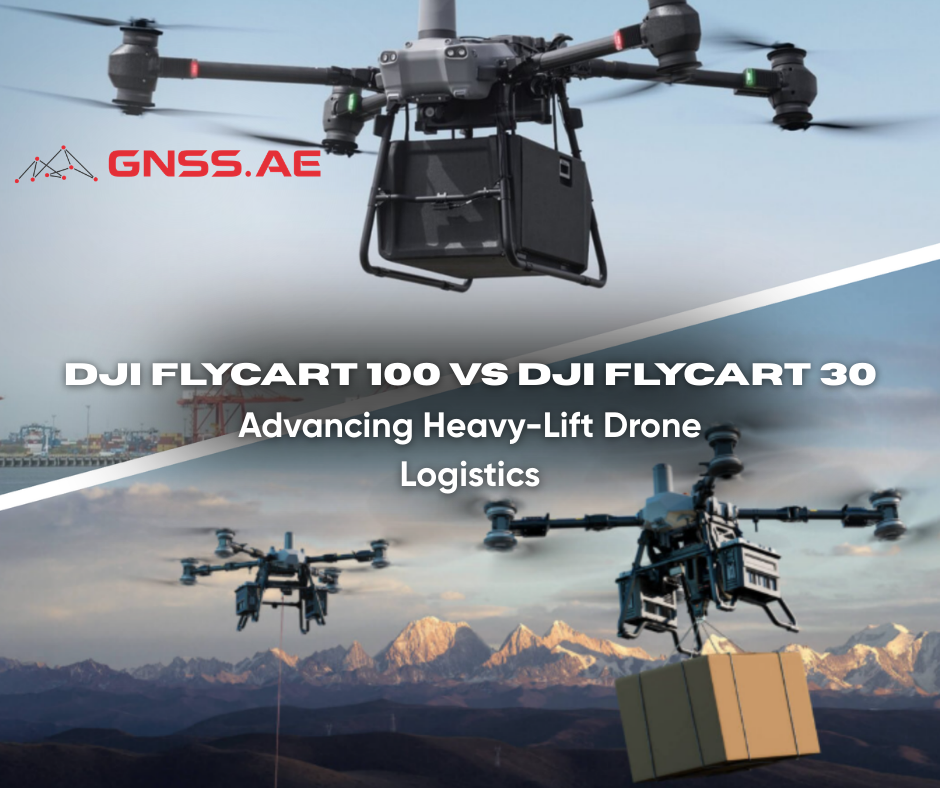
The rapid evolution in drone logistics is reshaping how industries manage cargo delivery, particularly in remote and hard-to-reach areas. With the introduction of DJI FlyCart 100, DJI has significantly expanded the capabilities first demonstrated by the DJI FlyCart 30.
While the FlyCart 30 proved that heavy aerial transport was possible, the FlyCart 100 marks a significant technological advancement — not only in terms of payload but also in safety, efficiency, and the ability to scale operations.
In a previous GNSS.AE article, we examined the DJI FlyCart 100 and its role in advancing industrial aerial logistics. This article provides a structured comparison of both platforms — DJI FlyCart 30 and DJI FlyCart 100 — to help determine which solution best fits specific logistics needs.
When it comes to cargo drones, payload capacity is the most crucial factor, as it directly influences the kinds of missions they can undertake — ranging from light deliveries to heavy industrial logistics.
Configuration | DJI FlyCart 30 | DJI FlyCart 100 |
Max Payload (Single Battery) | 40 kg | 100 kg |
Max Payload (Dual Battery) | 30 kg | 85 kg |
Max Takeoff Weight | ~95 kg | 170 kg |
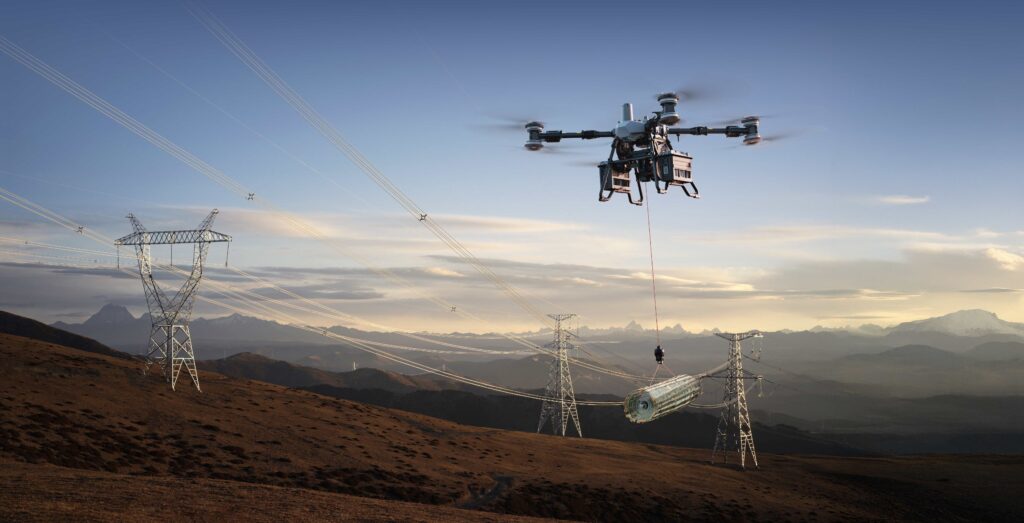
The FlyCart 30 is perfect for transporting tools, spare parts, and medical supplies, but the FlyCart 100 takes things to a whole new level. With a payload capacity of up to 100 kg, it can carry:
This increase is supported by a redesigned airframe, high-torque motors, and large carbon fiber propellers, effectively turning the FlyCart 100 into an “aerial logistics platform” rather than just a delivery drone.
Range and endurance are key for operating efficiently over large project areas, especially in regions with limited infrastructure.
Parameter | DJI FlyCart 30 | DJI FlyCart 100 |
Range (Max Payload, Dual Battery) | 16 km (with 30 kg) | 12 km (with 65 kg) |
Wind Resistance | Up to 12 m/s | Up to 12 m/s |
Max Altitude | 6,000 m | 6,000 m |
Although FlyCart 30 offers slightly longer range in certain configurations, FlyCart 100 maintains strong performance even under heavy load conditions.
This makes FlyCart 100 more suitable for:
Both models can operate in high-altitude environments, making them ideal for regions with challenging landscapes.
Efficient delivery mechanisms are critical for operations where landing is not possible — such as forests, construction zones, or offshore locations.
Feature | DJI FlyCart 30 | DJI FlyCart 100 |
Delivery Modes | Cargo box + winch | Advanced winch + dual systems |
Winch System | Standard | Dual-motor upgraded system |
Load Monitoring | Basic | Real-time weighing |
Emergency Features | Limited | Cable release & emergency drop |
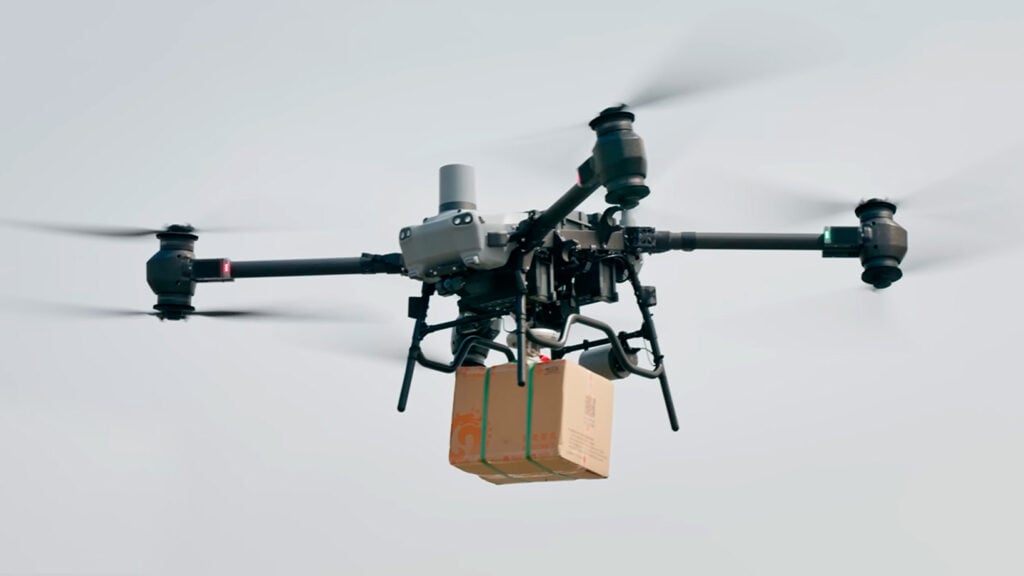
Both drones support:
However, FlyCart 100 significantly enhances this capability.
Its upgraded Flagship Winch System allows for:
Additional smart features include:
These improvements are particularly valuable for operations over:
Advanced sensing systems are critical for safe operation in obstacle-rich or low-visibility environments.
System | DJI FlyCart 30 | DJI FlyCart 100 |
Vision System | Binocular vision | Multi-directional vision |
Radar | Yes | Millimeter-wave radar |
LiDAR | No | Yes |
Parachute System | Yes | Enhanced (lower descent speed) |
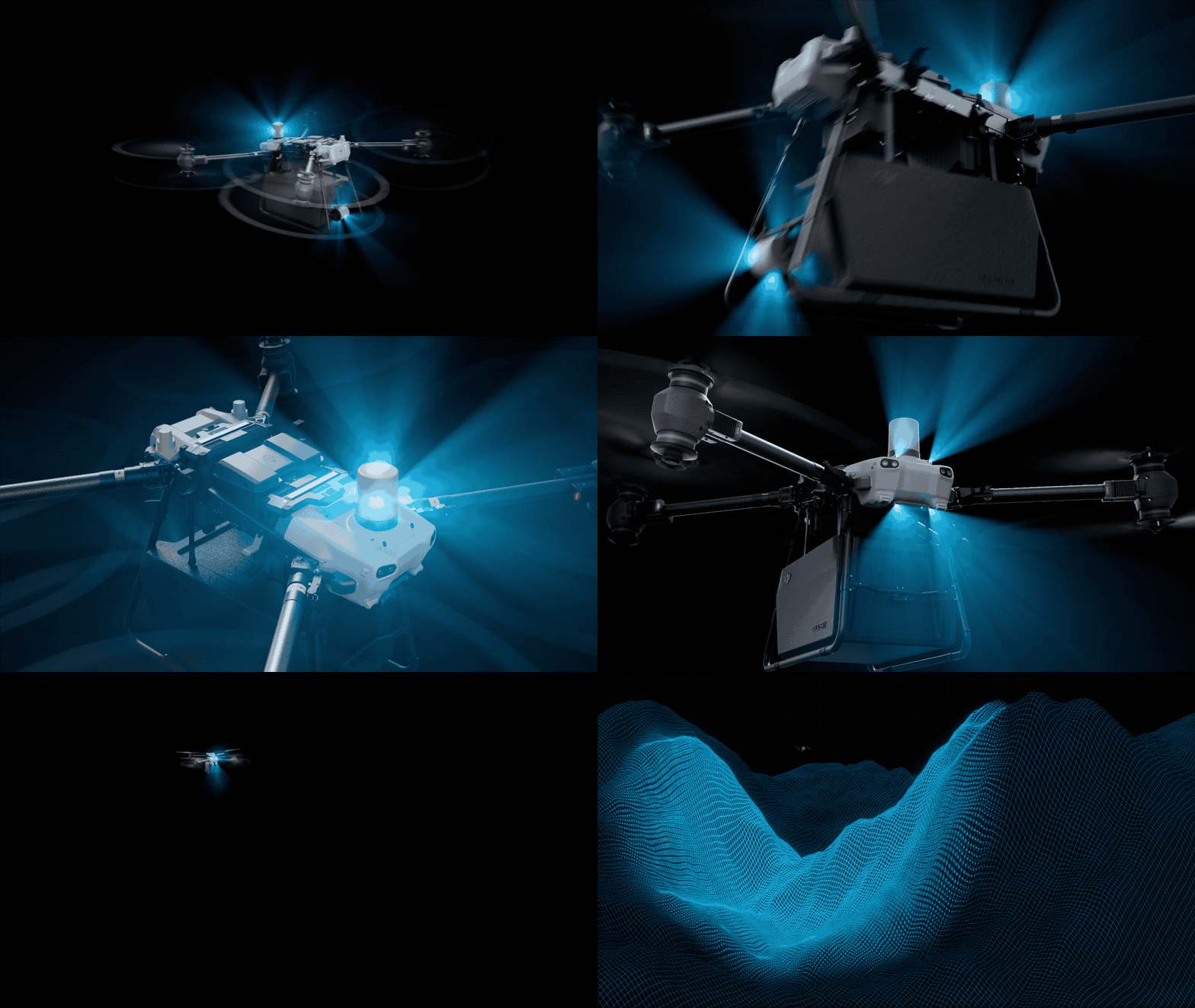
FlyCart 100 introduces a significantly more advanced multi-sensor perception system, combining:
This combination allows the drone to detect:
Additionally, both drones include a parachute system, but FlyCart 100’s version is enhanced to handle higher mass and ensure safer descent in emergency scenarios.
Industrial drone operations often require reliable performance under extreme environmental conditions.
Parameter | DJI FlyCart 30 | DJI FlyCart 100 |
IP Rating | IP55 | IP55 |
Operating Temperature | -20°C to 45°C | -20°C to 40°C |
Wind Resistance | Up to 12 m/s | Up to 12 m/s |
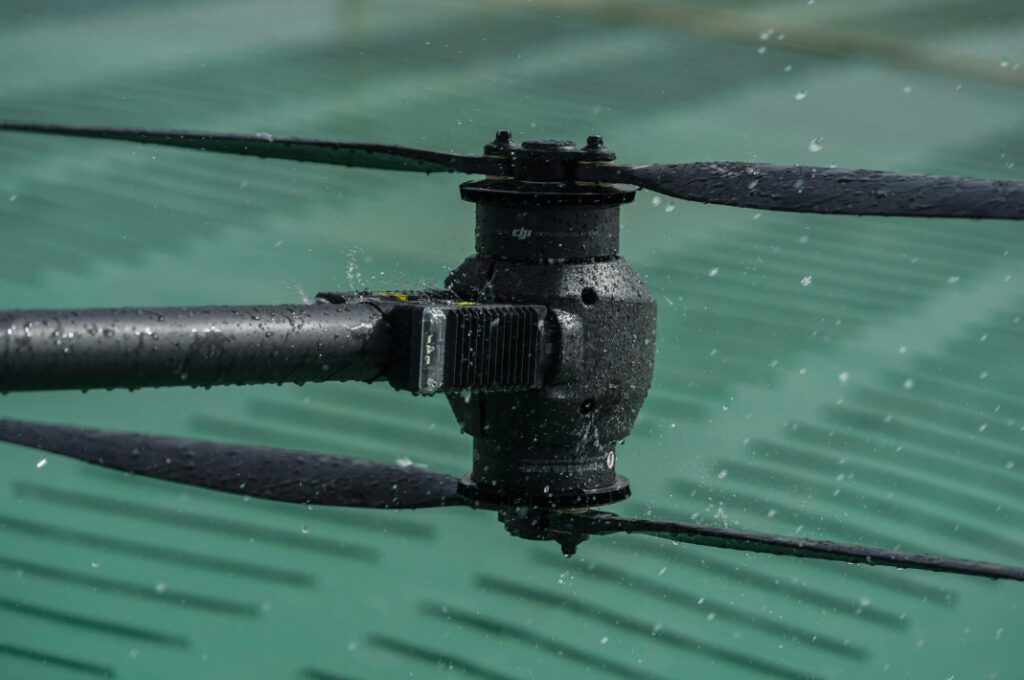
Both models offer comparable protection and durability suited for desert, mountain, and offshore environments typical in the region.
Aspect | DJI FlyCart 30 | DJI FlyCart 100 |
Deployment | Standard operations | Scalable logistics |
Mission Type | Medium-duty | Heavy-duty / high-volume |
System Integration | Basic | Advanced ecosystem support |
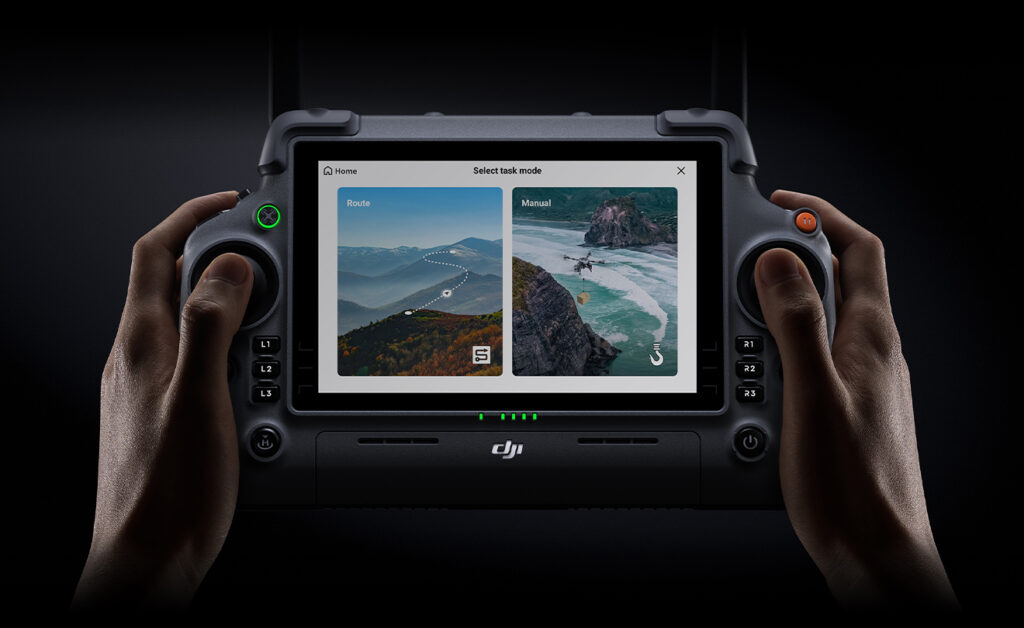
FlyCart 30 is well-suited for stable, repeatable operations, while FlyCart 100 is designed for scaling logistics workflows and handling larger, more complex missions.
Drone logistics is particularly relevant in regions with large-scale infrastructure projects and difficult terrain.
DJI FlyCart 30
DJI FlyCart 100
The ability to transport heavy loads efficiently makes FlyCart 100 especially valuable in the UAE and Middle East, where projects often require long-distance delivery in challenging environments.
The DJI FlyCart 30 and FlyCart 100 represent different phases in the progression of aerial logistics. The FlyCart 30 is a proven option for medium-scale delivery requirements, whereas the FlyCart 100 introduces enhanced payload capacity, safety features, and operational adaptability suited to heavier and more complex logistics needs. As sectors increasingly adopt drone-based delivery, these models will contribute to faster, safer, and more effective solutions for challenging environments.
To learn more, explore the full FlyCart 100 review and product pages on GNSS.AE.