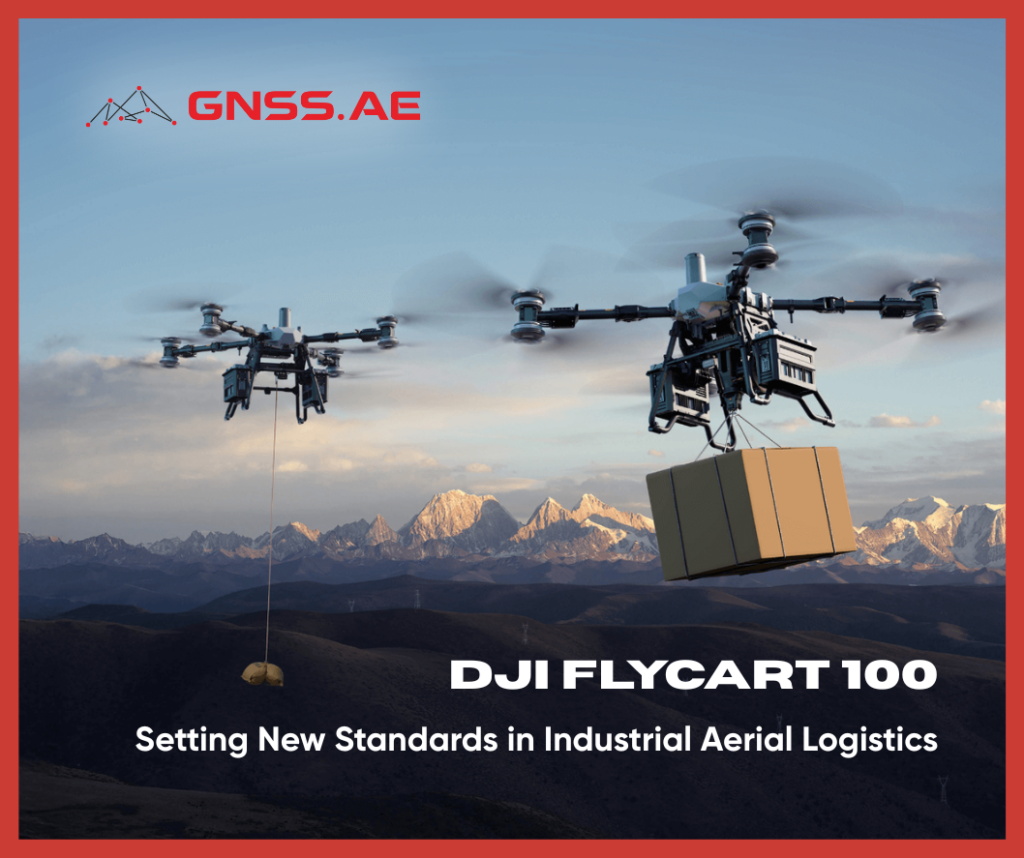
DJI has officially launched DJI FlyCart 100, marking a significant leap forward in heavy-lift cargo drone technology. As the company’s most powerful delivery drone to date, the FC100 is engineered to redefine professional aerial logistics and push the boundaries of what’s possible in industrial delivery operations.
DJI FlyCart 100 represents a substantial upgrade over its predecessor, the FlyCart 30, with dramatically enhanced carrying capacity. With a maximum takeoff weight of 170kg, the FC100 can transport up to 100kg of cargo when operating with a single battery configuration, or 85kg when utilizing dual batteries. This represents more than double the capacity of DJI FlyCart 30, which maxed out at 40kg and 30kg respectively.
These impressive specifications translate to real-world performance, with the drone capable of achieving up to 12km maximum flight distance even at a 149.9kg takeoff weight, making it ideal for mission-critical operations in challenging environments.
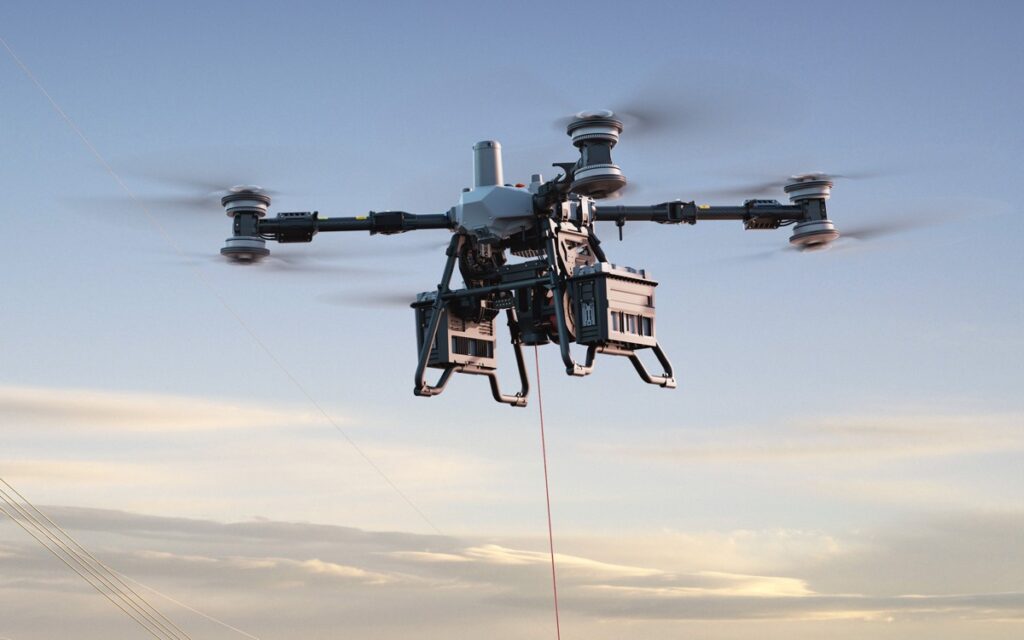
One of DJI FlyCart 100’s standout features is its support for two distinct payload systems, allowing operators to select the optimal configuration for their specific delivery scenarios:
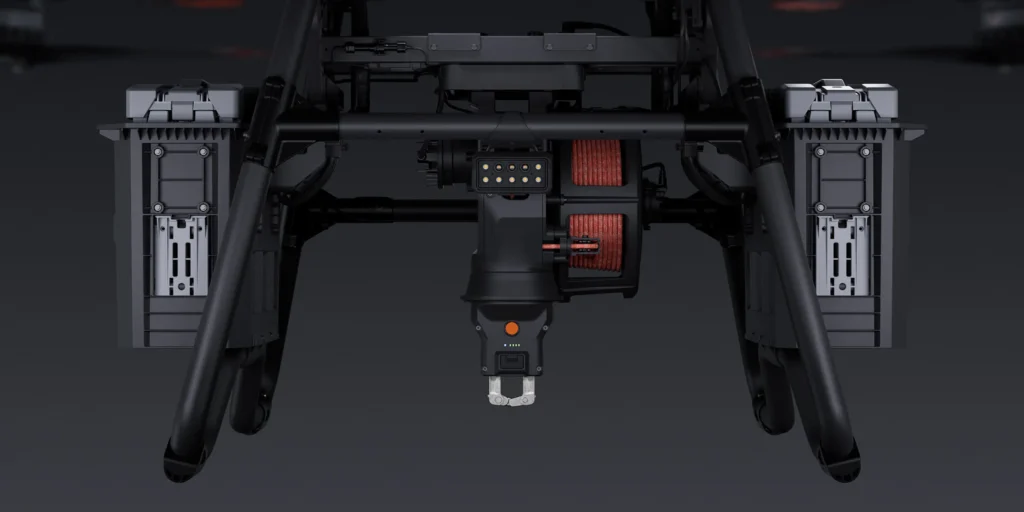
DJI FlyCart 100 Flagship Winch System: This significantly redesigned system features dual-motor operation, extended internal cable length, increased motor power, and faster deployment and retrieval speeds. Key capabilities include cable release and retrieval, an innovative electric hook with on/off control, real-time weighing functionality, and emergency cable abandon features for critical situations.
DJI Dual-Battery Lifting System: This alternative system offers real-time weighing, automatic balance control, and cable-cut escape functionality, providing versatility for different operational requirements.
It’s important to note that while both systems are compatible with the FC100, they are not interchangeable with the previous FlyCart 30 systems due to the substantial engineering improvements.
Safety is paramount in DJI FlyCart 100’s design. The drone incorporates a sophisticated multi-layered safety architecture that includes:
This comprehensive protection framework safeguards personnel, drones and cargo throughout all phases of operation, from takeoff to landing, under both routine and emergency conditions.
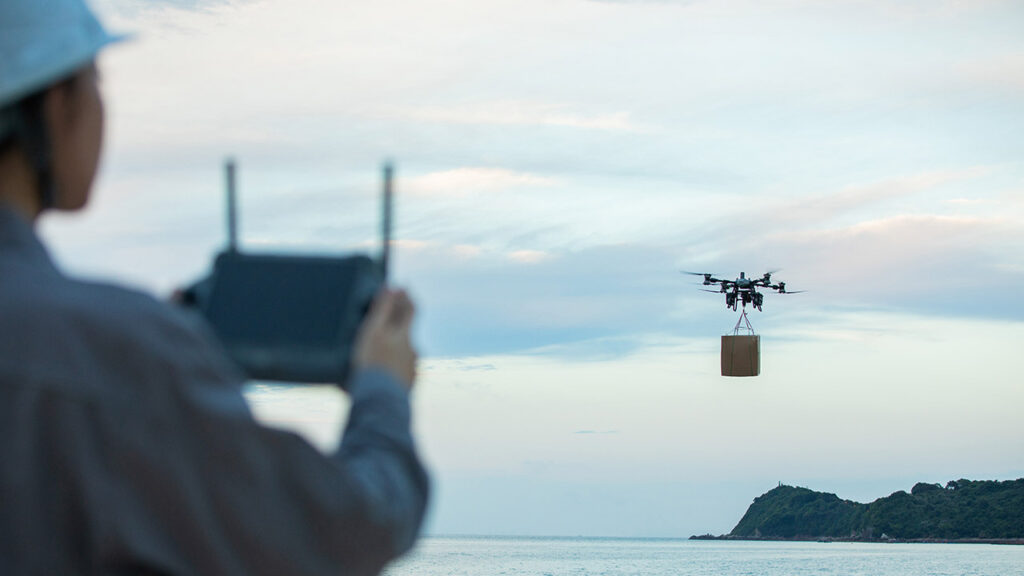
DJI FlyCart 100 is engineered to operate reliably in challenging conditions. With an IP55 rating, the drone offers robust protection against dust and water. It can handle wind speeds up to 12 m/s and operate in temperatures ranging from -20°C to 40°C. The aircraft can even reach altitudes up to 6,000 meters, making it suitable for mountainous terrain and high-altitude operations.
To minimize downtime, DJI FC100 supports ultra-fast charging via the C12000 charger or D14000iE generator, ensuring rapid turnaround between missions.
DJI has developed a comprehensive ecosystem to support FlyCart 100 operations:
RC Plus 2 Controller: Features a bright 7-inch display and supports Dual Controller Mode for enhanced operational flexibility.
DJI Delivery App: Enables pilots to operate the FC100 directly from their controller, with innovative features including A-B Route Operation Mode and AR Display for enhanced situational awareness.
DJI DeliveryHub: This one-stop air delivery management platform provides efficient operation planning, comprehensive status monitoring, and centralized team resource management, streamlining complex logistics operations.
DJI FlyCart 100 embraces customization through its support for PSDK (Payload SDK) and high-power interfaces for third-party payloads. This integration with a powerful developer ecosystem enables organizations to tailor the drone to their specific operational needs and unlock infinite possibilities for specialized applications.
DJI FlyCart 100 represents a transformative advancement in aerial cargo delivery. By more than doubling payload capacity, enhancing safety systems, and providing flexible deployment options, DJI has created a platform that can truly break through operational boundaries. From mountains to oceans, from remote communities to industrial sites, DJI FC100 is poised to enable unstoppable delivery in environments where traditional logistics face significant challenges.
As industries continue to explore autonomous delivery solutions, DJI FlyCart 100 establishes a new benchmark for what heavy-lift cargo drones can achieve in real-world applications.
Contact GNSS.AE and take your aerial operations to the next level.