Cargo drones are gradually moving beyond short-distance deliveries. As industries look for faster ways to transport equipment and supplies to remote locations, the focus is shifting toward aircraft that can carry heavier payloads over longer distances without relying on traditional transport infrastructure.
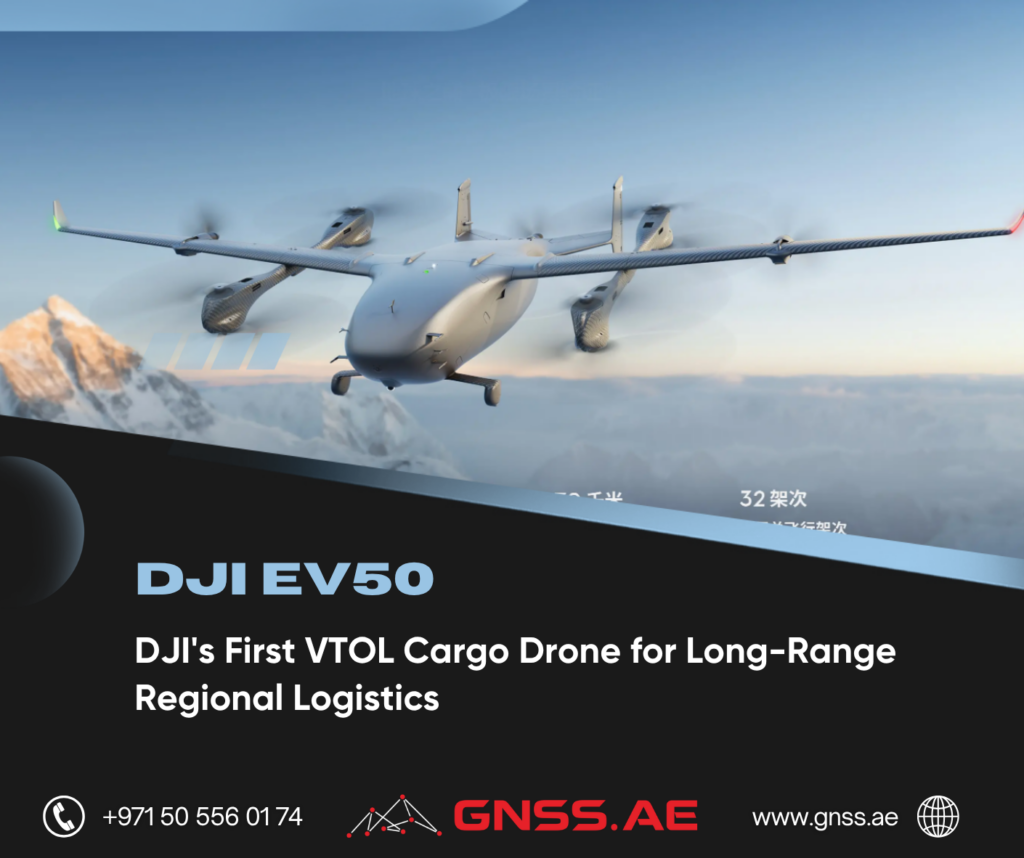
DJI’s EV50 represents the company’s first vertical take-off and landing (VTOL) fixed-wing cargo drone developed for regional logistics. By combining vertical take-off capabilities with the efficiency of fixed-wing flight, the aircraft is designed to support delivery operations that are difficult to perform with conventional multirotor drones.
Most cargo drones currently rely on either multirotor or fixed-wing designs.
Multirotor platforms offer excellent maneuverability and can operate from confined areas, making them suitable for short-range deliveries and precision drops. However, their endurance is limited because all rotors must continuously generate lift throughout the flight.
Fixed-wing aircraft provide much better range and energy efficiency but require runways, launch equipment, or prepared operating areas.
The EV50 combines these two approaches. Its VTOL design allows it to launch and land vertically from temporary logistics sites, construction areas, emergency zones, or remote facilities. After take-off, the aircraft transitions into fixed-wing flight, reducing energy consumption and enabling longer regional transport missions.
Instead of replacing existing cargo drones, the EV50 expands the range of scenarios where unmanned logistics can be practical.

The EV50 is designed for transporting cargo between locations where roads are slow, seasonal, or unavailable. Mountain communities, offshore facilities, research stations, industrial sites, and disaster-affected regions are all examples of environments where aerial logistics can provide clear operational advantages.
DJI specifies the aircraft for regional delivery missions of up to 100 km, while its maximum no-load range reaches 150 km.
Key specifications:
These figures position the EV50 as one of DJI’s most capable logistics platforms to date, balancing payload capacity, endurance, and deployment flexibility.
During takeoff and landing, eight lift rotors provide stable vertical flight without requiring a runway. After reaching a safe altitude, the aircraft transitions into forward flight powered by three dedicated cruise propulsion motors, allowing the wings to generate lift instead of relying entirely on rotor thrust.
This approach significantly reduces energy consumption during cruise, enabling longer flights and higher payload efficiency than would typically be possible with a purely multirotor platform.
For regional cargo operations, where aircraft may need to travel tens or even hundreds of kilometers between destinations, this efficiency becomes one of the platform’s biggest advantages.
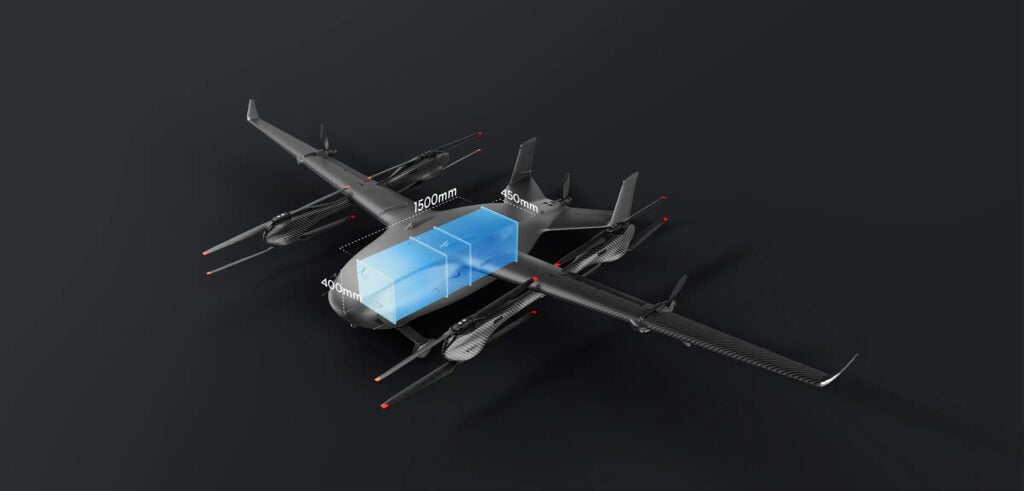
The EV50 is equipped with a 270-liter wide-body cargo compartment designed to support different types of payloads while utilizing its 50 kg payload capacity.
The available space allows operators to transport equipment such as emergency supplies, medical cargo, scientific instruments, industrial components, and maintenance materials. In practical applications, this can reduce the number of flights required for moving larger volumes of cargo.
Long-range unmanned logistics depends not only on flight endurance but also on system reliability, especially when operating in remote areas.
The EV50 includes several redundancy and safety features designed to support more reliable missions:
Together, these features are designed to help maintain safe operation throughout long-distance flights, particularly in remote environments where recovery options may be limited.
The EV50 is designed for practical deployment outside traditional aviation infrastructure.
Its modular airframe can be assembled or disassembled without tools, allowing two operators to prepare the aircraft for transport or flight in approximately five minutes.
The compact transport configuration makes relocation and storage easier, enabling teams to move the aircraft between mission sites with minimal preparation time.
Although the EV50 is primarily designed for cargo transport, DJI has developed it as an expandable aircraft platform.
Support for DJI’s Payload SDK (PSDK) allows developers and system integrators to integrate additional mission equipment beyond standard cargo modules. Depending on the application, the aircraft can carry environmental sensors, scientific instruments, communication equipment, and other specialized payloads.
This approach gives the EV50 flexibility beyond traditional delivery missions, allowing it to be adapted for research, monitoring, and industrial applications.
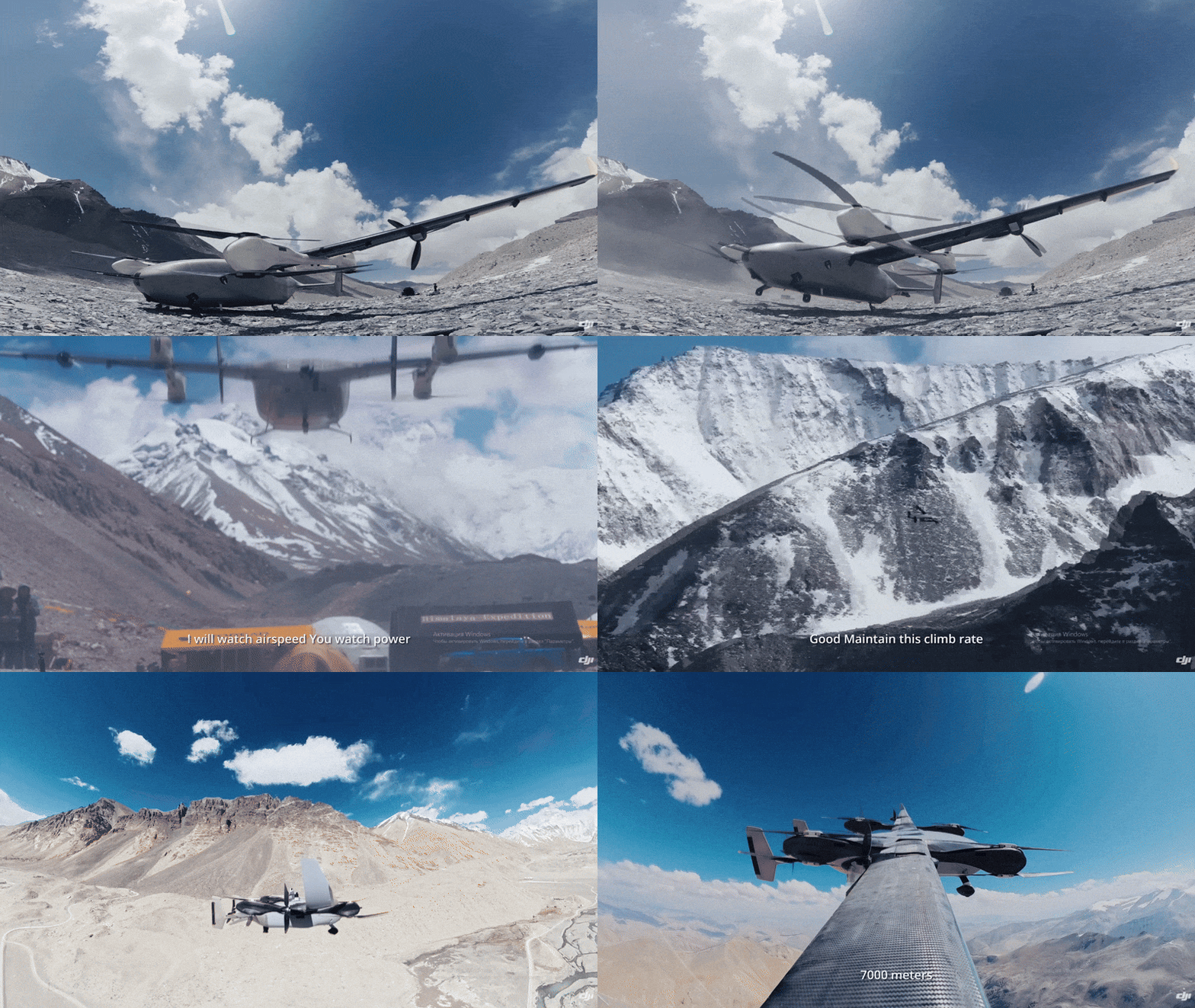
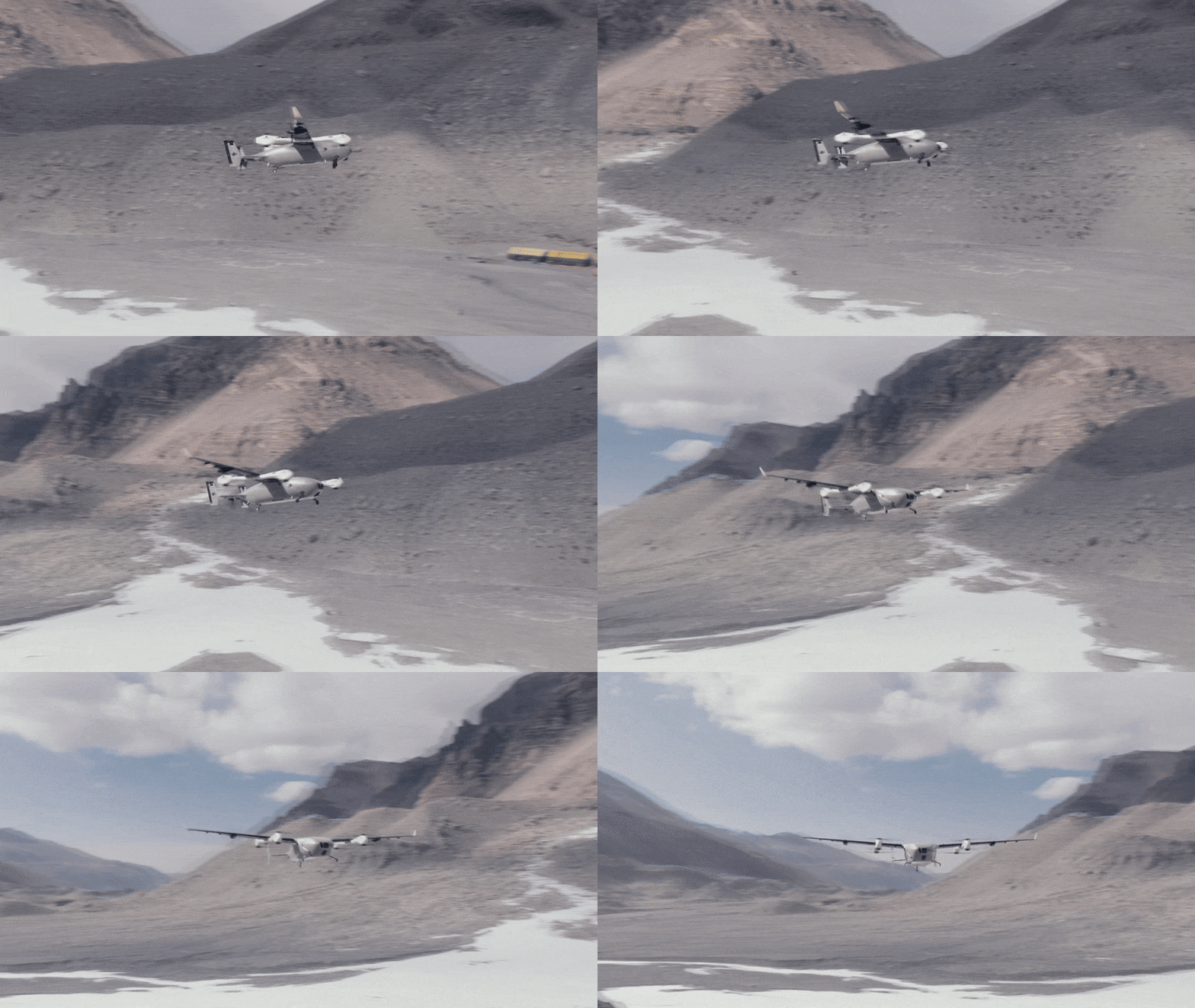
To demonstrate the capabilities of the EV50, DJI conducted flight operations in one of the world’s most challenging environments: the Mount Everest region.
In May 2026, the aircraft supported a scientific expedition by transporting ozone-monitoring equipment and atmospheric research instruments for researchers from Peking University.
High-altitude atmospheric research presents unique challenges. Above 8,000 meters, extreme weather, limited access, and reduced air density make continuous data collection difficult using conventional aircraft or ground-based methods.
During the expedition, the EV50 operated in low-pressure conditions, thin air, and changing mountain winds. The aircraft reached an altitude of 8,861 meters, setting the highest recorded flight altitude for a DJI aircraft while supporting atmospheric measurements of ozone and particulate matter in the Everest region.
The mission highlighted the potential of long-range unmanned aircraft for scientific operations in remote environments where traditional transportation methods are limited.
The EV50 expands DJI’s existing cargo drone lineup with a different operational approach.
The FlyCart series (30/100) is focused on heavy-lift missions using multirotor technology, where hovering capability and precise delivery are key advantages. The EV50, with its VTOL fixed-wing configuration, is designed for longer routes where flight efficiency and range become more important.
Together, these platforms cover different logistics requirements, from short-distance material transport to regional cargo delivery.
The EV50 is designed for a wide range of industries where reliable transportation remains challenging.
Potential applications include:
The DJI EV50 introduces a new category within DJI’s enterprise portfolio. Rather than scaling up an existing multirotor cargo platform, DJI developed a VTOL fixed-wing aircraft capable of carrying heavier payloads over significantly longer distances while retaining the flexibility of vertical takeoff and landing.
Its combination of long-range efficiency, modular deployment, built-in redundancy, and open payload integration makes the EV50 more than a delivery drone. It is a versatile logistics platform designed for operations where conventional transportation is impractical and where reliable aerial mobility can make a measurable difference.