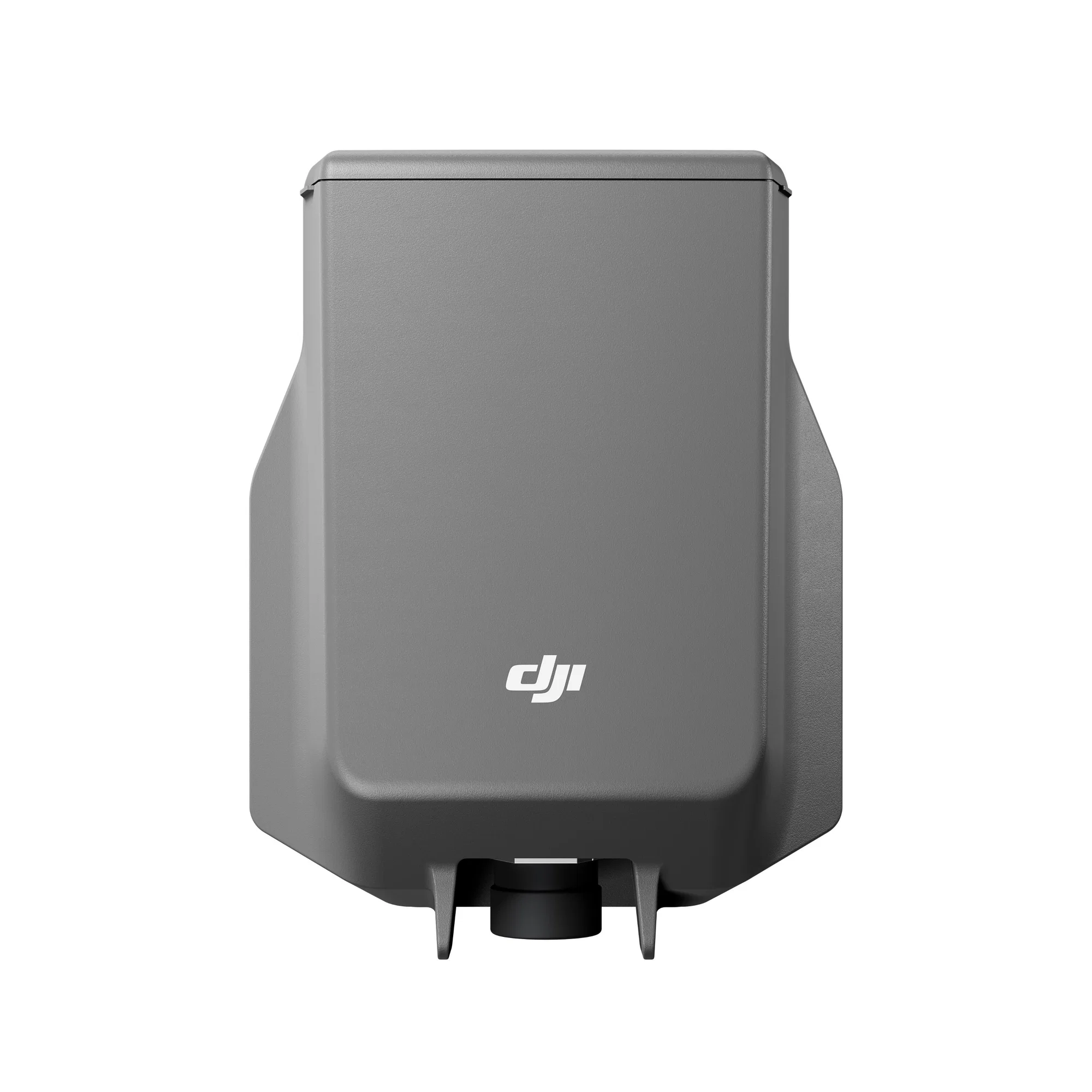
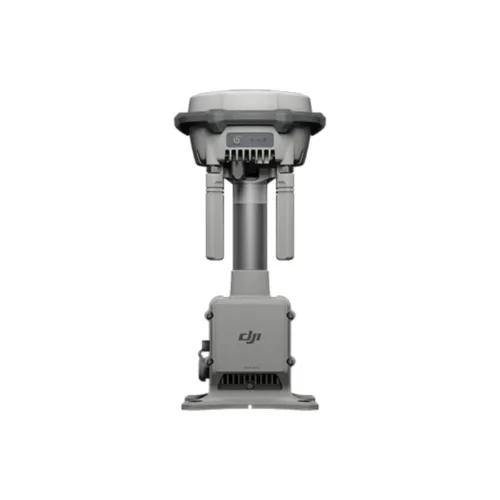
DJI AP100 Parachute for Matrice 400 enables C5/UK5 and C6/UK6 operations. It features independent power and full-link redundancy, supporting both manual and automatic deployment. With a response time under 600 ms and a descent rate below 5 m/s, it helps protect your platform, payloads, and the ground below.

M400 Drone Parachute
For the Priceless Below
DJI AP100 Parachute for Matrice 400 [1] enables C5/UK5 and C6/UK6 operations [2]. It features independent power and full-link redundancy, supporting both manual and automatic deployment. With a response time under 600 ms [3] and a descent rate below 5 m/s [4], it helps protect your platform, payloads, and the ground below**.
When paired with DJI AP100 Parachute, Matrice 400 [1] meets the European Union Aviation Safety Agency’s (EASA) C5/C6 and the UK Civil Aviation Authority’s (CAA) UK5/UK6 operational safety requirements [2]. It facilitates compliance for Standard Scenarios, including flights over populated urban areas (STS-01) and Beyond Visual Line of Sight (BVLOS) operations (STS-02) [5].
From the moment Matrice 400 powers on and throughout the entire flight, the parachute continuously monitors the status of the gas generator and communication links. If an anomaly occurs, real-time alerts are displayed via the Health Management System (HMS) in the DJI Pilot 2, ensuring safe operation.
Equipped with an independent flight control system and sensors like IMU, the parachute functions as a self-contained safety module. Intelligent algorithms continuously cross-validate data between the drone and the parachute in real time, significantly reducing the risk of accidental deployment.
Built-in dual capacitors provide up to 1 hour of independent backup power [6]. This helps ensure uninterrupted flight attitude monitoring and automatic deployment, without relying on main aircraft power or an active E-Port connection.
When triggered, an independent Flight Termination System (FTS) cuts motor power within 600 ms [3], stopping the rotors before parachute ejection to prevent entanglement.
Automatic Deployment Response Time ≤ 600 ms [3] | Stabilized Descent Speed ≤ 5 m/s [4] at Deployment Altitude ≥ 30 m [7]
Automatically deploys when it detects flight attitude or speed anomalies [7]. In the EU, UK, and other supported countries or regions, it also triggers when the drone breaches a Geocaging [8] boundary set in the DJI Pilot 2.
Trigger deployment with the on-screen slider in the DJI Pilot 2. In the EU, UK, and other supported countries or regions, remote deployment is also available through DJI FlightHub 2’s Flight Termination System (FTS) page [9] using the Aircraft SN and a verification code (DJI Cellular Dongle 2 [10] and 4G required).
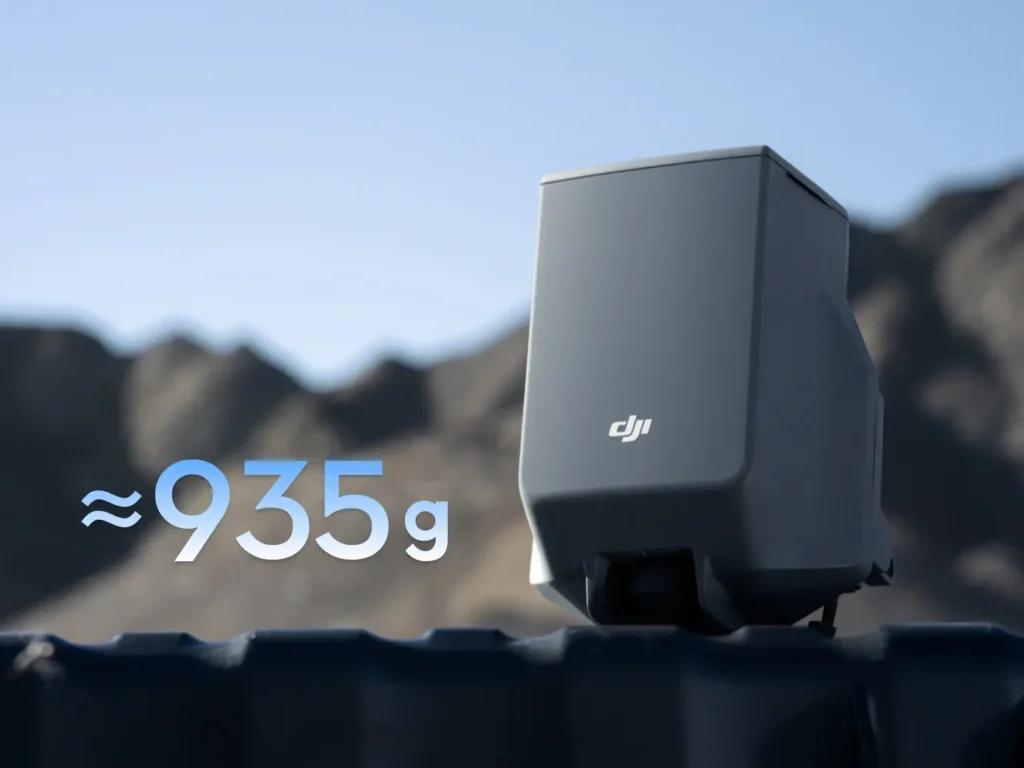
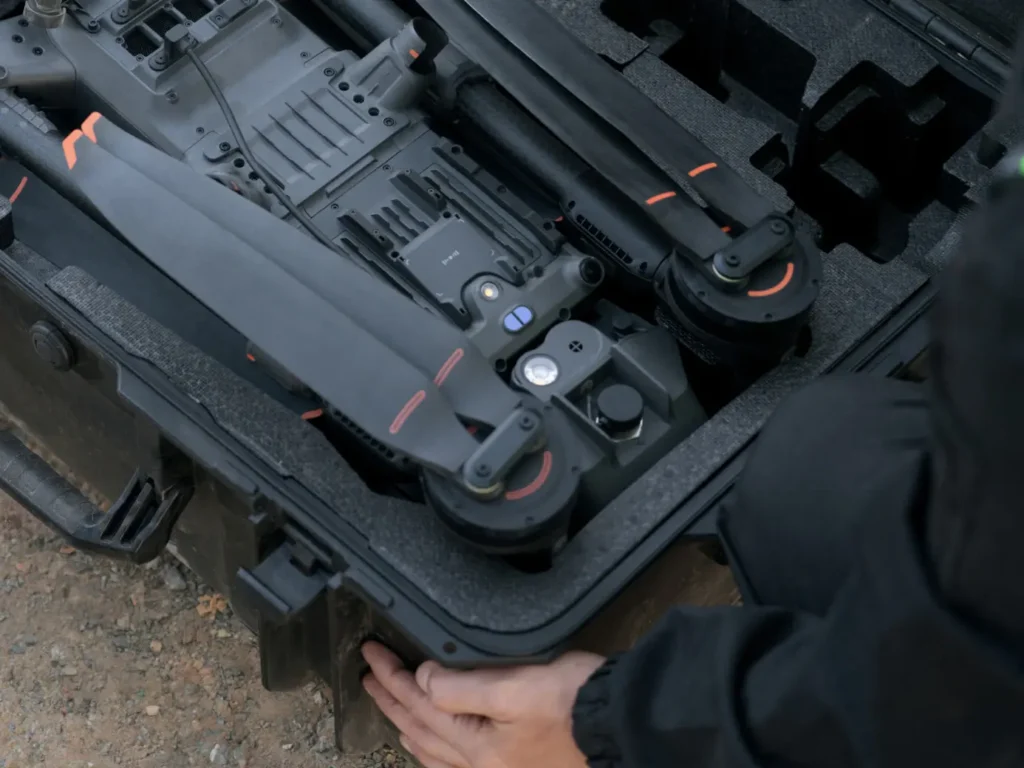
Sharing Matrice 400’s IP55 rating [12], the system operates reliably in challenging conditions, including heavy dust or rain. It also maintains stable performance across temperatures from -20° to 50° C (-4° to 122° F), delivering consistent results in both hot and cold conditions.
| Dimensions | 182×171×157 mm (L×W×H) (with bracket) |
| Weight | Approx. 935 g (with bracket) |
| Max Supported Takeoff Weight | 15.8 kg |
| Operating Temperature | -20° to 50° C (-4° to 122° F) |
| Operating Altitude | 0 to 4500 m |
| Ingress Protection Rating | IP55 Please follow the requirements stated in the IP55 protection rating instructions. Measured in a controlled environment. The IP rating is not permanently effective and may decrease due to product wear and tear. |
| Stabilized Descent Speed | ≤ 5 m/s Measured in a windless environment at 25° C (77° F), at an altitude between 30 m and 500 m, with DJI Matrice 400 taking off at the max takeoff weight of 15.8 kg. Data is for reference only. Actual experience may vary depending on the environment, usage, and firmware version. |
| Effective Deployment Altitude | ≥ 30 m The minimum effective deployment altitude of DJI AP100 Parachute is 30 m (the minimum vertical altitude required for the parachute to stabilize the aircraft’s descent below 5 m/s). If deployed below 30 m, the parachute will still eject, but may not fully inflate to adequately slow the descent. Additionally, in some cases, auto-deployment may not trigger, requiring manual operation. Please fly with caution. For detailed features and trigger conditions, visit the official product page.The 30 m data was measured in a windless environment at 25° C (77° F), at an altitude below 500 m, with DJI Matrice 400 taking off at the max takeoff weight of 15.8 kg. Data is for reference only. Actual experience may vary depending on the environment, usage, and firmware version. |
| Automatic Deployment Response Time | ≤ 600 ms Measured in a controlled laboratory environment. With DJI Matrice 400 hovering and propellers spinning, this is the total time interval recorded from the triggering of the Flight Termination System (FTS) signal, through the confirmation of a complete rotor stop, to the triggering of the gas generator’s electrical signal. Data is for reference only. Actual experience may vary depending on the environment, usage, and firmware version. |
| Canopy Material | Nylon |
| Manual Deployment | Supports Manual Deployment via App and FTS Deployment* * FTS Deployment via DJI FlightHub 2 is supported in the following countries and regions: EU member states (Austria, Belgium, Bulgaria, Croatia, Cyprus, Czechia, Denmark, Estonia, Finland, France, Germany, Greece, Hungary, Ireland, Italy, Latvia, Lithuania, Luxembourg, Malta, Netherlands, Poland, Portugal, Romania, Slovakia, Slovenia, Spain, Sweden), the United Kingdom, Norway, Iceland, Switzerland, Liechtenstein, Serbia, and Georgia. For the Flight Termination System (FTS) interface. |
| Automatic Deployment | Supports Automatic Deployment triggered by flight anomalies* or Geocaging** * The parachute will automatically deploy upon detecting abnormal aircraft attitude or speed. However, to mitigate the risk of damage to nearby equipment or property caused by close-range deployment, the automatic deployment will be disabled under either of the following conditions:
** Geocaging is supported in the following countries and regions: EU member states (Austria, Belgium, Bulgaria, Croatia, Cyprus, Czechia, Denmark, Estonia, Finland, France, Germany, Greece, Hungary, Ireland, Italy, Latvia, Lithuania, Luxembourg, Malta, Netherlands, Poland, Portugal, Romania, Slovakia, Slovenia, Spain, Sweden), the United Kingdom, Norway, Iceland, Switzerland, Liechtenstein, Serbia, and Georgia. |
| Audible and Visual Alarms | Alarms last for approx. 1 hour after deployment* and can be turned off via the physical button on the parachute. * Measured at 25° C (77° F) with the parachute in its factory state, or when the parachute is connected to the aircraft for over 30 minutes of flight time each month. Data is for reference only. Actual experience may vary depending on the environment, usage, and firmware version. |
| Backup Power Duration | Approx. 1 hour Measured at 25° C (77° F) with the parachute in its factory state, or when the parachute is connected to the aircraft for over 30 minutes of flight time each month. Data is for reference only. Actual experience may vary depending on the environment, usage, and firmware version. |
| Self-Check | Continuously monitors the status of the gas generator and communication links, displaying alerts via the DJI Pilot 2 Health Management System (HMS) interface. |
| Independent FTS | Independent control and rotor stop links |
Inquire price for DJI AP100 Parachute for Matrice 400